Guides · Materials
Marble, granite or quartz?
All three look beautiful on the first day. The difference shows years later, in a kitchen with lemons, on a stair with sand on it or on a terrace in full sun. Here is how they really compare.
The three, in one line each
- Marble is a natural stone formed from limestone under heat and pressure. It is mostly calcite, which makes it softer than granite and sensitive to acids. Many Egyptian ‘marbles’ are, strictly speaking, dense limestones traded as marble; in daily use they behave the same way.
- Granite is an igneous stone, crystallised from molten rock deep underground. It is mostly quartz and feldspar, very hard, and largely unaffected by kitchen acids. In the trade the name also covers other hard igneous stones.
- Quartz is engineered: crushed natural quartz bound with resin and pigments, pressed into slabs in a factory. It is uniform, non-porous and needs no sealing, but its resin does not like strong heat or direct sun.
Side-by-side comparison
| Marble | Granite | Quartz | |
|---|---|---|---|
| What it is | Natural, metamorphic (calcite) | Natural, igneous (quartz and feldspar) | Engineered: quartz grains and resin |
| Scratching | Scratches fairly easily; wear shows on busy floors | Very hard to scratch | Hard to scratch |
| Stains | Absorbs oil and coffee unless sealed | Low for most dark granites; seal the light ones | Non-porous; resists stains without sealing |
| Acids (lemon, vinegar) | Etches: leaves dull marks, even when sealed | Generally not affected | Generally not affected |
| Heat | Tolerates warmth; sudden heat can mark or crack it | Handles heat well; use a trivet all the same | Resin can scorch or discolour: always use a trivet |
| Sun and outdoors | Polish dulls outside; honed finishes cope better | Excellent; colour stays stable | Not for direct sun: resin can yellow or fade |
| Look | Soft veining, every slab different | Grain or speckle, some with movement | Even colour; veining is designed and repeats |
| Upkeep | Seal, wipe spills at once, re-polish over time | Occasional sealing for lighter stones | Mild cleaner; avoid harsh chemicals |
Which works where
| Use | Marble | Granite | Quartz |
|---|---|---|---|
| Kitchen worktop | Possible if you accept marks over time | Strong choice | Strong choice, away from direct heat |
| Bathroom vanity | Good; wipe off cosmetics and cleaners | Good | Very good |
| Indoor floors | The classic choice, polished or honed | Good for heavy traffic | Possible, but rarely used |
| Stairs | Good indoors; honed where treads may get wet | Best for heavy use and entrances | Rarely used |
| Walls and features | Excellent: the veining is the point | Good | Good, with a uniform look |
| Outdoors, terraces, facades | Honed or textured only; some types weather | The best choice, with a textured finish | Not recommended |
For the kitchen
Granite and quartz are the practical kitchen choices; marble works only if you accept that it will mark.
A worktop meets lemon juice, vinegar, tomato, hot pans and knives every day. Granite shrugs off most of it. Quartz resists stains best of all but needs a trivet under anything hot. Marble etches wherever acid touches it, even when sealed: some owners love the patina that builds up, others are upset by it within a month.
Whatever the stone, ask about the details that decide how a worktop lasts: thickness, edge profile, where the joints fall, how the sink and hob cut-outs are reinforced, and whether the worktop is templated on the installed cabinets.
Floors, stairs and bathrooms
Marble remains the classic floor for receptions and bathrooms, granite is the tougher choice for stairs and entrances, and quartz is mostly kept for tops.
Polished marble floors look rich but turn slippery when wet and show scratches from grit, so many owners choose a honed finish for bathrooms and entrances. Stairs take the hardest wear in any home: granite treads, or marble with a honed or grooved nosing where water or sand is likely.
In the bathroom, any of the three works for a vanity. Keep acidic cleaners off marble, rinse soap and cosmetics off before they dry, and seal light-coloured stone.
Outdoors and on the coast
Outside, granite is the safe choice; quartz belongs indoors and out of the sun.
Sunlight, salt and sand are hard on stone. Granite with a flamed or bush-hammered finish keeps its colour and its grip on terraces, steps and facades. Marble can go outside with a honed or textured finish, but polished marble loses its shine and becomes slippery, and softer types weather over time. Quartz is a poor choice in direct sun, because its resin can yellow and fade.
For more on salt air and humidity, see our guide to finishing materials for the coast.
Examples from our catalogue
The catalogue shows each stone with its origin and finishes. A few names to start from:
- Marble: Galala Classic, Sunny Menia, Triesta, Silvia Menia, Milly Gray.
- Granite: Halayeb, New Halayeb, Black Aswan, Gandola, Aswan Red.
- Quartz: Calacatta Nile, Statuario Alba, Pure White.
A photo shows the stone; a slab in person shows the batch. For worktops and book-matched walls, choose from the actual slabs whenever you can.
How Itmam supplies and fits stone
We supply marble, granite and quartz from a catalogue of 94 stones, onyx included, and you can see stone at our showroom in El Deresa, Alexandria.
Stone tops are made in our own workshops: templated on site, cut and installed by the same team. Supply-only is available if you have your own installer, and every order starts with a written, itemised quotation.
Departments for this
Marble
We buy marble at the block, not off a photograph.
See moreGranite
Granite is the stone you specify when a surface has to survive people.
See moreQuartz & Sintered Stone
Engineered surfaces exist for one reason: predictability.
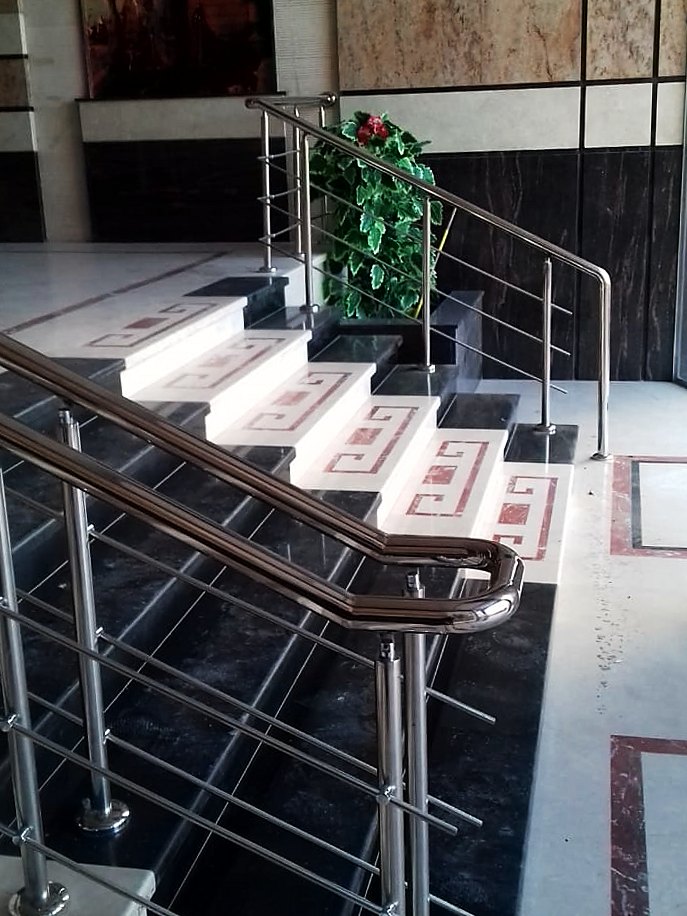
See more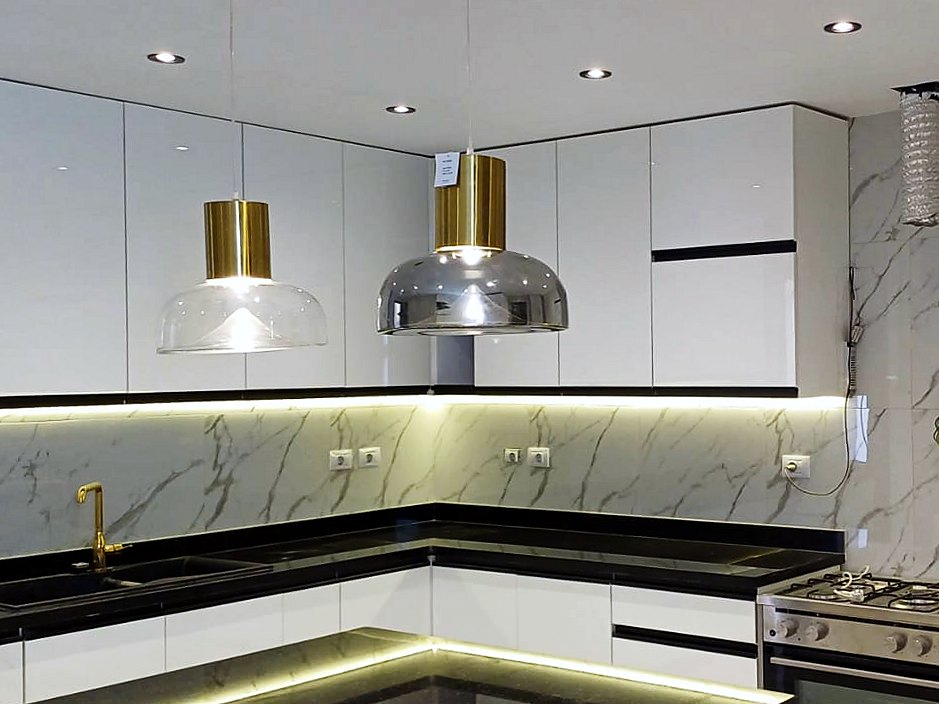
Kitchens
A kitchen is the one room where bad manufacturing shows up daily — a door that drops, a drawer that catches, a worktop joint over the sink.
See moreWork we have done
Photo gallery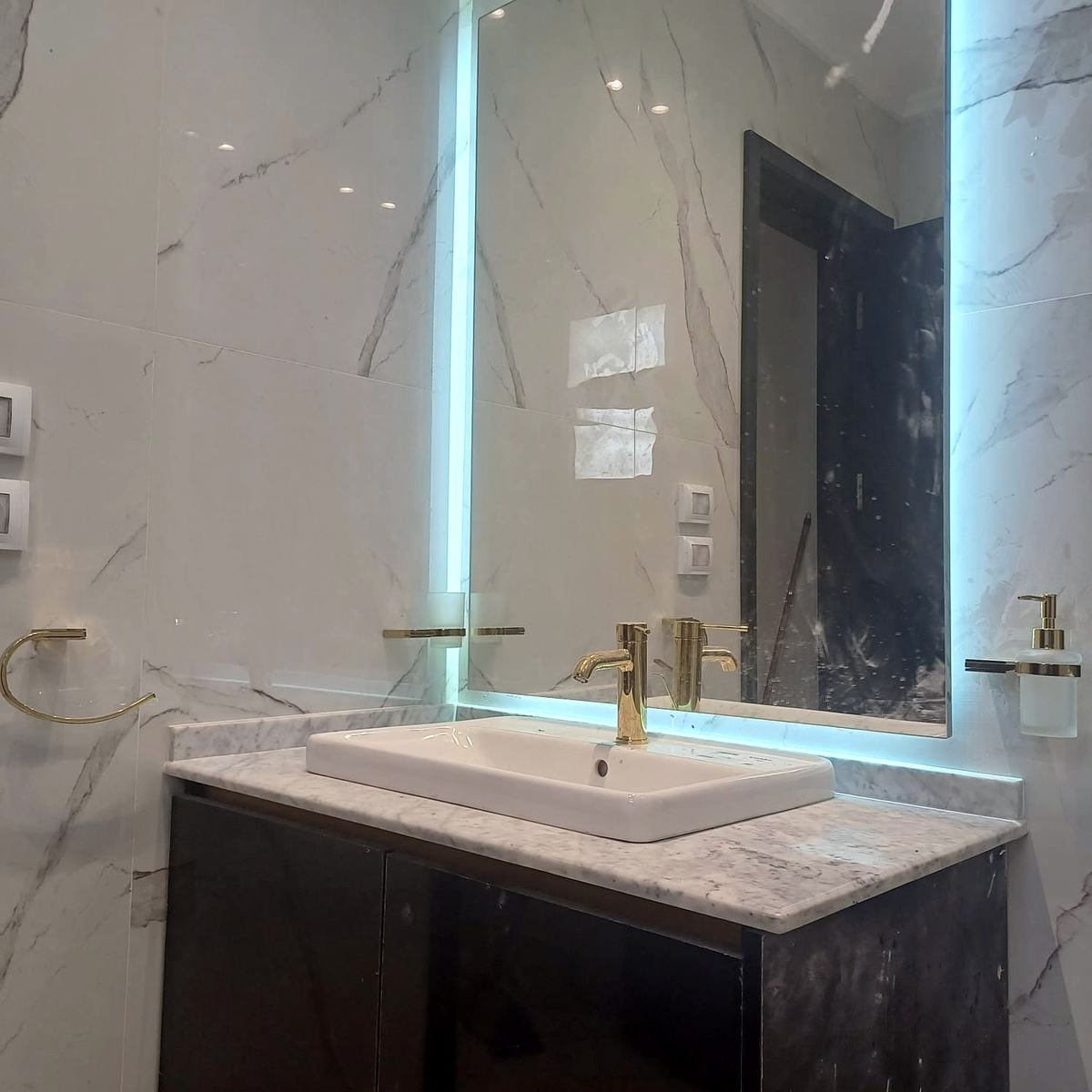
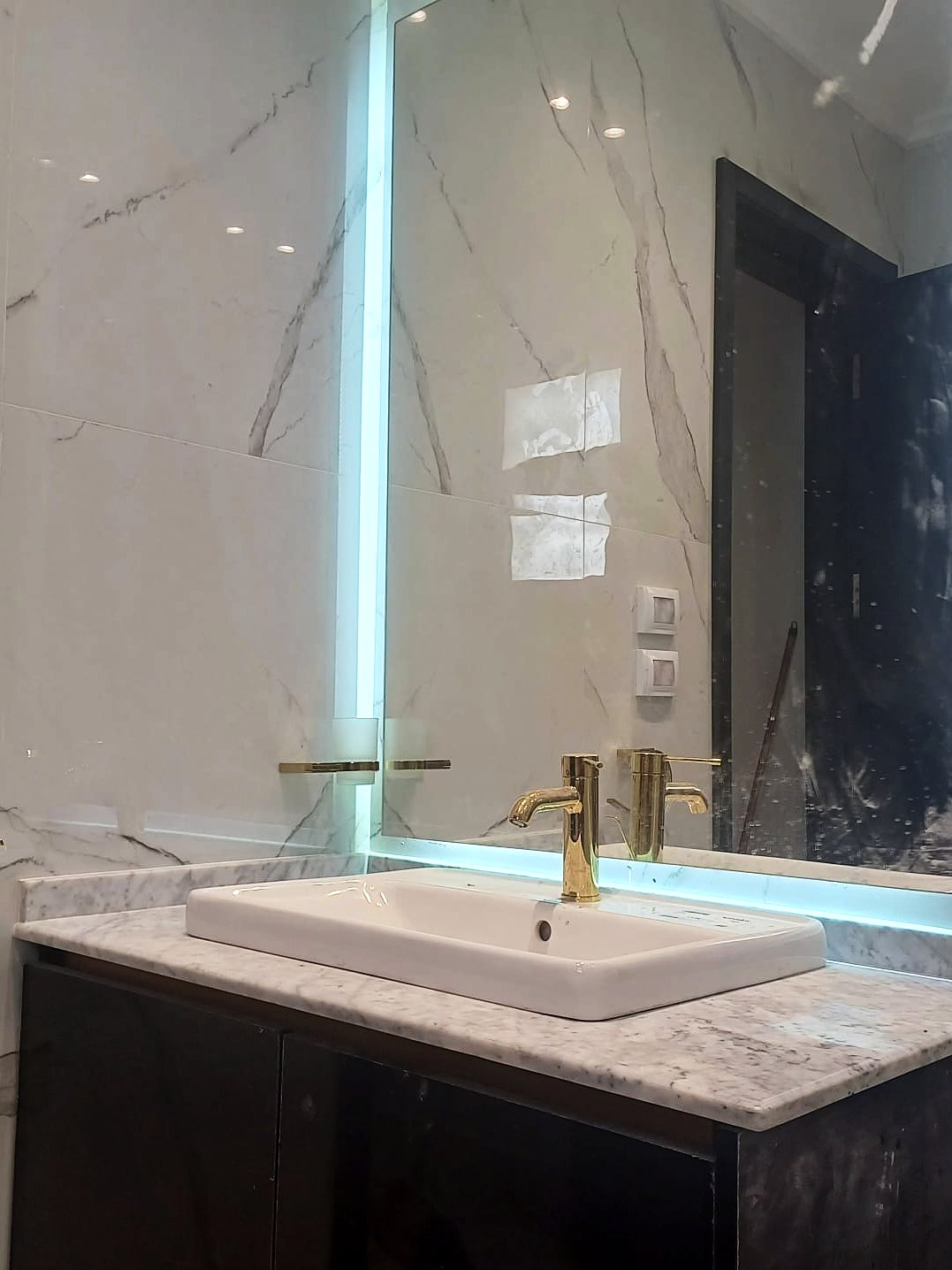
Sea-view Villa — Marble & Brass
Turnkey finishing · Villa · In progress
View project
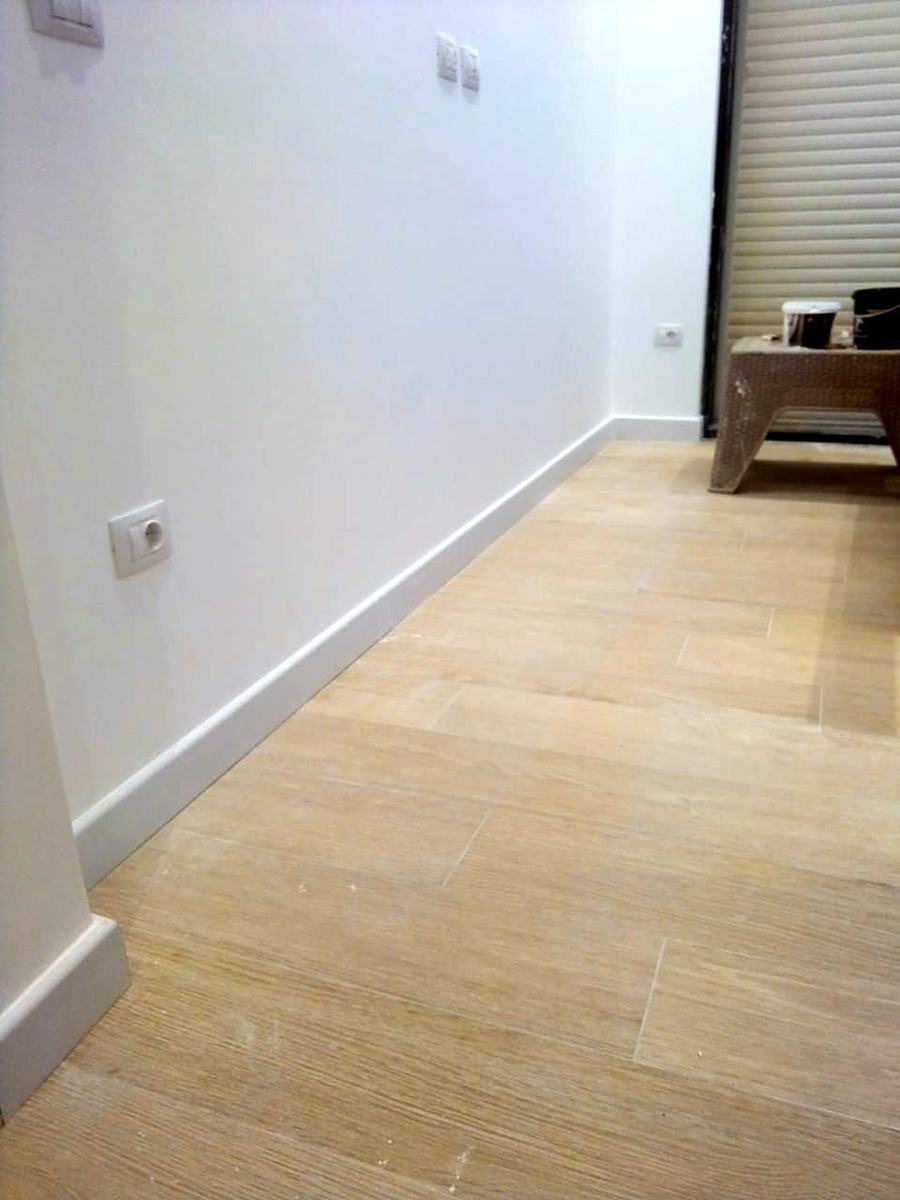
Pool Villa — Oak & Rattan
Exterior, pergola & interiors · Villa · In progress
View project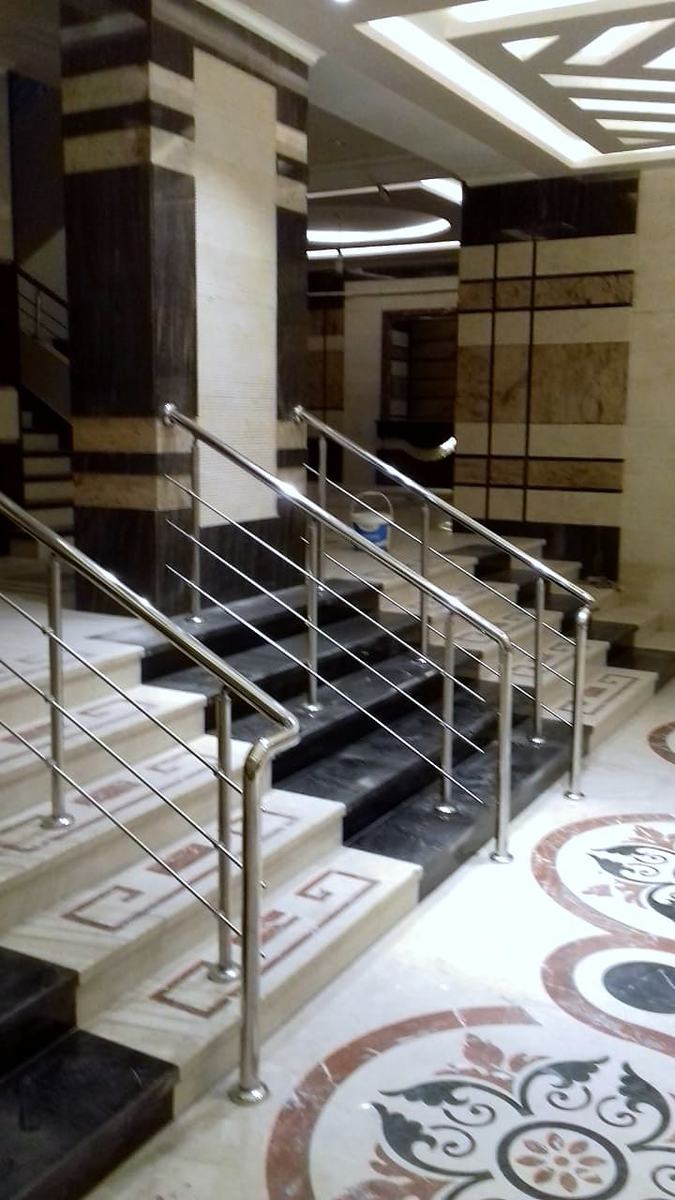
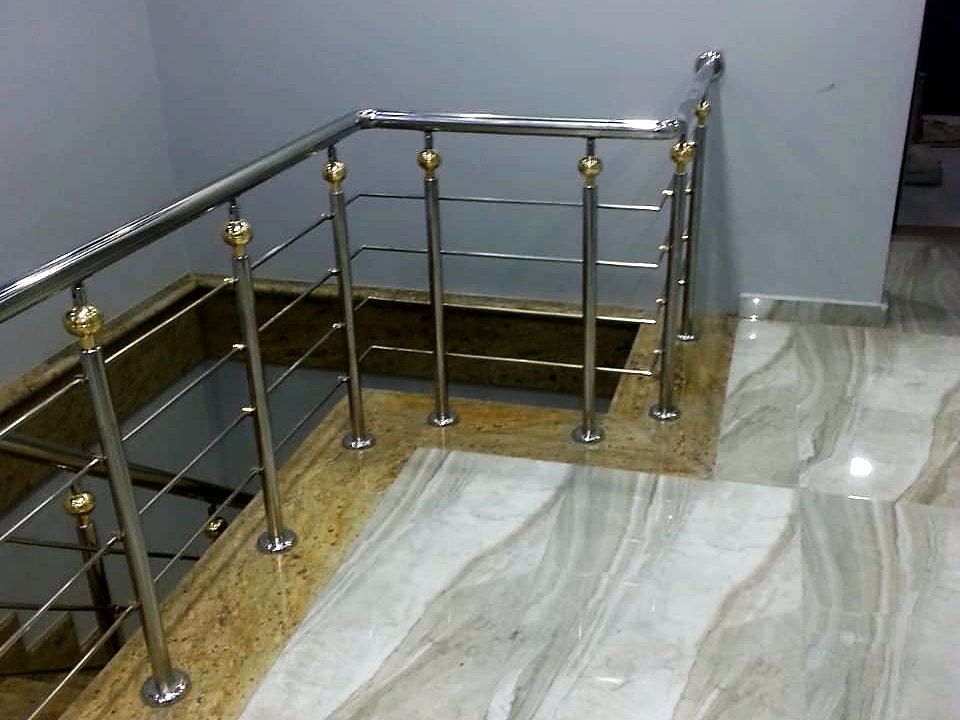
Entrance Lobby & Marble Stairwell
Lobby, stairs & balustrades · Residential building · Completed
View projectQuestions people ask
Which is better for a kitchen, marble or granite?
Is quartz natural or man-made?
Do lemon and vinegar damage marble?
Can quartz go on a sunny terrace?
Is Egyptian granite as good as imported?
Does marble need sealing?
Read next
The stone catalogue
See more SupplyThe stone catalogue
See more SupplyThe stone catalogue
See more Supply · ShowroomOur marble and granite showroom in El Deresa
Stone is not chosen from a photograph. At our showroom in El Deresa, Alexandria, you see the stone in person, compare finishes…
See more Finishing · by levelSuper lux finishing, fully specified
Super lux is the level many flats in Egypt are finished to, and the label people understand in the most different ways. Here is…
See more Guides · MaterialsFinishing by the sea: what lasts and what fails
A finish that lasts for years in Cairo can fail within a few seasons on the North Coast. Salt, humidity, sun, sand and long…
See more