Areas · Alexandria
Bathroom finishing and renovation in Alexandria
Bathroom finishing and renovation in Alexandria starts with what is under the tiles, not their colour: the waterproofing, the pipes, the falls and the ventilation. Here is when a refresh without stripping is enough and when the room must go back to the slab, how to plan a small bathroom, and what protects the flat below.
What is different about a bathroom in Alexandria?
A bathroom in Alexandria faces three things at once: older buildings whose pipes and waterproofing have reached the end of their life, high humidity all year round, and small bathrooms in flats that were never planned for today’s fittings.
The most common complaint is water coming through the ceiling of the flat below. The cause is usually failed waterproofing under the tiles, or old pipes leaking inside the wall or floor. Many buildings still have galvanised steel supply pipes, which rust from the inside, so the pressure drops, the water runs discoloured, and then the joints start to leak.
Damp shows up as black spots in the ceiling corners, especially in a bathroom whose window opens onto a narrow light well, or that has no window. So any renovation starts with a survey: where the water comes from, what state the pipes are in, and how the steam gets out.
Renovating a bathroom without demolition: when it works and when it does not
A bathroom can be refreshed without stripping it only if what lies under the tiles is sound, and nobody can promise that before checking the room.
| Condition | Refresh without stripping | Must go back to the slab |
|---|---|---|
| Leaks | No sign of water on the neighbour’s ceiling or in the adjoining walls | A stain or seepage at the neighbour’s, or in an adjoining wall |
| Tiles | Firm and flat, with no hollow sound when tapped | Tiles that sound hollow, are cracked, or sit on loose mortar |
| Pipes | Already replaced with PPR and in good condition | Old galvanised steel, or leaks at the joints |
| Levels | A new layer will not raise the threshold or stop the door opening, and the floor already falls to the drain | Water stands on the floor, or there is no height for a new layer |
| Changes | The WC, basin and shower stay where they are | Moving the WC or the drain, or fitting a concealed cistern and concealed mixers |
A refresh usually means new sanitaryware and exposed mixers, a new vanity and mirror, fresh grout and silicone, and sometimes new tiles laid over firmly bonded old ones with a suitable adhesive. It does not fix failed waterproofing or old pipes inside the wall: tiling over a problem hides it, it does not solve it. Before deciding, we open a small inspection area and show you what is under the tiles.
A full bathroom renovation, step by step
Fully renovating an old bathroom means stripping back to the concrete slab and renewing everything under the tiles, and it is the only dependable fix once water has reached the neighbours.
Strip back to the slab
The tiles, the old mortar and the old pipes come out. In some older buildings the pipes run through a layer of fill under the floor; if the fill is saturated, it is removed and replaced.
Pipes and drains
PPR supply pipes replace galvanised steel, PVC drains run with enough fall to the building’s stack, the bathroom gets its own shut-off valve within easy reach, and the pipes are pressure-tested before the wall is closed. If the shared drain stack itself leaks, that is agreed with the building management.
Electrics
The water heater circuit, sockets, lighting and extractor points go in before plastering and tiling, on circuits protected by an earth-leakage breaker.
Falls and waterproofing
The floor is set to fall towards the drain so no water stands, and a full waterproofing tank covers the floor and turns up the walls, higher in the shower area, with the corners, the drain and the pipes reinforced.
Flood test
The drain is blocked and the floor flooded for a day or two while the ceiling of the flat below is checked, so arrange this with your neighbour in advance. With us, the test is recorded with photos before any tile goes down.
Tiles and fittings
The tiles are laid to the falls, then the vanity, sanitaryware, mixers and glass go in.
Handover
Run all the taps together, fill the shower floor and check that it drains with no water standing, and look under the basin and around the WC before you sign.
Damp and mould: light well or extractor fan?
Steam has to leave the bathroom; if it does not, it condenses on the ceiling and walls and mould appears, however good the paint.
- A window onto the light well helps if it actually opens and the light well is open at the top. Do not rely on a narrow, closed light well alone.
- An extractor fan ducted outside or into the light well, wired to run with the light or left on for a while after a shower. If the duct would come out on the building’s façade, ask the building management first.
- A bathroom with no window: here the extractor is a necessity, not a luxury, with a gap under the door to let air in.
- The ceiling: a moisture-resistant, washable paint, and for a suspended ceiling, moisture-resistant gypsum board with an access panel. Existing mould is cleaned and treated, but it comes back if the cause stays.
- The vanity unit: a carcass in moisture-resistant board with every edge sealed, because an open edge is the first thing to swell.
If the damp is in a shared wall or rising from the ground, that is a different problem from steam, and our guide to damp walls explains the difference.
Small bathrooms in older flats: a layout that makes room
In a small bathroom the layout matters more than any material: where the WC sits, how the door opens, and where the shower water goes.
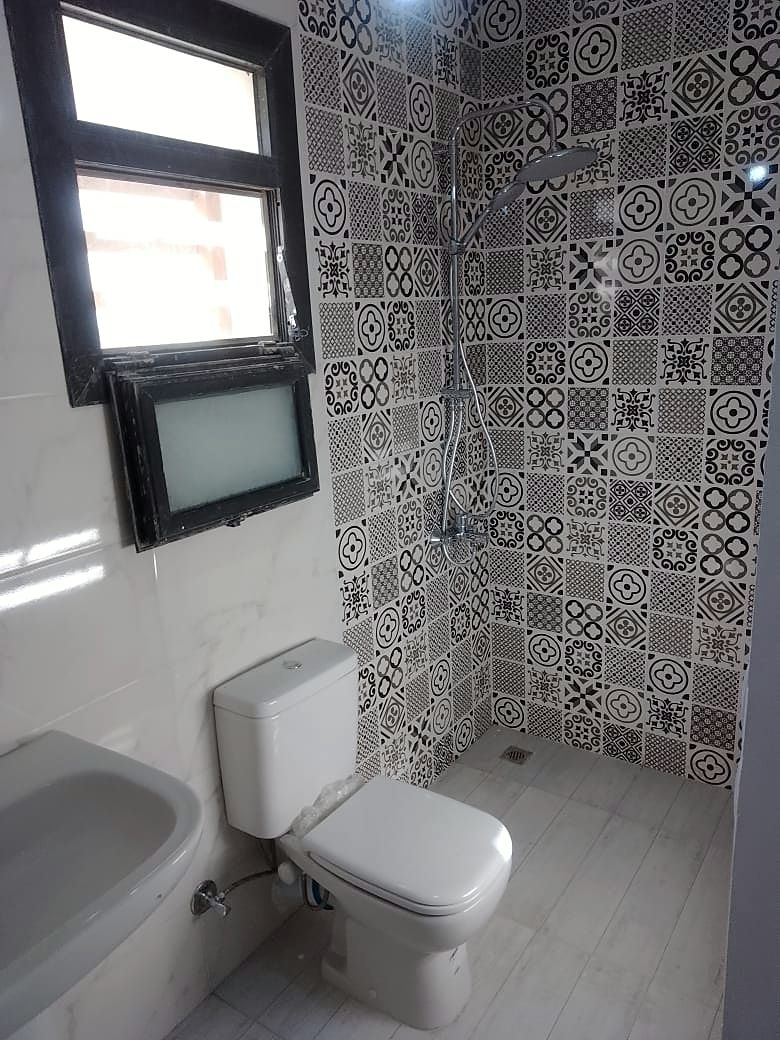
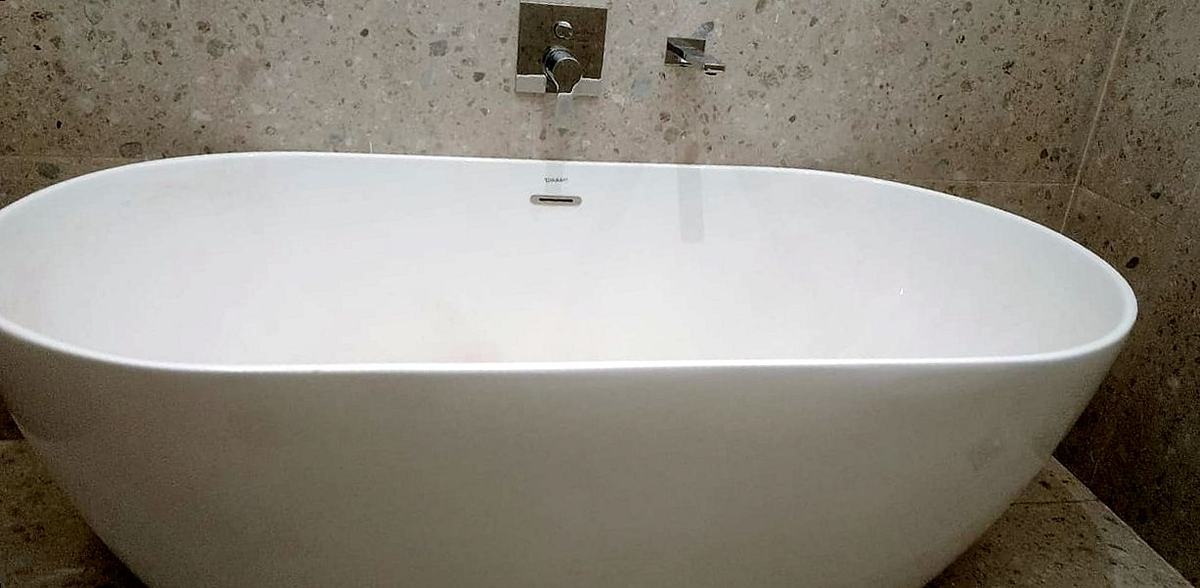
- A shower instead of a bath saves space, and a toughened glass screen instead of a curtain keeps the water in and lets the light through, so the room feels bigger.
- The door: if it hits the WC or basin as it opens inwards, consider a door that opens outwards or a sliding door.
- A wall-hung WC with a concealed cistern saves a little depth and makes cleaning easier, but it needs a wall that can take the cistern, so decide before demolition, not after.
- The WC position: it is best kept close to the drain stack, because moving it far away needs a fall the floor may not allow.
- A wall-hung vanity with drawers, a mirror cabinet, and a recessed niche if the wall is thick enough: storage that does not eat the floor.
- On the walls, larger tiles in a light colour with fewer joints; on the floor, a size that can follow the falls to the drain.
- The washing machine: in many older flats it lives in the bathroom, so plan its drain, valve and a protected socket from the start.
Water heaters and electrics near water
Water and electricity in a small room need planning from the start, not connections added after the finishes are on.
- An earth-leakage breaker on the bathroom circuits and a sound earth. Many older Alexandria buildings have no such breaker and still have aluminium wiring, so test the electrics before adding a new heater.
- An electric storage heater: on a wall that can carry its full weight, away from the shower spray, on a circuit suited to its rating, where it can be reached for maintenance, and with its safety valve piped to the drain.
- A gas water heater does not go inside a closed bathroom, because it needs ventilation and a flue to the outside. Any change to its position or to the gas line is a matter for the gas company.
- Sockets and switches: away from the shower and basin, with covers where they could be splashed.
- Lighting: fittings made for wet areas, especially above the shower and inside niches.
Finishes: tiles, the vanity top, and what super lux means
Choose bathroom materials for water first: a porcelain floor with a slip rating suited to wet floors, porcelain or ceramic on the walls, and epoxy grout in the shower, because it does not absorb water and resists stains and mould better than cement grout.
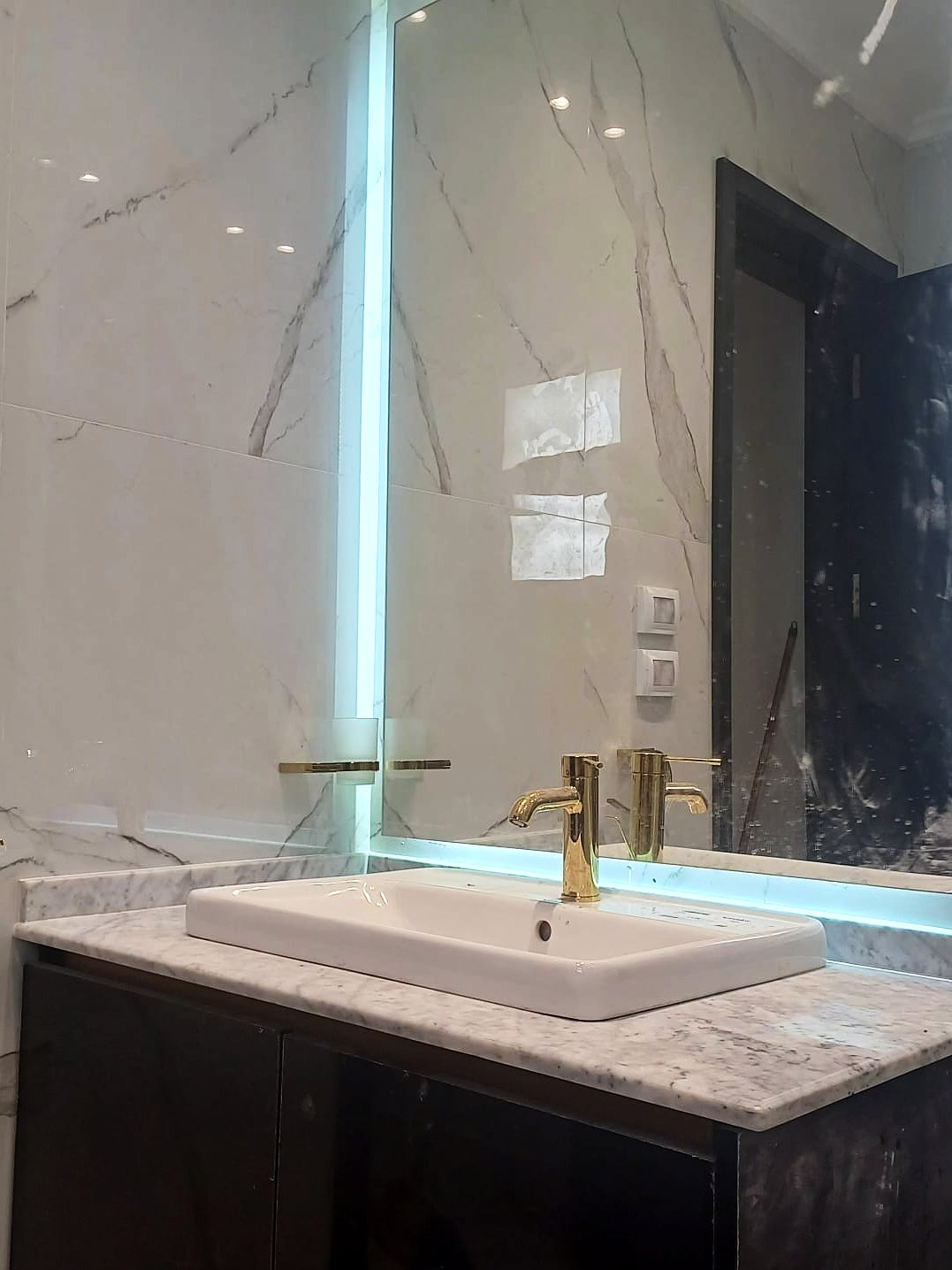
Choose the vanity top while looking at the stone itself at our marble and granite showroom in El Deresa, Moharram Bey. Granite copes with scratches and water, quartz does not absorb liquids, and marble has the finest veining but marks with acidic cleaners. Vanity units and stone tops are made in our own workshops, and the stone is templated, cut and installed by the same team.
A “super lux” bathroom is not a fixed specification, and the term changes from one contractor to the next, so ask for every item to be written into the quotation by name and specification: tiles, sanitaryware, mixers, cistern, shower screen, ceiling and extractor.
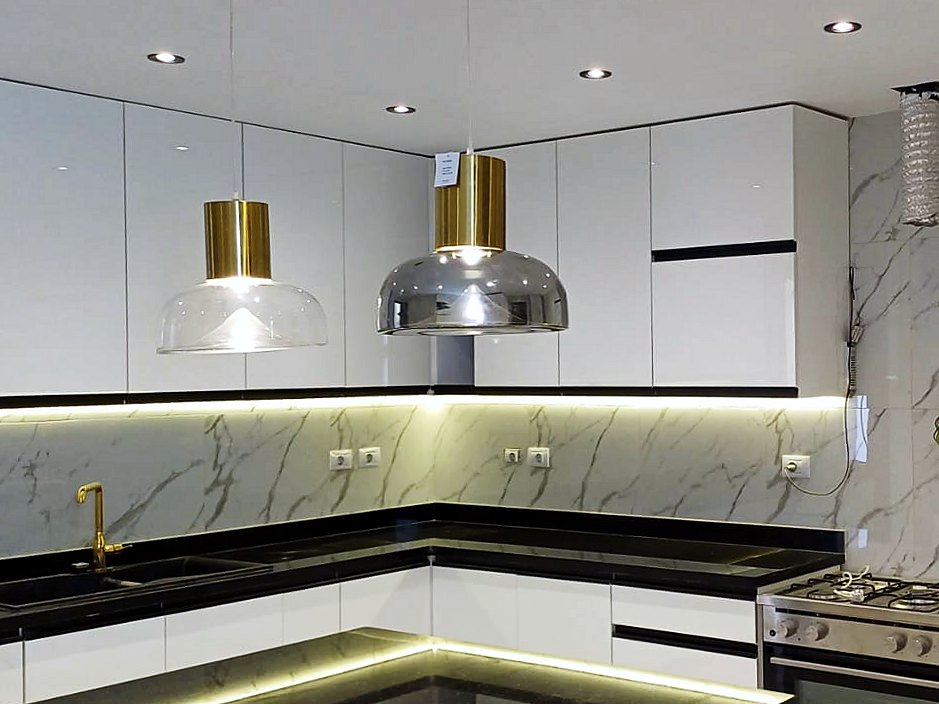
If the kitchen needs work too, doing the bathroom and kitchen together is usually easier to organise: the pipes are renewed once, the water is shut off once, and the demolition happens once.
Itmam and Alexandria bathrooms
Itmam is a finishing, decoration and supply company from Alexandria: head office in El Ibrahimya, marble and granite showroom in El Deresa, Moharram Bey. Vanity units, stone tops and metalwork are made in our own workshops, and on bathrooms we record the flood test with photos before any tile is laid.
We visit, measure and give you a written, itemised quotation before work starts. On a finishing contract you pay each supplier directly at their price, and the tax invoice is in your name; our management fee for supervision and execution is agreed in writing before we begin, and we add nothing to the price of materials. If you only need the materials, supply-only is available: tiles, pipes and sanitaryware.
Itmam was founded in 2016, with 20+ years in the trade. Call or WhatsApp us on +20 106 926 2572, Saturday to Thursday, 09:00 to 18:00.
Departments for this
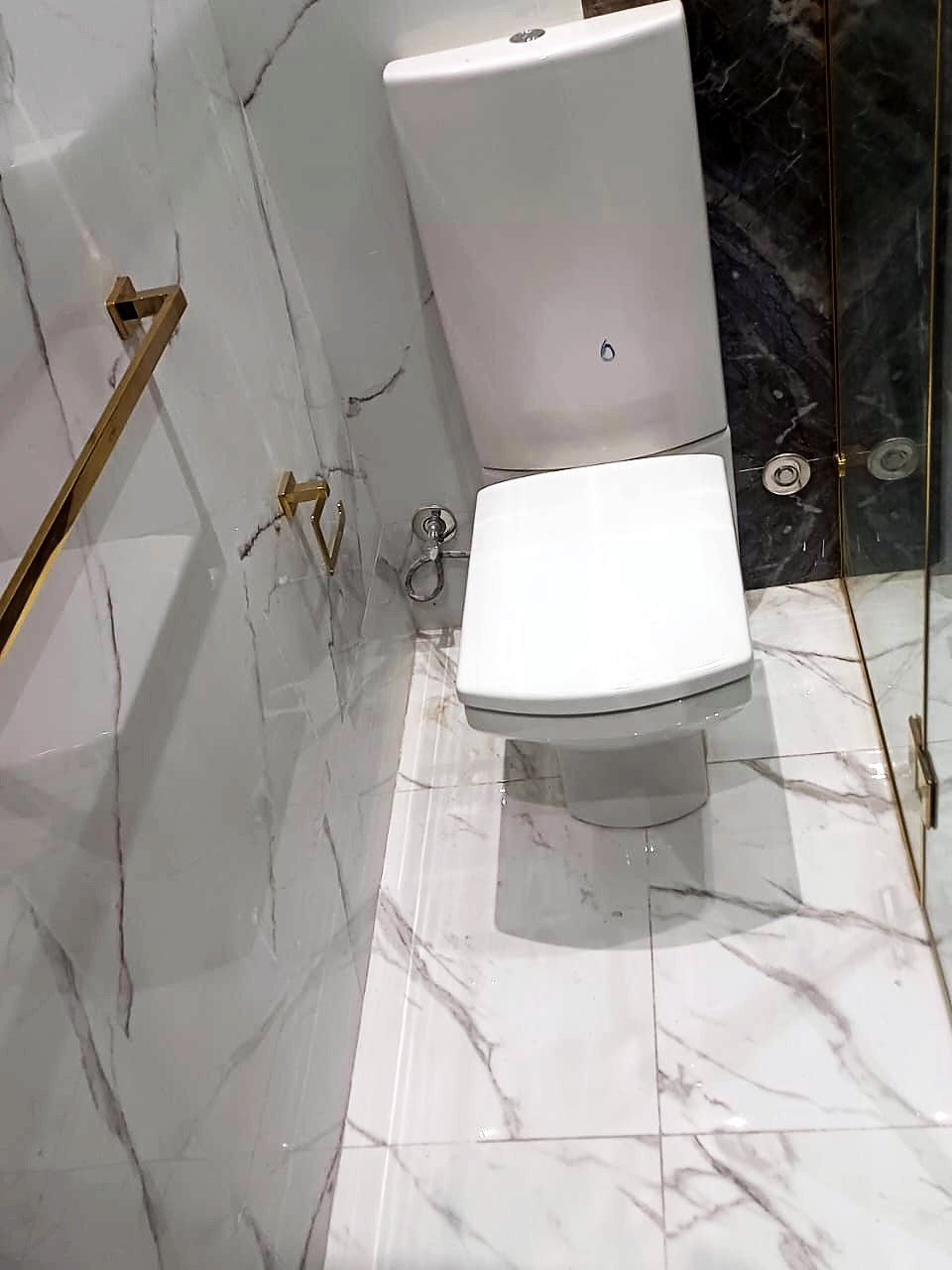
Bathrooms
Bathrooms are won and lost behind the tiles.
See more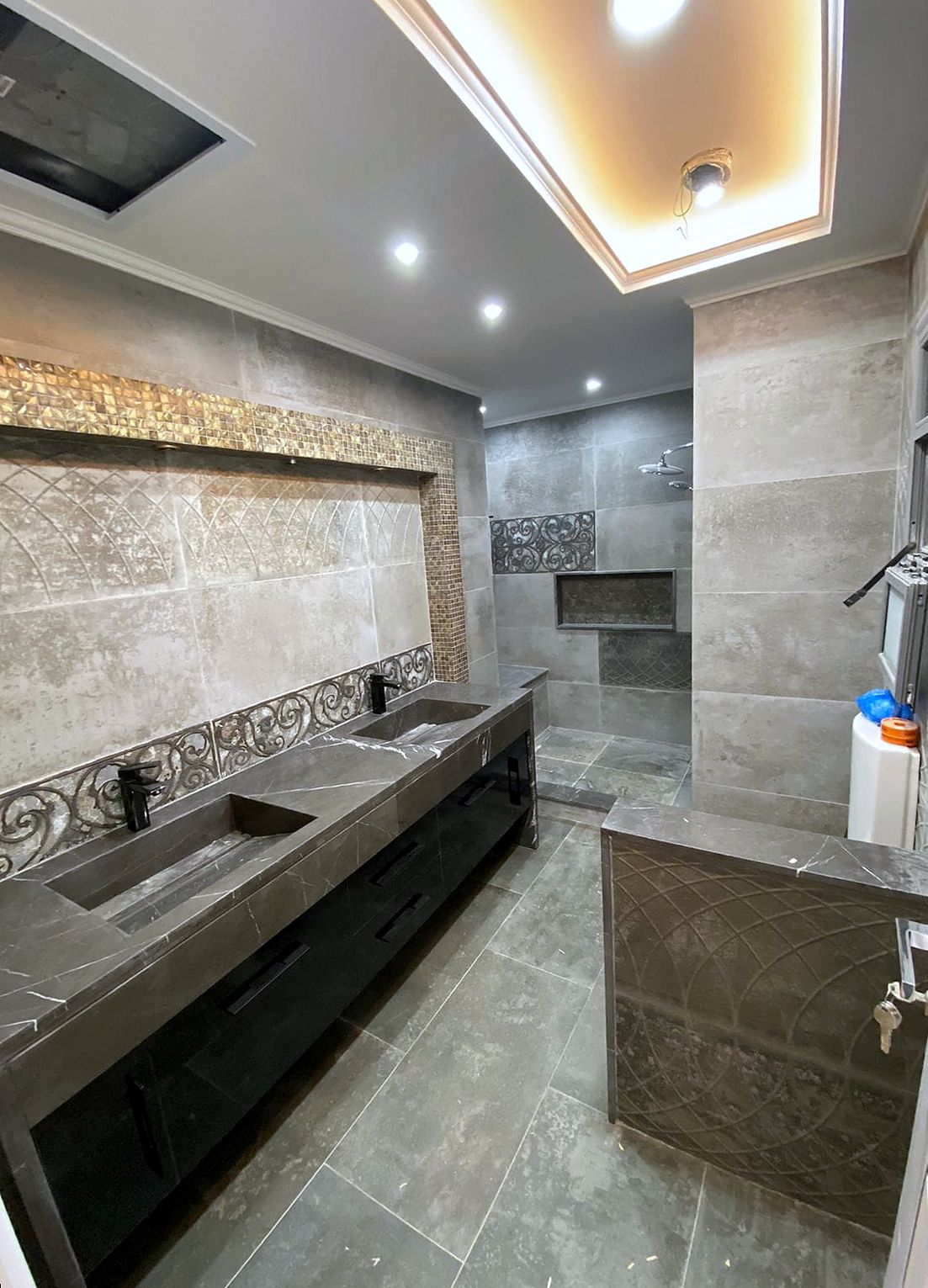
Marble
We buy marble at the block, not off a photograph.
See moreTiles, Porcelain & Ceramics
Tile is a material people are perfectly happy to buy months before anybody lays it, and we sell it exactly that way — by the lot, with no fitting contract attached.
See morePlumbing & Sanitary Supply
Pipe, fittings, valves and sanitary ware are sold across the counter and delivered to site, with no requirement that we do the first-fix.
See more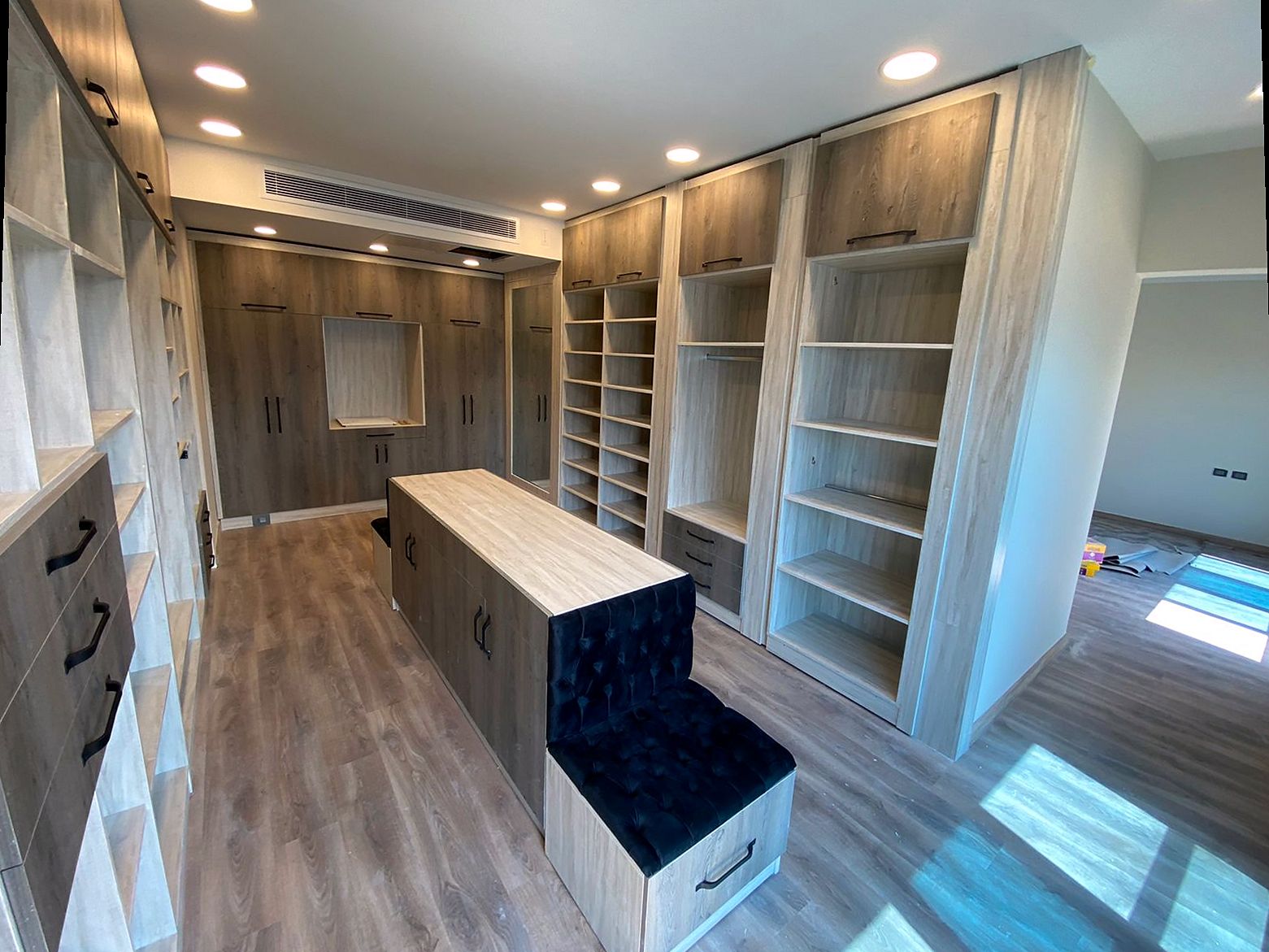
Full Home Renovation
This is the contract most of our clients actually want: one company, one programme, one written quotation.
See moreWork we have done
Photo gallery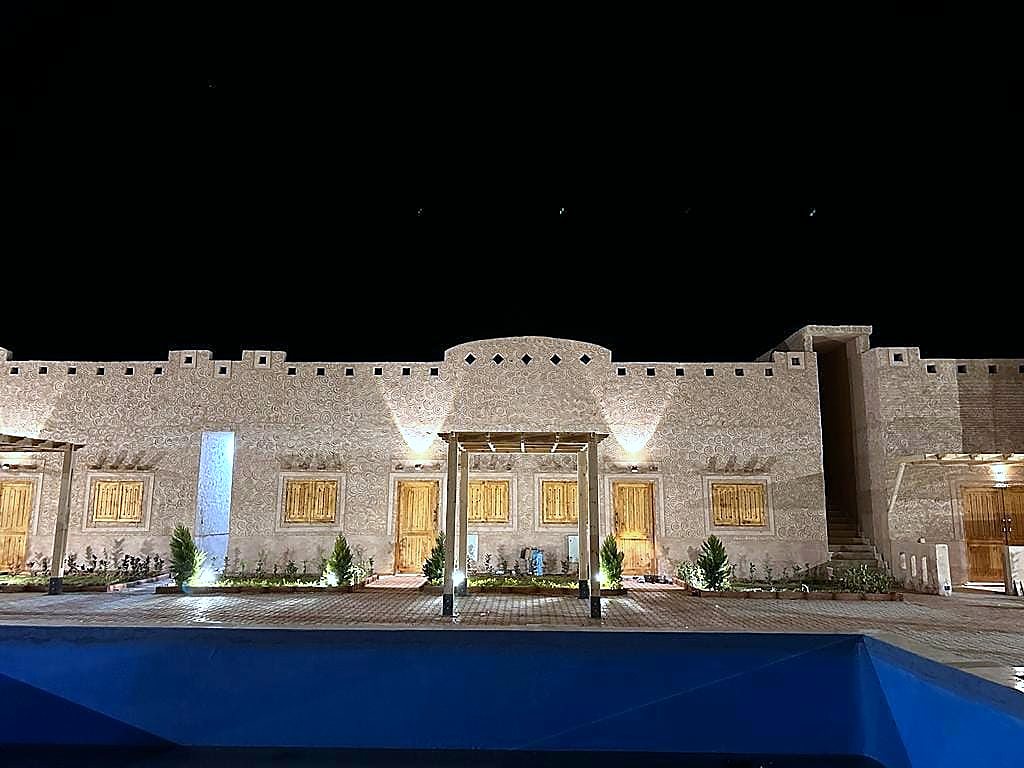
El Moghra
Turnkey build & finish · Desert lodge · Completed
View project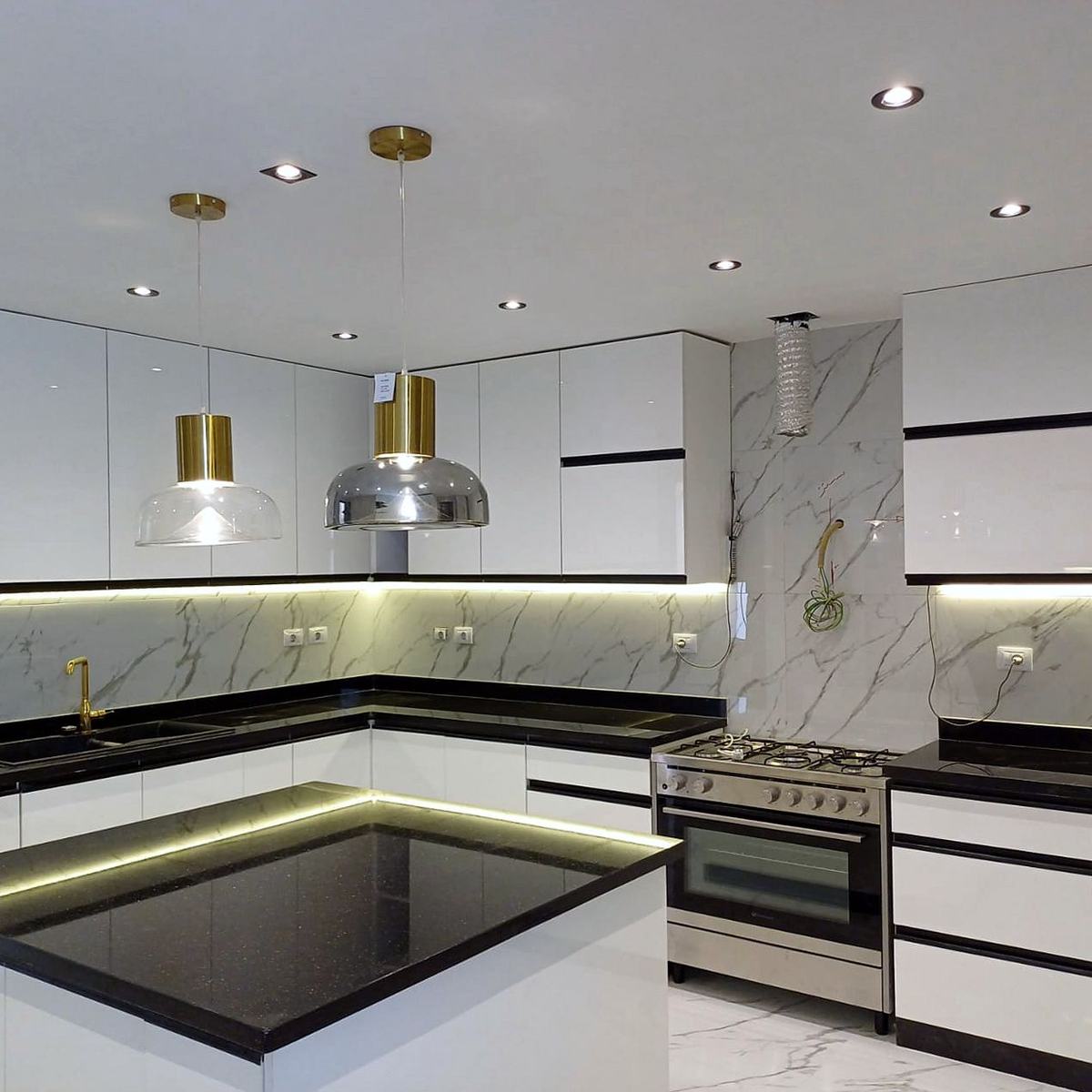
Sea-view Villa — Marble & Brass
Turnkey finishing · Villa · In progress
View project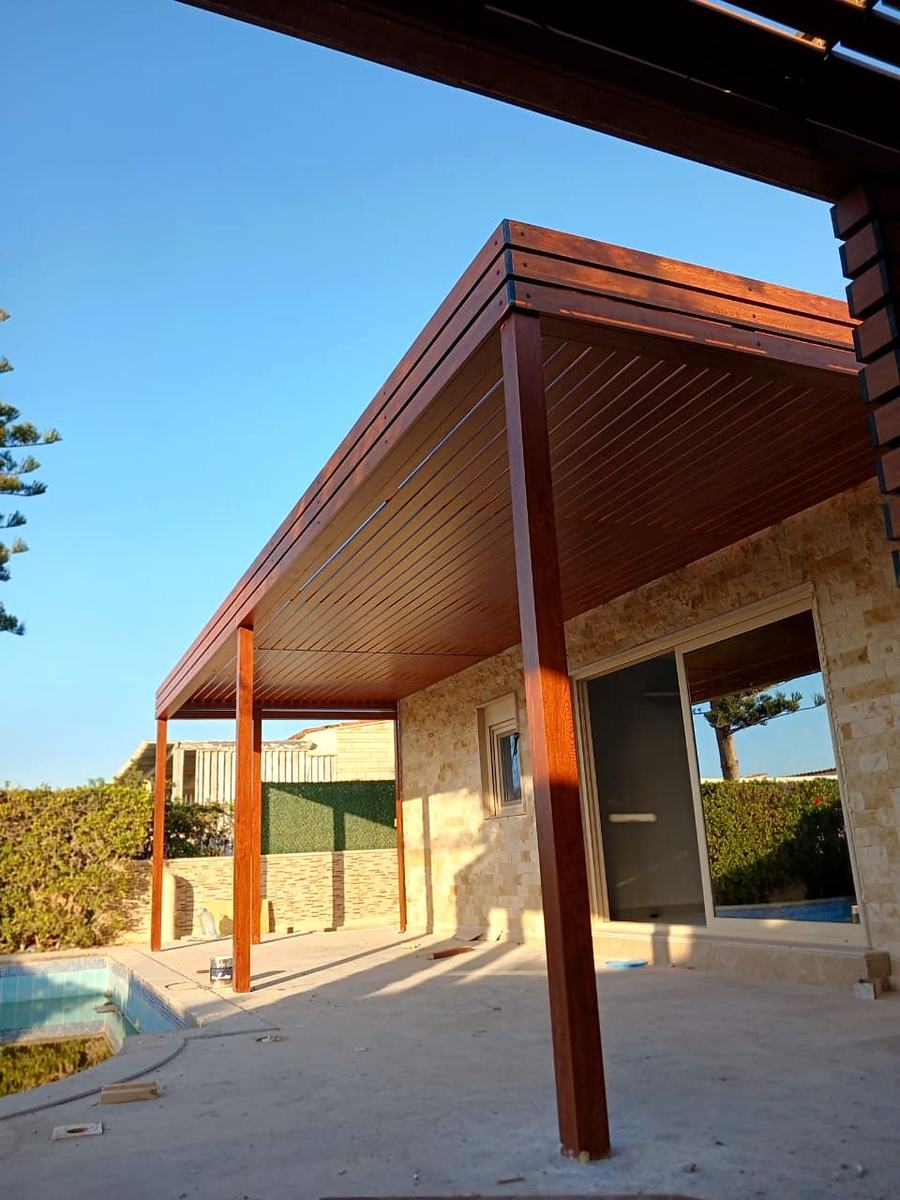
Pool Villa — Oak & Rattan
Exterior, pergola & interiors · Villa · In progress
View projectQuestions people ask
How do I finish a small bathroom in an older flat?
Can I renovate a bathroom without demolition?
My bathroom is leaking into the flat below. What do I do?
What does a super lux bathroom mean?
Should I do the bathroom and kitchen together?
How much does bathroom renovation cost in Alexandria?
Read next
Roof and bathroom waterproofing
Waterproofing is a layer nobody sees once the finishing is done, which is why its mistakes show late: a stain on the neighbour’s…
See more Guides · repairsDamp walls: find the cause first
Painting over damp hides it for a season, and then it comes back, usually worse. The fix depends on where the water comes from…
See more Finishing · by current stateRenovating older apartments
Older apartments in Alexandria have generous rooms, high ceilings and details that are hard to find today, and also wiring…
See more Areas · AlexandriaCeramic and porcelain tiles in Alexandria: choosing, supply and fitting
Choosing ceramic and porcelain tiles in Alexandria starts with the room itself: a damp bathroom, a balcony facing the sea or a…
See more Areas · AlexandriaKitchens in Alexandria: design, manufacture and installation
A kitchen in Alexandria lives with sea-air humidity, and many sit in older flats with narrow rooms and pipes and wiring that…
See more Finishing · by levelSuper lux finishing, fully specified
Super lux is the level many flats in Egypt are finished to, and the label people understand in the most different ways. Here is…
See more Supply · ShowroomOur marble and granite showroom in El Deresa
Stone is not chosen from a photograph. At our showroom in El Deresa, Alexandria, you see the stone in person, compare finishes…
See more Areas