Build & MEP
Solar Energy
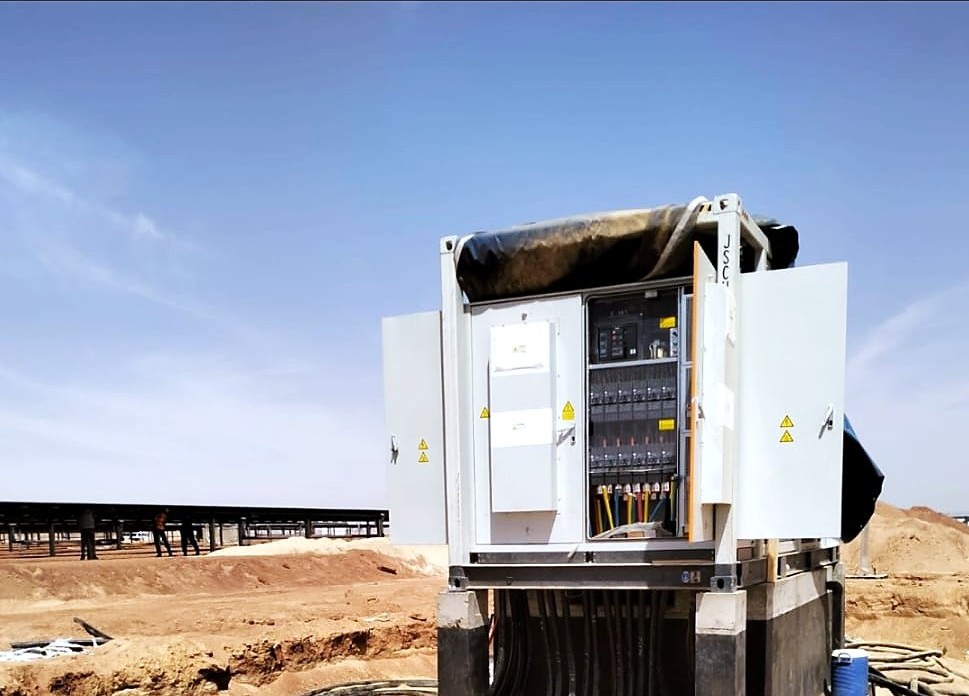
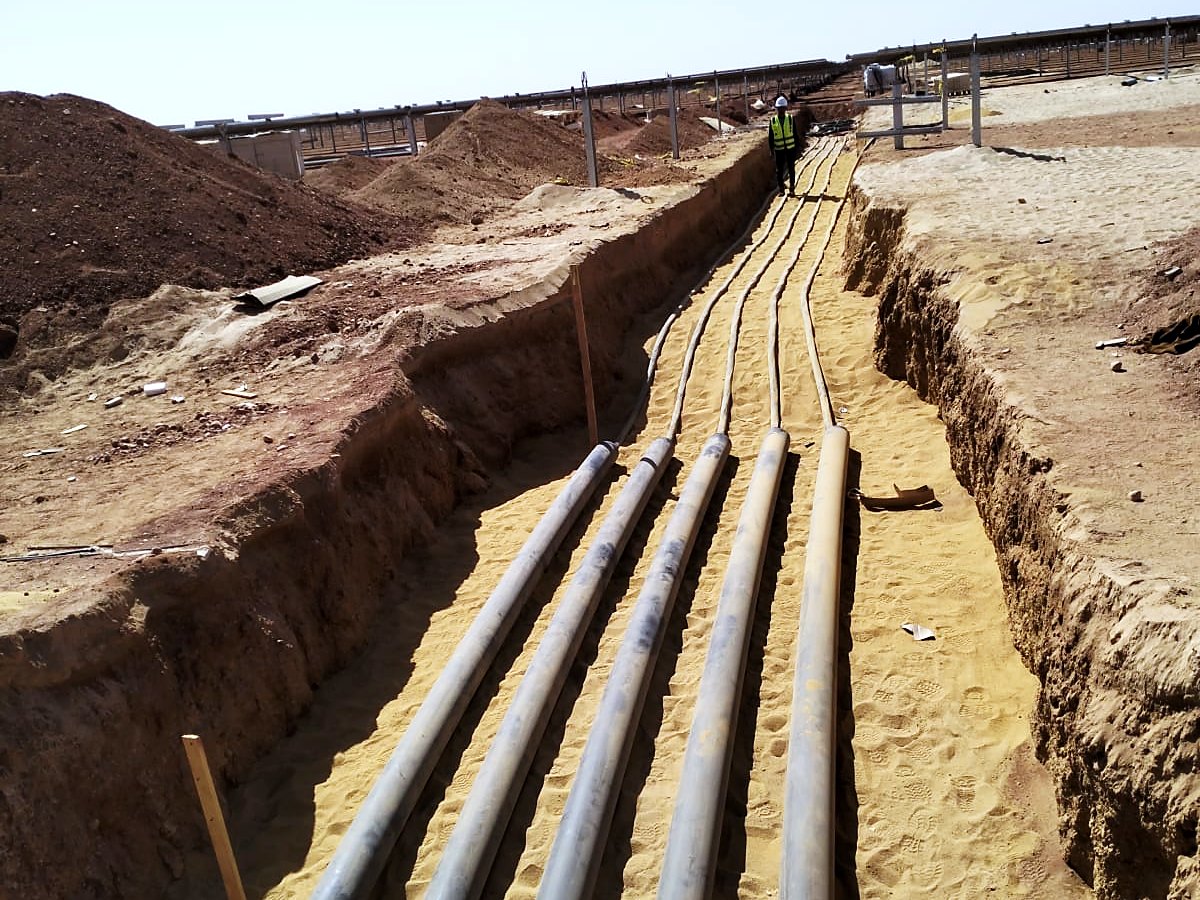
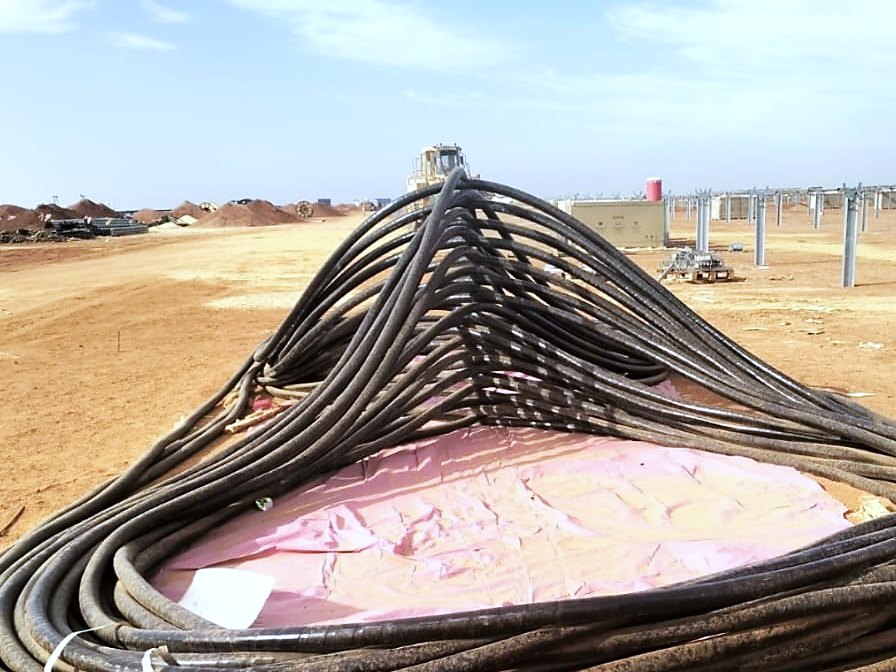
Egypt receives roughly 2,000 to 2,600 kWh of solar irradiation per square metre a year — around double what northern Europe gets, which is why payback here is counted in years rather than decades. We size and install rooftop systems on villas and chalets, and we build the plants out in the desert too: pile-driving the tracker rows, trenching the duct banks, pulling the DC trunk and standing up the inverter stations.
Scope of works
What we actually do.
Everything below happens inside our business — no subcontracted links in the chain.
- 01
Rooftop PV for villas & chalets
Monocrystalline modules on anodised aluminium rail, string or hybrid inverters sized to your roof and your consumption rather than to a brochure, DC and AC isolation, surge protection and monitoring you can read on a phone. Most New Cairo and Sheikh Zayed villas land between 8 and 20 kWp.
- 02
Utility-scale solar plants
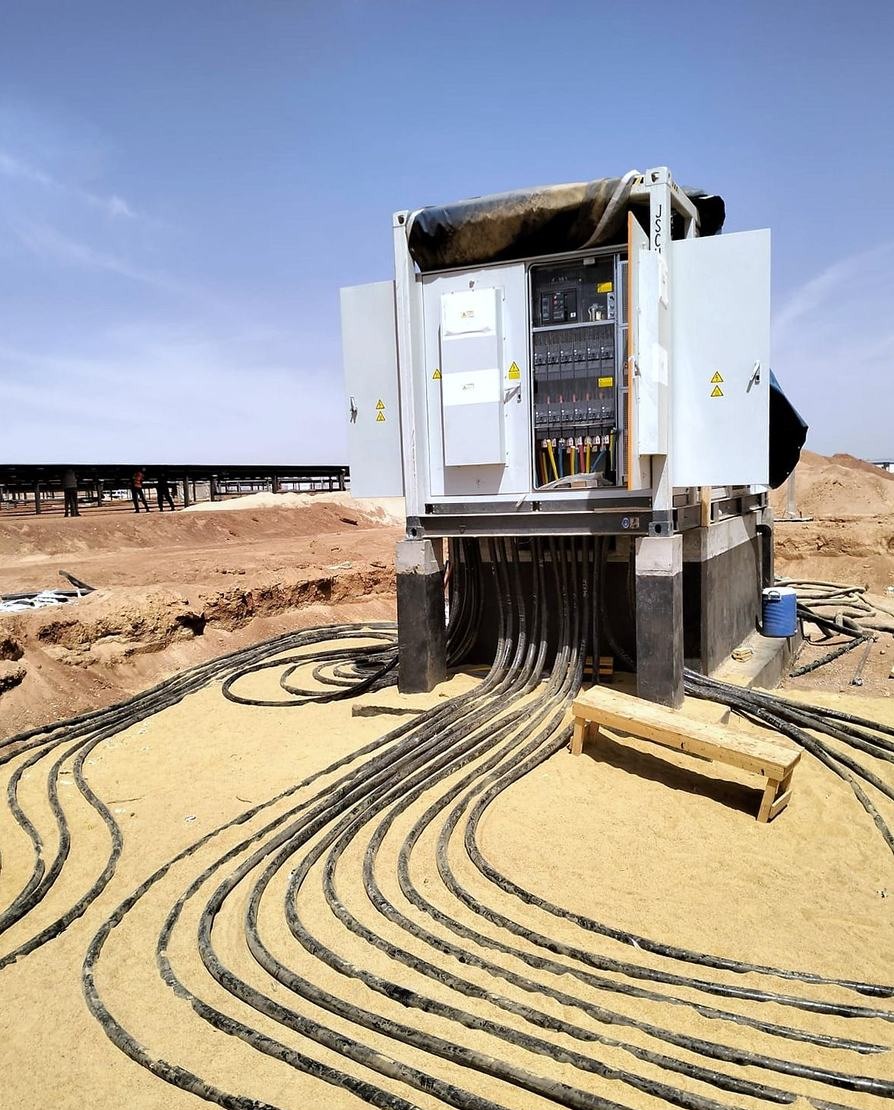
Pile-driven steel foundations for fixed-tilt and single-axis tracker rows, module mounting, trenching and duct banks, large-diameter DC cable pulls, combiner and string-inverter stations on cast concrete plinths, earthing grids and the MV interconnection.
- 03
Net metering & grid connection
Application through your distribution company, bi-directional meter, protection settings, single-line drawings and commissioning paperwork. We file where the property actually sits — anything past kilometre 66 on the Alexandria–Matrouh road is Beheira, not Alexandria, which catches out contractors who have never done a Sahel connection.
- 04
Solar water heating
Flat-plate and evacuated-tube collectors with 150–300 litre insulated cylinders, electric backup element and a thermostatic mixing valve. The cheapest solar you can buy in Egypt, because water heating is the largest single electrical load in most villas.
- 05
Battery storage & off-grid
LiFePO4 banks with hybrid inverters, automatic changeover and load prioritisation — sized either for the whole house or for essential circuits only. The right answer for a chalet at the end of a weak feeder or a farm with no reliable supply at all.
Specification
The numbers, before you ask.
| Modules | Monocrystalline PERC or TOPCon, 550–620 Wp, 25-year performance warranty |
|---|---|
| Inverters | String or hybrid, 5–100 kW, with DC surge protection and monitoring |
| Villa system size | 8–20 kWp typical; 25–60 kWp with pool plant and full HVAC |
| Mounting | Anodised aluminium rail, ballasted or chemically anchored; stainless fixings on the coast |
| Soiling loss | 5–12% a year uncleaned in the Western Desert; 2–4% cleaned monthly |
| Handover | Single-line diagram, string test results, monitoring login and an O&M schedule |
Selection
How we scope solar
Villa rooftop, grid-tiedNew Cairo · Sheikh Zayed
A system sized against twelve months of your real bills, wired to shave the expensive top consumption bracket first. Exported surplus credited under net metering.
Chalet hybrid with storageSahel
PV plus a battery so the fridge, the pumps and the alarm stay alive through a cut, with remote monitoring for the nine months nobody is there.
Solar water heatingRetrofit
The fastest payback in the catalogue. Collectors and a cylinder added to an existing house in two days, with the electric heater kept as backup for winter mornings.
Farm & off-grid pumpingDelta & desert
Direct-drive solar pumping with a variable-frequency drive, or a full off-grid set with battery and generator changeover where there is no usable feeder.
Utility-scale plant constructionContracting
Piling, trenching, duct banks, DC and AC cabling, inverter stations and earthing as a subcontract package, with our own rigs and cable-pulling crews.
Gallery
Solar Energy in place.
Every photograph on this page was taken on one of our sites during the work. Nothing here is a stock image or a render.
Where it goes
- Villa & chalet rooftops
- Carport & pergola PV
- Solar water heating
- Battery backup & off-grid
- Pool pump & irrigation circuits
- Utility-scale plant construction
- Trenching & duct banks
- Inverter & combiner stations
Projects featuring solar energy
Where we have used it.
Questions we get asked
Solar Energy — questions we get asked
How long does solar take to pay for itself in Egypt?
Does net metering actually work for a private home?
How much does dust cost me?
Do panels survive on the coast?
Do I need batteries?
Usually specified with