Guides · Quantity calculator
How much tile do you need? Work out m², tiles and cartons
The tile you buy is not the room’s area: there is wastage for cuts and breakage, and tile is sold by the carton, not the metre. Enter your room or bathroom in the calculator below to get the net area, the quantity to buy, and the number of tiles and cartons, as an estimate until the room is measured on site.
How tile quantity is worked out
What you buy is the net area plus a wastage allowance for cuts and breakage, rounded up to whole cartons. The net floor area is the inside length × width; for walls it is the room’s perimeter × the tiling height, less the doors.
Then divide that quantity by the area of one tile to get the number of tiles, or by the m² printed on the carton to get the number of cartons, always rounding up. Measure each room on its own and add them up, because wastage differs from room to room, and the reception and the bathroom may not take the same tile anyway.
Work out your tile quantity
Choose ‘floor’ or ‘walls’ and enter the length and width in metres. For walls, also enter the tiling height (it starts at 2.5 m) and the number of doors; each door takes off about 1.6 m². Then pick the tile size or type your own in centimetres, pick the wastage, and if you have the carton, type the m² printed on it.
Enter the length and width first.
Rough quantity
| Item | Rough quantity |
|---|
A first estimate. Measure each room on its own, buy everything from one batch (shade) and keep a few spare tiles for repairs.
You get the net area, the quantity to buy with wastage, the number of tiles, the number of cartons if you typed the m² per carton, and for a floor the length of skirting: the perimeter less about 90 cm per door. It is a first estimate; the final quantity comes after measuring on site. If you want to buy, send these quantities with the button and you get a written quotation for the supply.
Example: a 4 × 5 m room in 60 × 60 porcelain
A room 5 m long and 4 m wide with one door, laid in 60 × 60 porcelain in a straight pattern, with 10% wastage:
Net area
4 × 5 = 20 m².
Add wastage
20 × 1.10 = 22 m², the quantity you buy.
Number of tiles
One 60 × 60 tile is 0.36 m², and 22 ÷ 0.36 = 61.1, rounded up: 62 tiles.
Number of cartons
If a carton holds 1.44 m² (often four 60 × 60 tiles, but check what is printed on it): 22 ÷ 1.44 = 15.3, so 16 cartons.
Skirting
The perimeter is 2 × (4 + 5) = 18 m, less about 0.9 m for the door = 17.1 linear metres.
Sixteen cartons hold 64 tiles, slightly more than 62. That small surplus is normal because you cannot buy half a carton; keep the extra tiles for repairs.
Bathroom tiles: floor and walls
A bathroom is worked out twice, once for the floor and once for the walls, usually with two different tiles. Example: a 2 × 2.5 m bathroom with one door, tiled up to the false ceiling at about 2.5 m:
- Walls: 2 × (2 + 2.5) × 2.5 = 22.5 m², less 1.6 m² for the door = 20.9 m² net. With 10% wastage that is about 23 m², or 128 tiles of 30 × 60.
- Floor: 2 × 2.5 = 5 m². A bathroom is a small room with many cuts around the floor drain and the sanitaryware, so allow 15%: about 5.8 m², or 16 tiles of 60 × 60.
- Kitchen: the strip between the worktop and the wall cabinets is the worktop length × its height, often about 60 cm. A 4 m worktop needs about 2.4 m² before wastage.
In most Egyptian flats the bathroom walls are tiled up to the false ceiling, about 2.4 to 2.6 m, so enter your actual height. The calculator only takes off doors; if a wall has a large window or a stretch that will not be tiled, take its area off the result yourself.
Wastage: 5, 10 or 15%?
Wastage is what is lost to cuts, breakage and offcuts too small to use elsewhere. How much depends on the room’s shape, the laying pattern and the tile size:
| Wastage | When to choose it |
|---|---|
| 5% | A straight lay in a large, regular room, with few cuts at the edges |
| 10% | The normal case for most rooms and walls |
| 15% | A diagonal or herringbone lay, many cuts around columns and recesses, or a small room such as a bathroom |
Large tiles such as 60 × 120 and 80 × 80 waste more in small rooms, because each offcut is big and rarely fits anywhere else. When in doubt, take the higher figure: a spare carton is far easier than hunting for tiles from the same batch months later.
How big is one tile? Common sizes
One tile’s area = length × width in centimetres ÷ 10,000. These are the sizes in the calculator:
| Size (cm) | Area of one tile | Tiles per m², roughly | Common use |
|---|---|---|---|
| 60 × 60 | 0.36 m² | 2.8 | Room and reception floors |
| 60 × 120 | 0.72 m² | 1.4 | Large floors and feature walls |
| 80 × 80 | 0.64 m² | 1.6 | Receptions and open spaces |
| 30 × 60 | 0.18 m² | 5.6 | Bathroom and kitchen walls, sometimes floors |
| 25 × 40 | 0.10 m² | 10 | Bathroom and kitchen walls |
| 30 × 30 | 0.09 m² | 11.1 | Bathroom and balcony floors |
The m² in a carton is printed on it and varies with the size, the thickness and the maker. A carton of 60 × 60 often holds four tiles = 1.44 m², but read the carton before you count. If you only know how many tiles are in the carton, multiply that by the area of one tile.
Before you buy the tiles
- Measure each room on its own, sketch it with the dimensions, then add up.
- Buy the whole quantity at once and from one batch: tiles are made in production runs, and the shade and the exact size can differ between runs of the same design. The carton usually carries a shade code and a size code, so check that every carton shows the same ones.
- Keep a carton or two for repairs: if a tile cracks or the floor is opened to fix a pipe, the same batch may not be available later.
- If the skirting will be cut from the floor tiles, add its length to the order, and ask your tiler how many linear metres one tile gives.
- Adhesive and grout are worked out per m² for the tile type and size; the quantity per m² is in the product’s instructions.
- Large tiles need a properly flat floor and a tiler who has laid them before, so check both before you buy.
Send us the quantities: tile and porcelain supply
If your quantities are ready and you only need materials, supply-only is available: send the calculator’s result or your measurements with the tile size, the type (ceramic or porcelain) and the grade you want, and you get a written quotation for exactly what you sent, with adhesive and grout if you need them.
On a finishing contract we visit, measure every room and write the quantities into the quotation line by line. You pay each supplier directly at their price, with the tax invoice in your name, and our fee for supervision and execution is agreed in writing before work starts. We work in Alexandria, the North Coast and New Cairo / Fifth Settlement.
Departments for this
Tiles, Porcelain & Ceramics
Tile is a material people are perfectly happy to buy months before anybody lays it, and we sell it exactly that way — by the lot, on trade terms, with no fitting contract attached.
See more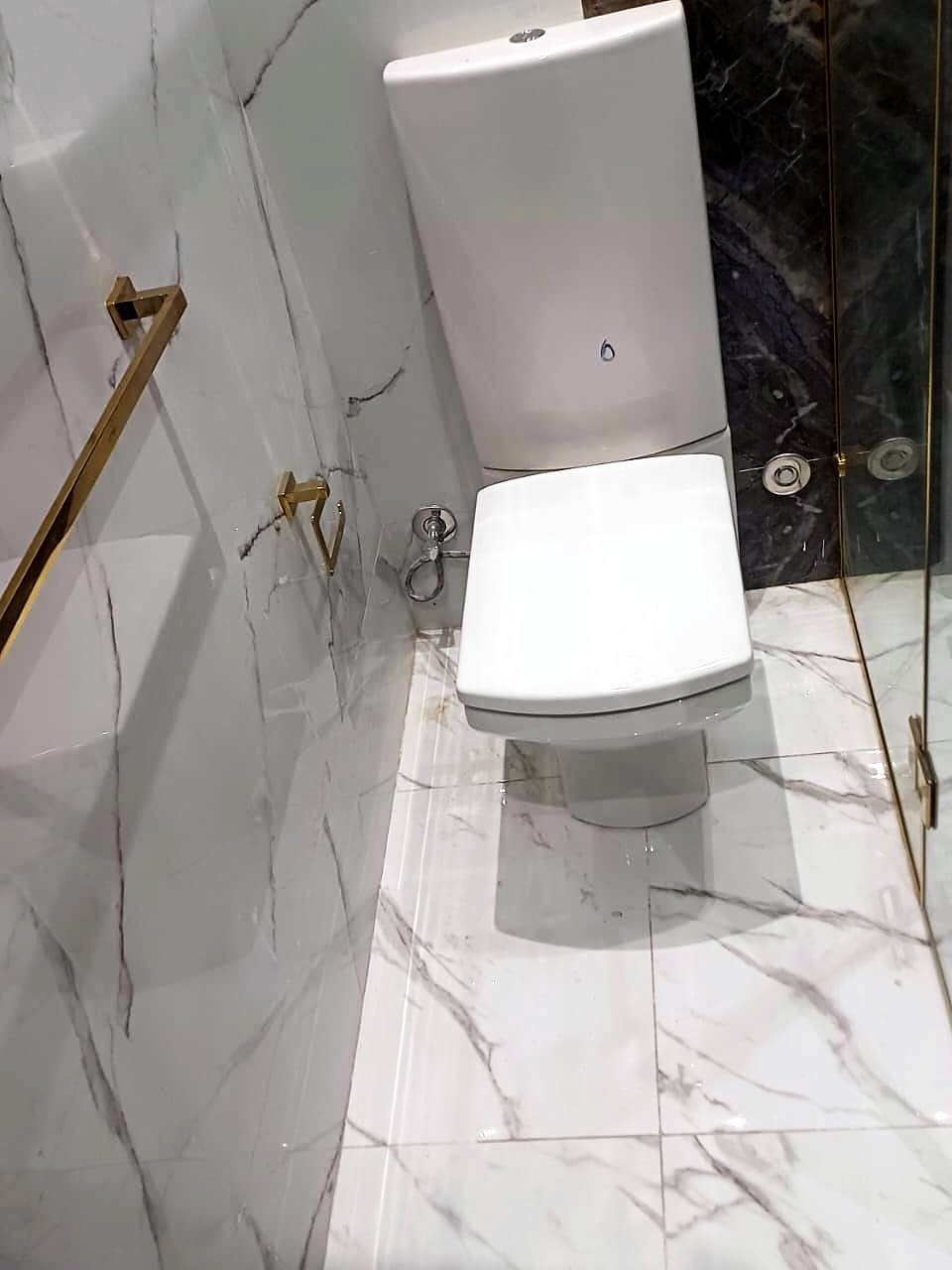
Bathrooms
Bathrooms are won and lost behind the tiles.
See moreMarble
We buy marble at the block, not off a photograph.
See moreWork we have done
Photo gallery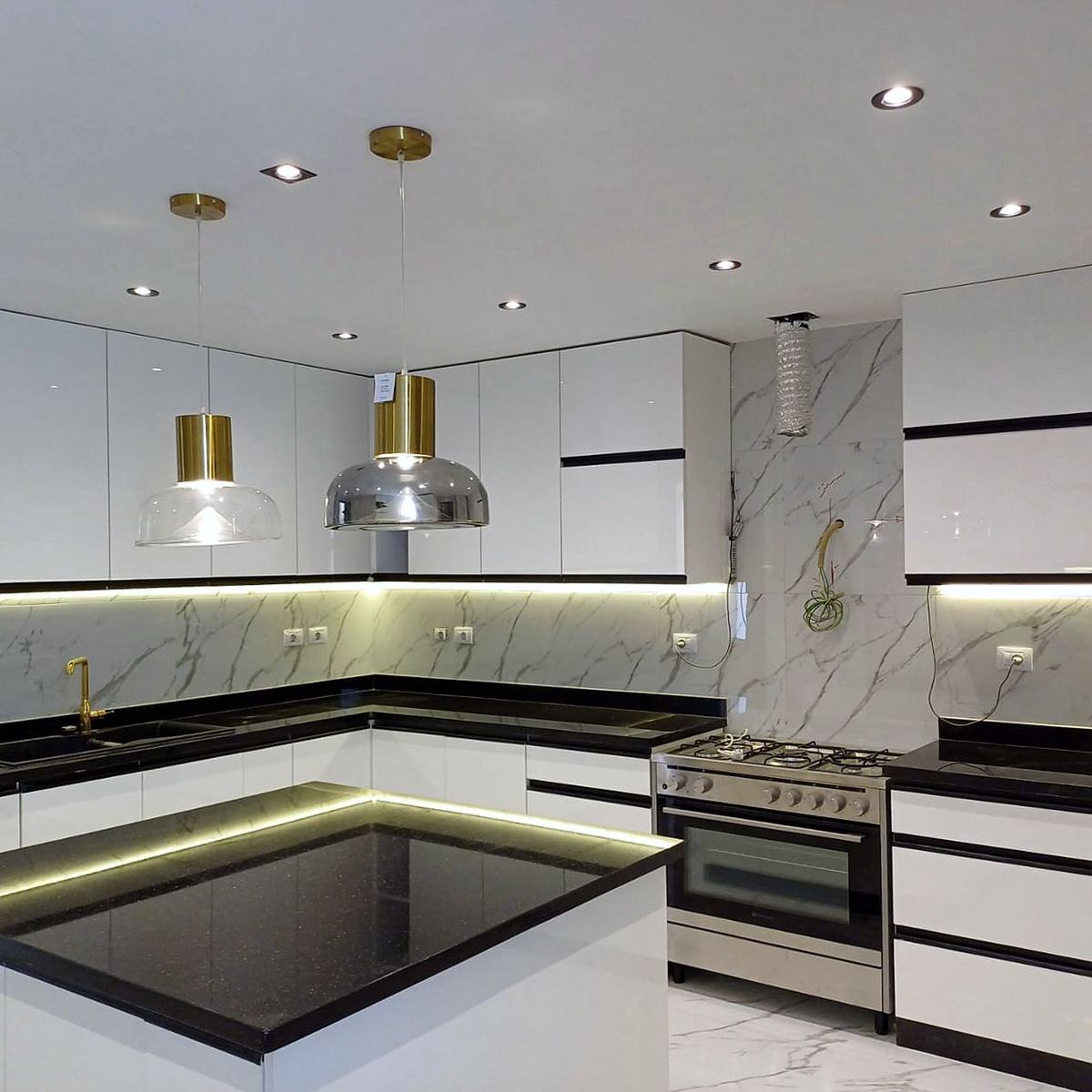
Sea-view Villa — Marble & Brass
Turnkey finishing · Villa · In progress
View project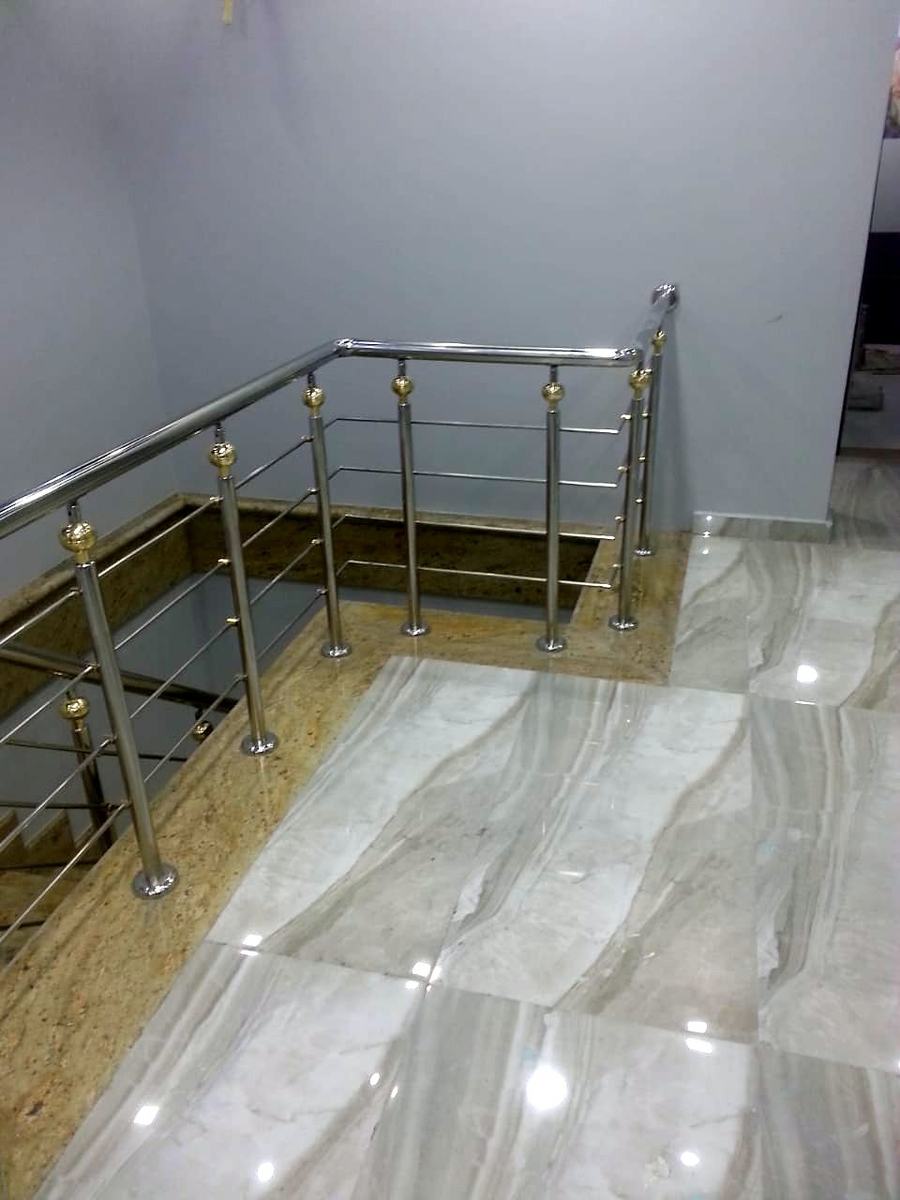
Entrance Lobby & Marble Stairwell
Lobby, stairs & balustrades · Residential building · Completed
View project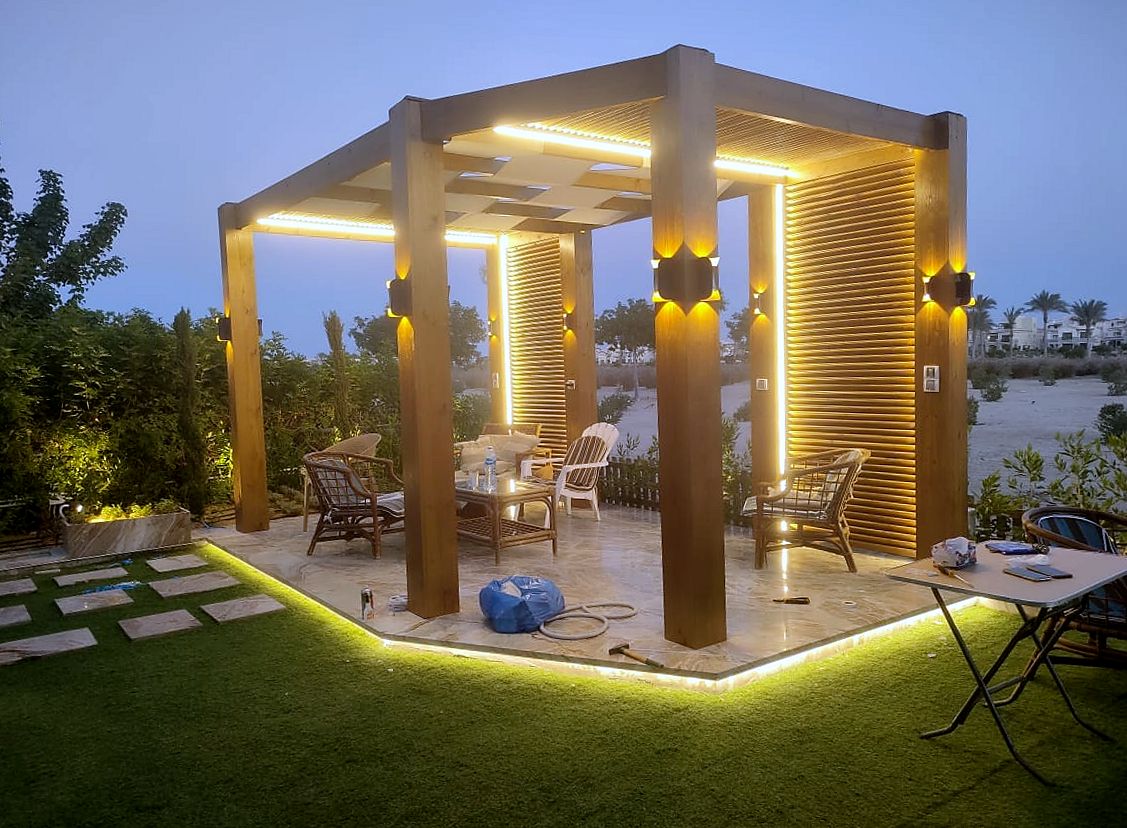
Garden Pergola & Landscape Lighting
Pergola, paving & lighting · Private garden · Completed
View projectQuestions people ask
How do I work out tiles for a floor?
How do I work out tiles for a bathroom?
How many m² are in a carton of tiles?
How much tile does a 100 m² flat need?
Why buy all the cartons at once?
Read next
Finishing cost by flat size: what scales and what doesn’t
‘How much to finish a 100 m² flat?’ has no honest answer until someone has seen the flat. This page gives you something more…
See more Guides · Quantity calculatorHow much paint do you need? Work out the litres
There is no fixed amount of paint per metre: it depends on the wall and ceiling area, the number of coats and the coverage…
See more Guides · materialsChoosing floors, room by room
Floors cover more of your home than any other finish, and they are the hardest thing to change later. Here is how porcelain…
See more Guides · Before you startThe finishing BOQ: every line that should be written down
A muqaysa, or bill of quantities, lists every job and material in your finish with its unit and specification. Read properly, it…
See more