Finishing · elements
Stone stairs and balustrades
The stair is the most walked-on part of a house and the place someone is most likely to trip. So the stone, the edge of each step and the balustrade are safety decisions before they are style decisions. Here are the materials, the details that matter and the right order of work.
Which stone takes a stair?
Granite is the hardest and the best fit for outdoor stairs and building stairwells, while Egyptian marble suits an indoor stair, provided the edge of each step has a finish or grooves that reduce slipping. Here is the comparison in detail:
| Material | Suits which stair | Watch for |
|---|---|---|
| Light Egyptian marble such as Galala, Sunny Menia and Triesta | Indoor stairs in villas and duplexes; it matches marble floors in the reception. | Softer than granite and marked by scratches and by acids such as lemon, vinegar and some cleaners. A polished face is slippery when wet, so it needs grooves or texture at the nosing. |
| Dark or strongly veined marble | Feature indoor stairs, or a border around a lighter stair. | Scratches and footprints show on dark polished colours, and strong veining has to be arranged before cutting so it runs on from one step to the next. |
| Granite such as Aswan Red, Gandola, Black Aswan and Halayeb | Outdoor stairs, villa entrances, building stairwells and any stair with heavy traffic. | Harder and less absorbent, but polished granite is slippery when wet, so flamed or bush-hammered finishes suit the outdoors better. |
| Marble with granite | Granite treads with marble risers, or a marble landing framed in granite. | Plan the two colours and the thickness of each piece before cutting, so there is no difference in level between the two stones. |
Before you choose, ask for a large sample in the finish that will actually be installed, polished or honed, and try it wet. Where you can, see the slabs themselves at the showroom, because colour and veining vary from block to block.
The step details that make the difference
The difference between a fine stair and a tiring one is usually in the small details, not in the stone alone:
- Tread and riser: the tread is the surface you step on; the riser is the vertical face of the step. Treads are usually cut thicker than risers because they carry the traffic, and they project slightly over the riser below.
- Nosing (the front edge): rounded or chamfered rather than left as a sharp arris, because it takes the knocks, and a sharp edge chips quickly and can cut.
- Anti-slip grooves: two or three machine-cut grooves near the nosing, or a strip with a rough finish. They are essential on outdoor stairs and in building stairwells.
- Skirting: cut from the same stone alongside the stair, either stepped with the treads or as one straight raking line, protecting the wall from shoes and mopping.
- Landings: cut from large slabs where possible to reduce joints; with veined marble, the veins can be book-matched like a mirror.
- Built-up edge: to make a step look thicker, a strip is bonded under the front of the tread with a 45-degree mitre, so it reads as one solid piece.
- Solid block steps: on some outdoor or feature stairs, a single solid block replaces the tread and riser. It is heavier and needs planning for handling and setting.
Order of work: from concrete to handover
A good stair is prepared before the stone arrives, because most stair problems come from the concrete and the levels, not from the marble.
Check the concrete
Inspect the concrete steps for cracks, broken edges and differences between one step and the next, and repair them before any cladding.
Fix the floor levels
Set the finished floor level at the bottom and the top of the stair before cutting. If the floor build-up changes afterwards, the first or last step ends up a different height from the rest, which is the most common cause of trips on stairs.
Measure every step
Concrete steps are rarely identical, so each one is measured on its own and the differences are taken up, so every finished step has the same height and depth.
First-fix lighting and balustrade
Run conduit for the stair lighting and set the positions and base plates of the balustrade posts in the concrete before the stone goes on, not after.
Cut and set
Pieces are cut to the measurements and bedded on mortar or a suitable adhesive that fills the whole back, because voids under a tread make it crack under load.
Protect until handover
Cover the finished stair with boards or heavy card, because the other trades will be carrying materials and tools up and down until the job ends.
Indoor, outdoor and building stairs
Each stair needs its own specification, because the traffic, the water and the sun differ in each case.
| Stair | Best stone | Finish | Notes |
|---|---|---|---|
| Indoor, villa or duplex | Marble or granite to match the floors | Polished or honed, with grooves or texture at the nosing | Coordinate with the floors, the balustrade and the lighting, and with a double-height space if there is one. |
| Outdoor or entrance | Usually granite | Flamed, bush-hammered or sandblasted | A slight fall on each tread so water does not stand on it, and corrosion-resistant metals near the sea. |
| Shared building stair | Granite or a hard marble | Honed, or with clear grooves | Daily traffic from many residents and furniture moves, so choose a colour that does not show dirt quickly, and light it on a motion sensor. |
Balustrades: iron, stainless or glass?
Choose a balustrade for safety first and looks second: the right height, gaps too narrow for a child to pass through, and posts fixed into the concrete itself, not only into the stone.
| Type | Strengths | Watch for |
|---|---|---|
| Wrought iron | Classic, with many patterns, made to measure. | Needs a good anti-rust paint system and upkeep at intervals; near the sea, hot-dip galvanise it before painting. |
| Stainless steel | Clean, modern and low-maintenance. | Near the sea, grade 316 is the better choice, because ordinary grades can show rust spots in salt air. |
| Toughened glass, with or without a handrail | Opens up the space and shows off the stone; suits modern interiors. | Safety glass, toughened and laminated, in a thickness calculated for the load; it needs regular cleaning of handprints. |
| Aluminium | Light, does not rust, and powder-coated in many colours. | Sections sized for the load and firm fixings; less suited to heavy classical designs. |
| Timber handrail | Warm to the hand, and matches the doors and joinery. | Affected by humidity and sun, so it is best kept to indoor stairs. |
Avoid horizontal rails that a child can climb like a ladder, and keep the handrail continuous from the first step to the last wherever you can.
Stair lighting
Stair lighting is for safety before decoration, and it is planned before the stone is cut, because some options need a recess or a channel in the stone itself.
- Small wall lights set low beside the steps, lighting the treads without dazzling you on the way down.
- A concealed LED strip under the tread nosing or inside the skirting, which needs a channel planned before cutting.
- Two-way switching at the top and the bottom, so the light can be turned on and off from either end.
- In a building stairwell, a motion sensor or a timer, so the lights do not burn all night and nobody climbs in the dark.
- The driver placed where it can be reached for maintenance, not buried behind stone.
Itmam and stairs
We visit, measure every step and give you a written, itemised quotation before work starts: the stone, its thickness and finish, the nosing and grooves, the skirting and landings, and the balustrade type and how it is fixed.
The stone is templated, cut and installed by the same team, and balustrades and other metalwork are made in our own workshops. You can choose from a catalogue of 94 Egyptian stones — marble, granite, quartz and onyx — or visit the showroom in El Deresa, Alexandria. Supply-only is available if you have your own installer.
On the North Coast we hold to the specification we write for the sea: 316 stainless steel, hot-dip galvanised steel and marine-grade hardware. On a finishing contract you pay each supplier directly and the tax invoice is in your name; our fee for supervision and execution is agreed in writing before we begin.
Departments for this
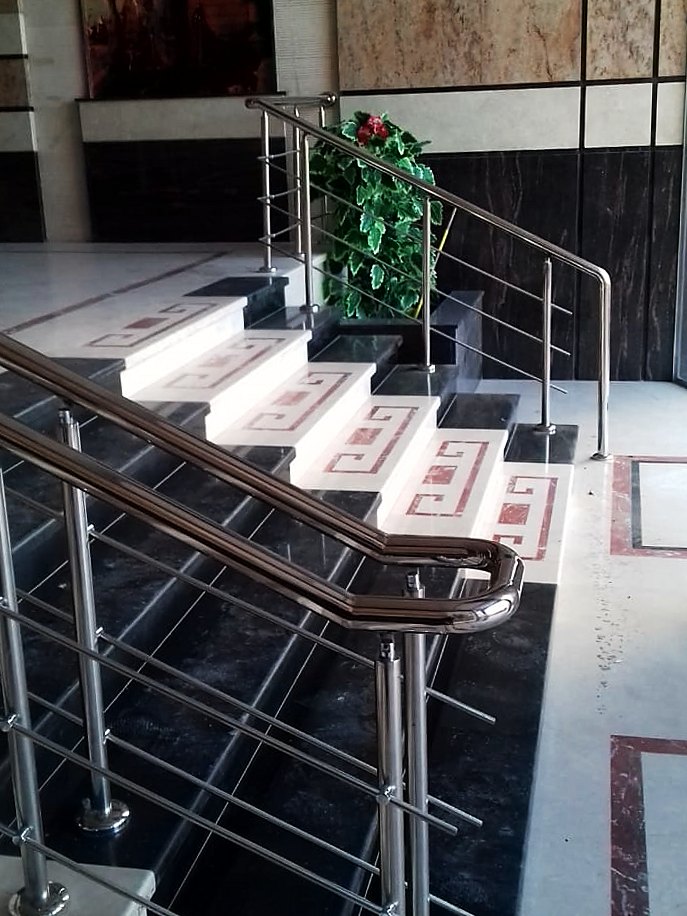
Marble
We buy marble at the block, not off a photograph.
See more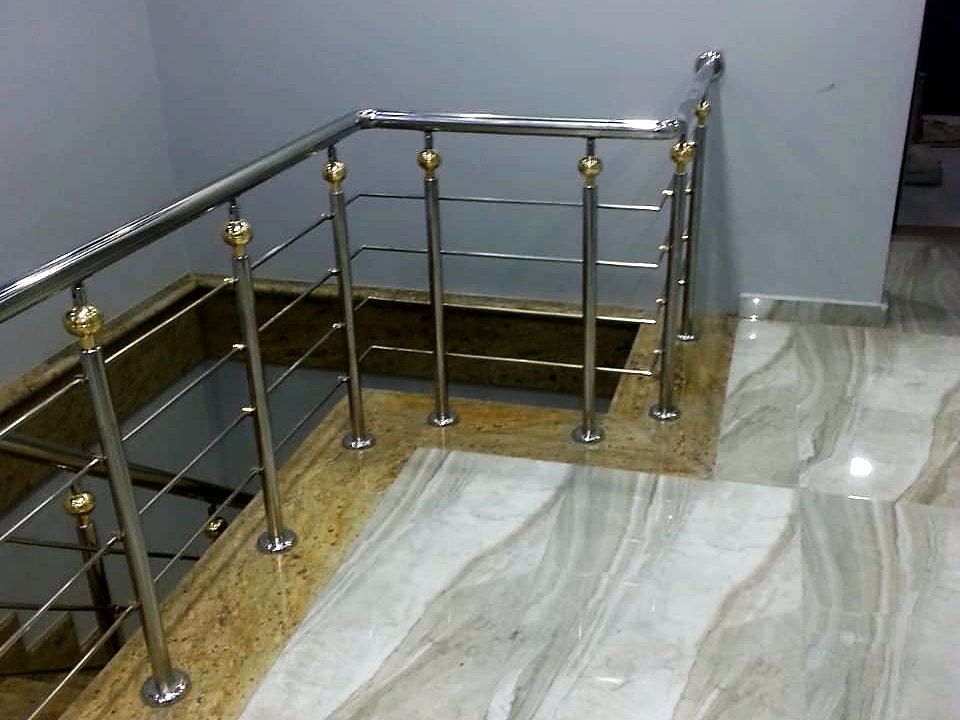
Granite
Granite is the stone you specify when a surface has to survive people.
See more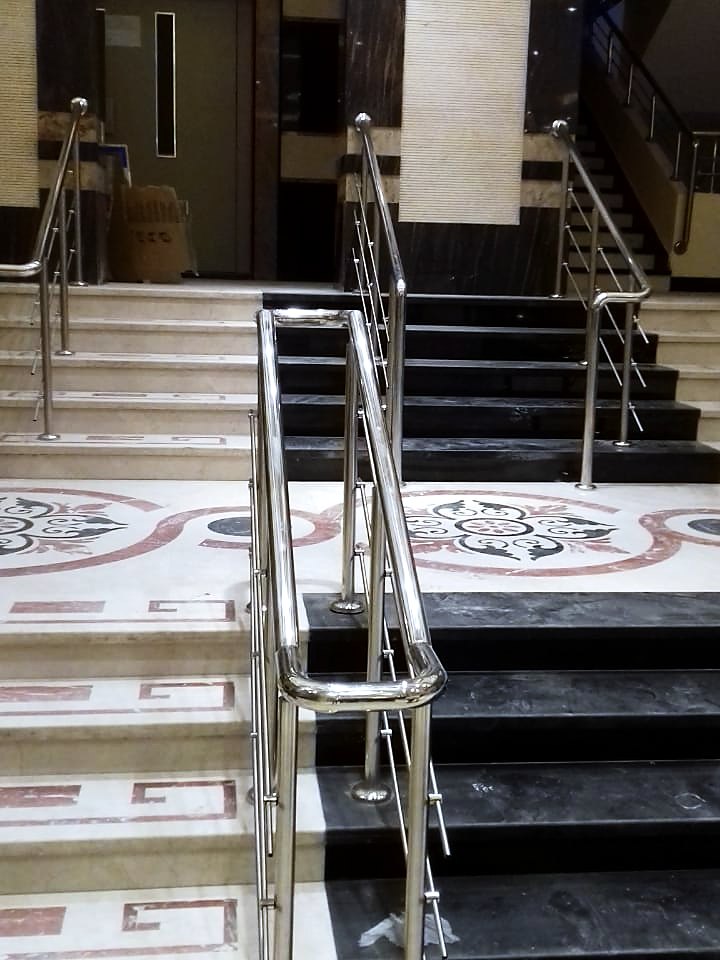
Steel & Ironwork
Metalwork is where a house gets its lines.
See more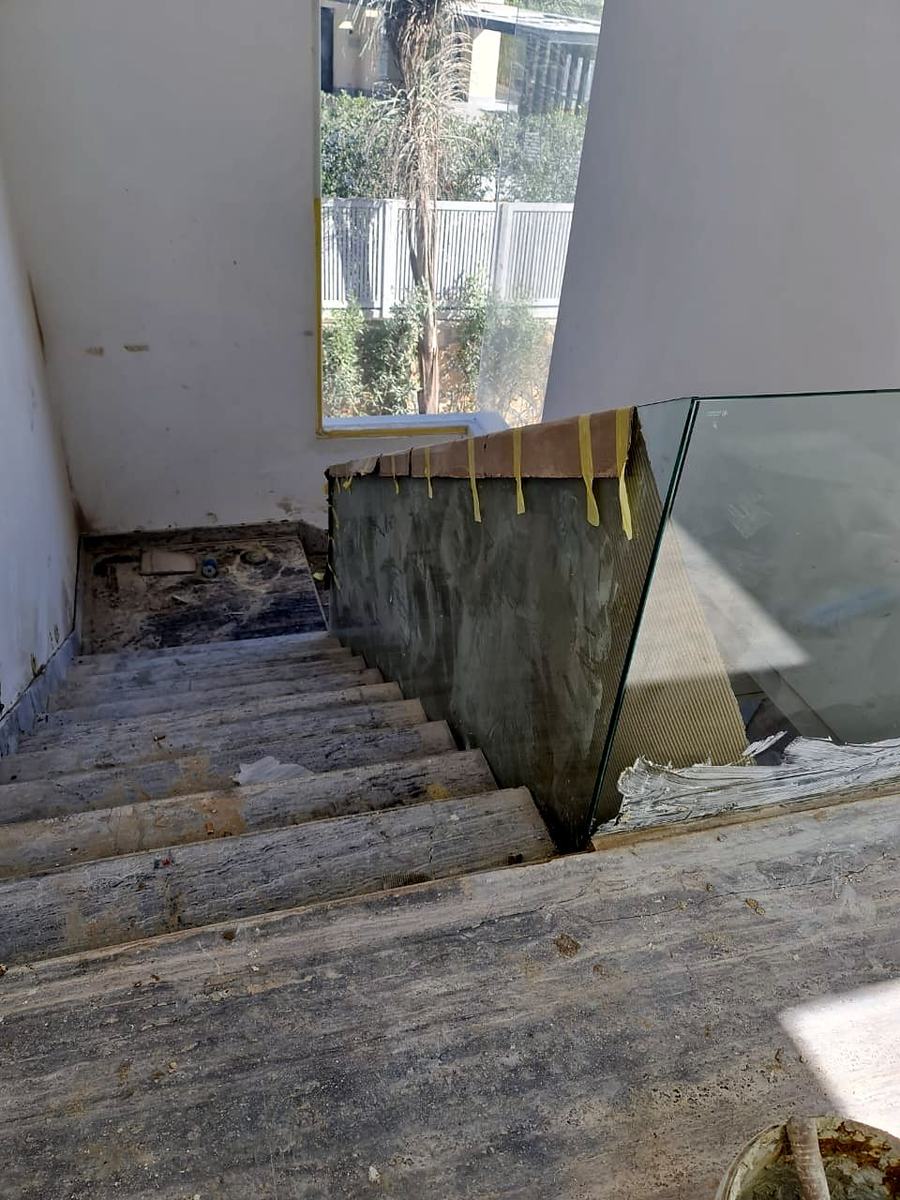
Aluminium & Glass Works
Glass is unforgiving.
See more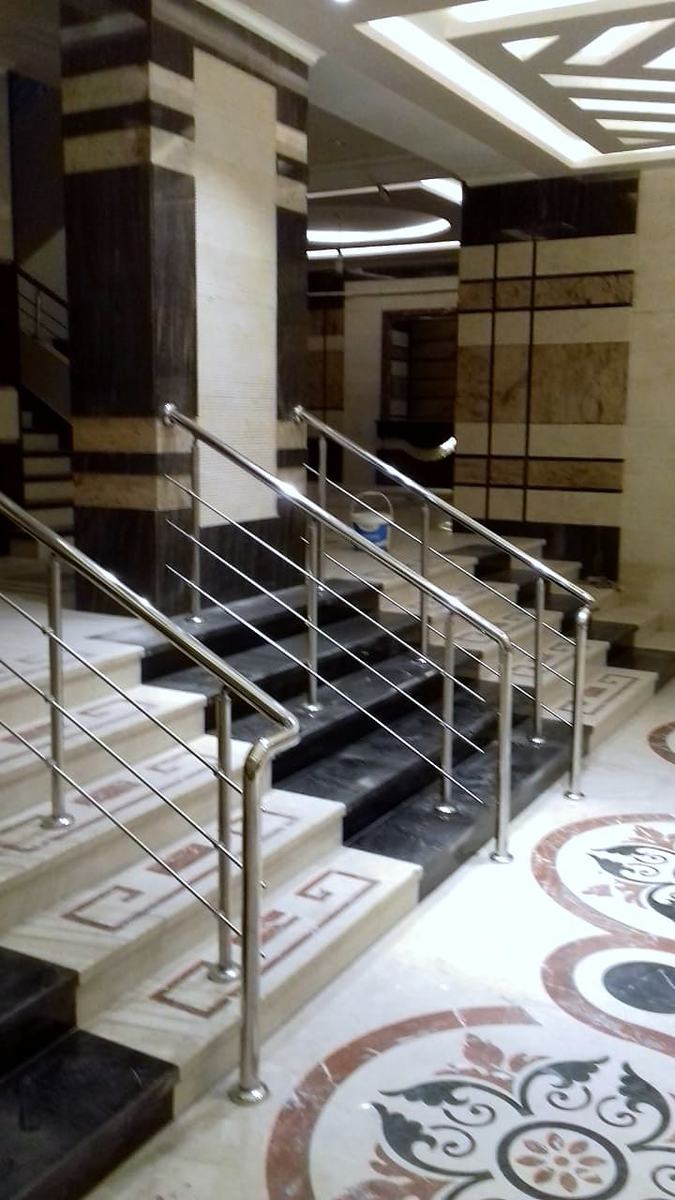
Questions people ask
What’s the best marble for stairs?
Are marble stairs slippery?
Is granite better for outdoor steps?
Stainless or wrought-iron balustrade?
Can stair marble be replaced without breaking the concrete?
How is the cost of a marble stair worked out?
Read next
Duplex finishing
A duplex is a home on two floors, and what really changes in the finishing is not the area. It is the stair, the double-height…
See more Finishing · by propertyVilla finishing, inside and out
A villa is not a large apartment. It has several floors, a stair, a roof, a façade and a garden, and all of them need planning…
See more Finishing · by propertyBuilding finishing, from lobby to roof
Finishing a building is not finishing one flat multiplied by the number of floors. There are shared areas every resident uses…
See more Finishing · exteriorsVilla façades
The façade is the first thing anyone sees of a villa, and the part that faces the sun, rain and salt every day. Here are the…
See more Guides · materialsEgyptian marble, type by type
Egypt quarries many marbles, and most of them are beige, but they are not interchangeable. Here is what the main types look…
See more Guides · MaterialsMarble, granite or quartz?
All three look beautiful on the first day. The difference shows years later, in a kitchen with lemons, on a stair with sand on…
See more Decoration · by styleHidden lighting: plan it before the gypsum
Hidden lighting is decided at the electrical first fix and built into the gypsum board. Planned in layers, in the right colour…
See more Supply