Areas · Alexandria
AC installation in Alexandria: first fix, installation and commissioning
Installing air conditioning in Alexandria means dealing with salty sea air, high humidity all year round, and older buildings whose wiring was never sized for today’s appliances. Here is how air conditioning is first-fixed before the gypsum and paint, how split and concealed units differ, what decides a unit’s capacity, where the outdoor unit should go, and how to check the work and look after the system.
First-fixing air conditioning during finishing, before gypsum and paint
Air conditioning is first-fixed before the gypsum, plaster and paint, because the copper pipes, drains and power disappear inside walls and ceilings, and any change afterwards means breaking out and repainting.
Positions first
The positions of the indoor and outdoor units, the pipe and drain routes and the power point for each unit are marked on the drawing and on the wall. An indoor unit should not blow straight onto a bed or sofa or be blocked by a curtain or wardrobe, and its air should be thrown along the length of the room.
Type and capacity before the first fix
Even if you will buy the units later, decide the type and approximate capacity for each room now, because the copper pipe sizes and the maximum route length vary from one unit to another under the maker’s instructions.
Copper pipes
Two copper lines for each indoor unit, each with its own insulation, inside the wall or in a gypsum board bulkhead, on the shortest route with the fewest bends, with the interconnecting cable in conduit. The ends stay capped until installation day, and the pipes are pressure tested and vacuumed before the refrigerant is charged.
The drain line
An insulated drain pipe with a fall of at least 1:100, that is 1 cm in every metre, ending at a real outlet: a floor drain or a drain stack with a trap, never a ceiling void or open air.
A circuit for every unit
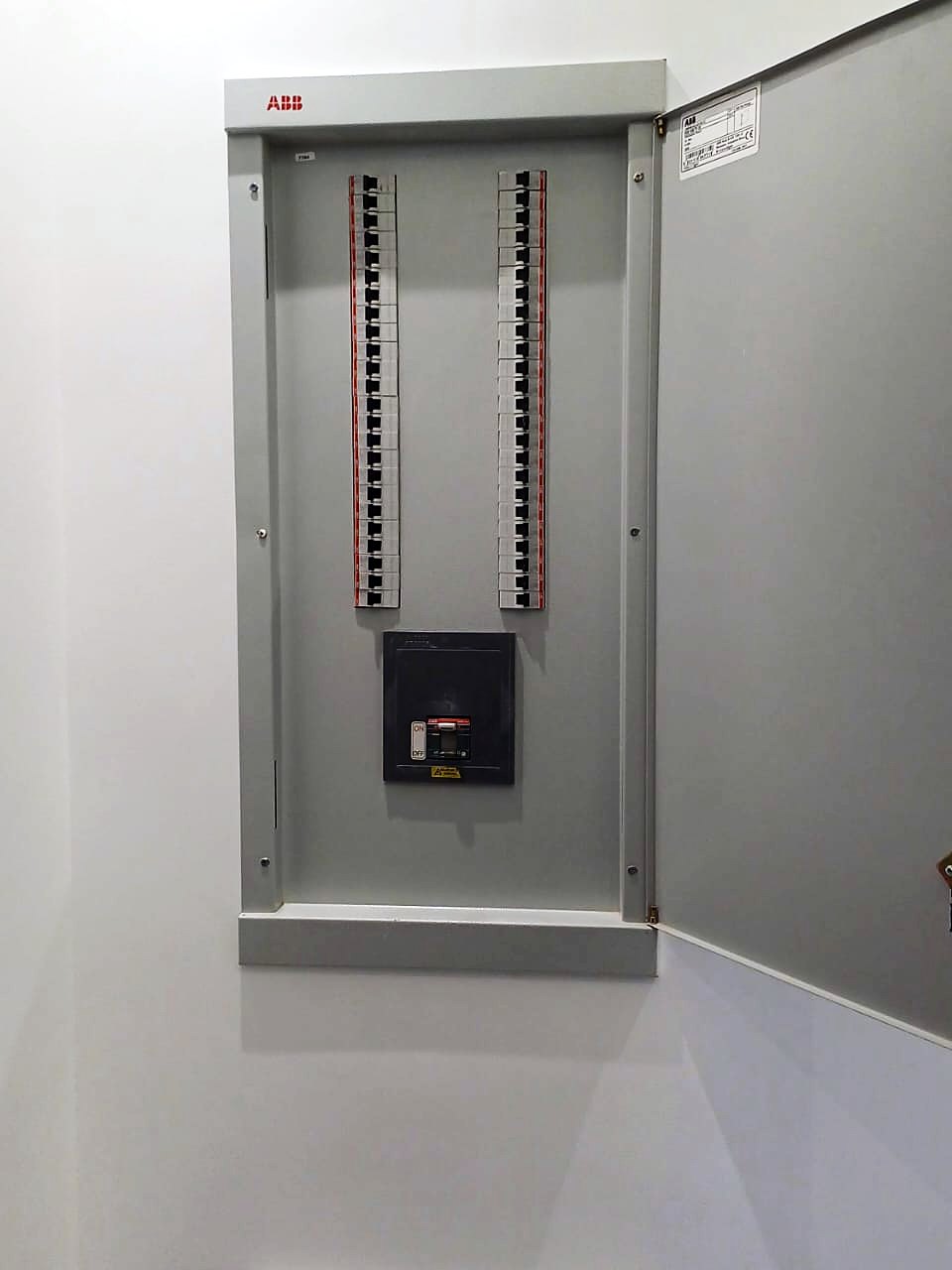
A dedicated circuit from the board for each unit, with its own labelled breaker, cable sized for the unit’s rating and the length of the run, and a power point next to the unit, not a spur off the nearest socket.
Gypsum and paint, then the units
Then the gypsum is closed and the walls painted, and the units go in at the end, away from sanding dust. Concealed units get an access hatch at every unit.
Split or concealed air conditioning?
A split unit is simpler to install, service and replace; a concealed ducted unit is invisible in the room and quieter, but needs the ceiling coordinated from the first drawing.
| Item | Wall-mounted split | Concealed ducted |
|---|---|---|
| Look | A visible unit on the wall in every room | Only linear or square grilles in the ceiling |
| Ceiling | No suspended ceiling needed | Needs depth in the suspended ceiling, coordinated with lighting and beams from the start |
| Servicing | The filter is within reach, and replacing one unit leaves the rest alone | An access hatch at every unit, and the filter is cleaned through it |
| Control | Each room at its own temperature | Rooms served by one unit usually share one temperature |
| Best for | Existing flats, room-by-room control, and fitting into a finished flat | Receptions and rooms where you do not want a visible unit, in a flat being finished |
You can mix the two: concealed in the reception, splits in the bedrooms. With a multi-split, one outdoor unit serves several indoor units.
Choosing the capacity: the room, its orientation and the sun
A unit’s capacity is worked out for the room itself, not from its floor area alone, so two rooms of the same size can need different capacities.
- Orientation and sun: a west-facing room takes the afternoon sun, large glazing facing the sun adds load, and double or solar-control glazing reduces it.
- The floor: a top-floor flat under the roof gets hotter, especially if the roof is not thermally insulated.
- Height: the high ceilings of older Alexandria buildings mean more air to cool.
- Use: how many people are usually there, appliances that give off heat, and a kitchen open to the reception.
- Bigger is not better: an oversized unit cools quickly and switches off before it has removed the moisture, leaving the room cold and clammy at the same time, which you notice in Alexandria’s humidity. An undersized one runs all the time and never reaches the set temperature.
So we calculate the load for each room and tell you what capacity we arrived at and why, instead of picking a size from an area chart.
The outdoor unit: sea air, the façade and condensate
The outdoor unit is the first thing to suffer near the sea, and the first thing neighbours complain about if it is badly fixed or drained.
- Sea air: near the Corniche, salt eats the coil fins and the fixings, so we write anti-corrosion coated coils and stainless fixings into the quotation. If you are buying the unit yourself, ask the supplier about coastal protection for the coil before you buy.
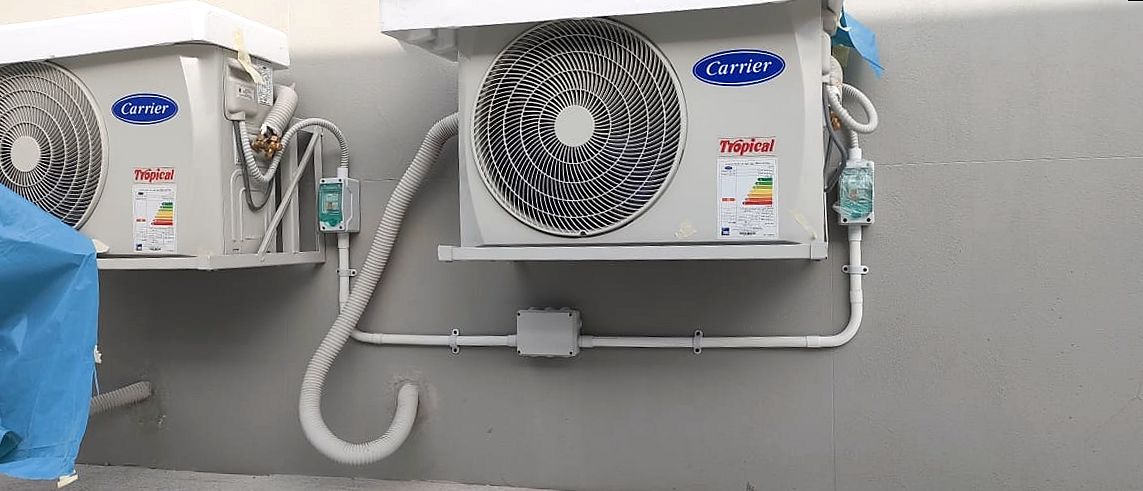
- Brackets: galvanised or stainless and rated for the unit’s weight, fixed into concrete or brickwork, not plaster, with stainless bolts, anti-vibration rubber pads, and clearance around the unit for airflow.
- The façade: many buildings have rules on where outdoor units go, in the light well, on the roof or on a service balcony rather than the main façade, so ask the building management or the owners’ association before the first fix. The pipes run inside the wall, not clipped across the façade.
- Narrow light wells: an outdoor unit in a narrow, enclosed light well draws its own hot air back in and cools less, so check the clearance the unit’s instructions ask for.
- Condensate: it must not drip onto the neighbours’ balcony or the pavement. The drain line runs to the balcony floor drain or to the drain stack with a trap, and where there is no natural fall, a small condensate pump is fitted with the unit.
Electrics in older buildings: can they take the air conditioning?
Test the electrics before adding any air conditioning to an older building, because a lot of Alexandria wiring is still aluminium, on boards extended again and again.
- Aluminium wiring and old joints heat up under the steady load of air conditioning, especially with coastal humidity at the terminations; replacing them is a safety job first and a convenience second. And never run air conditioning off an extension lead or a shared socket.
- An earth-leakage breaker and a sound earth, which many older buildings lack.
- The meter’s capacity: add up the load of every unit, the water heater and the kitchen before you buy, because increasing the supply needs an application to the electricity company and takes time.
- With us, we open the board, test it and give you a written finding, and if replacing part of the wiring is genuinely enough, we tell you so.
How to check the installation at handover
Do not sign for the handover until every unit has run in front of you, its drain has been tested and its readings written down.
Pressure test and vacuum
Ask when the pipes were pressure tested and vacuumed before the refrigerant was charged, and ask for it to be recorded.
Running and readings
Run every unit on cooling: the air should be strong and even, and the temperature difference between the air going into the unit and the air coming out is measured and written on the handover sheet with the refrigerant charge.
Drain test
Water is poured into the indoor unit’s tray and followed to the end of the line, with no dripping from the unit.
Insulation and openings
Insulation runs the full length of both copper lines up to the unit, no bare copper shows outside, and the hole where the pipes pass through the wall is sealed against rain.
Outdoor unit and board
The outdoor unit is level and firm, with no vibration carried into the wall, the breaker is labelled on the board, and there is an access hatch at every concealed unit.
Air conditioning maintenance: what does it really involve?
Most routine care is simple: clean filters, an outdoor unit rinsed of salt, a clear drain and a check before summer.
- Filters: wash them regularly during the cooling season as the unit’s manual says, and more often in homes near the sea or with a lot of dust. A clogged filter weakens cooling and raises consumption.
- Outdoor unit: rinse it with fresh water from time to time with the power off, without a high-pressure jet that bends the fins, and check the brackets for rust.
- The drain: if the indoor unit drips, the line is blocked or its fall is wrong, and it needs clearing or correcting.
- Before summer: a qualified technician checks the refrigerant pressure, the connections and the fan, and cleans the coils, before the rush for appointments.
- Refrigerant is not used up: a unit that needs recharging has a leak, and the right fix is to find and repair the leak before recharging.
- Switch the unit off and call a technician if ice forms on the pipes, it gets loud, the breaker trips, or there is a burning smell.
Our air conditioning work is the first fix, installation and commissioning, in a flat being finished or one already finished. If your system’s problem comes from the installation itself, such as a drain with no fall or an overloaded circuit, that is installation work: we survey it and write you a quotation.
Itmam and air conditioning in Alexandria
Itmam is a finishing, decoration and supply company from Alexandria: head office in El Ibrahimya, marble and granite showroom in El Deresa, Moharram Bey. We first-fix air conditioning together with the electrics and gypsum board under the same finishing contract, so routes and access hatches are coordinated before the ceiling closes, and we hand over the commissioning readings in writing.
We visit, measure and give you a written, itemised quotation before work starts. On a finishing contract you pay each supplier directly at their price, and the tax invoice is in your name; our management fee for supervision and execution is agreed in writing before we begin, and we add nothing to the price of materials. If you only need electrical materials, supply-only is available.
Itmam was founded in 2016, with 20+ years in the trade. Call or WhatsApp us on +20 106 926 2572, Saturday to Thursday, 09:00 to 18:00.
Departments for this
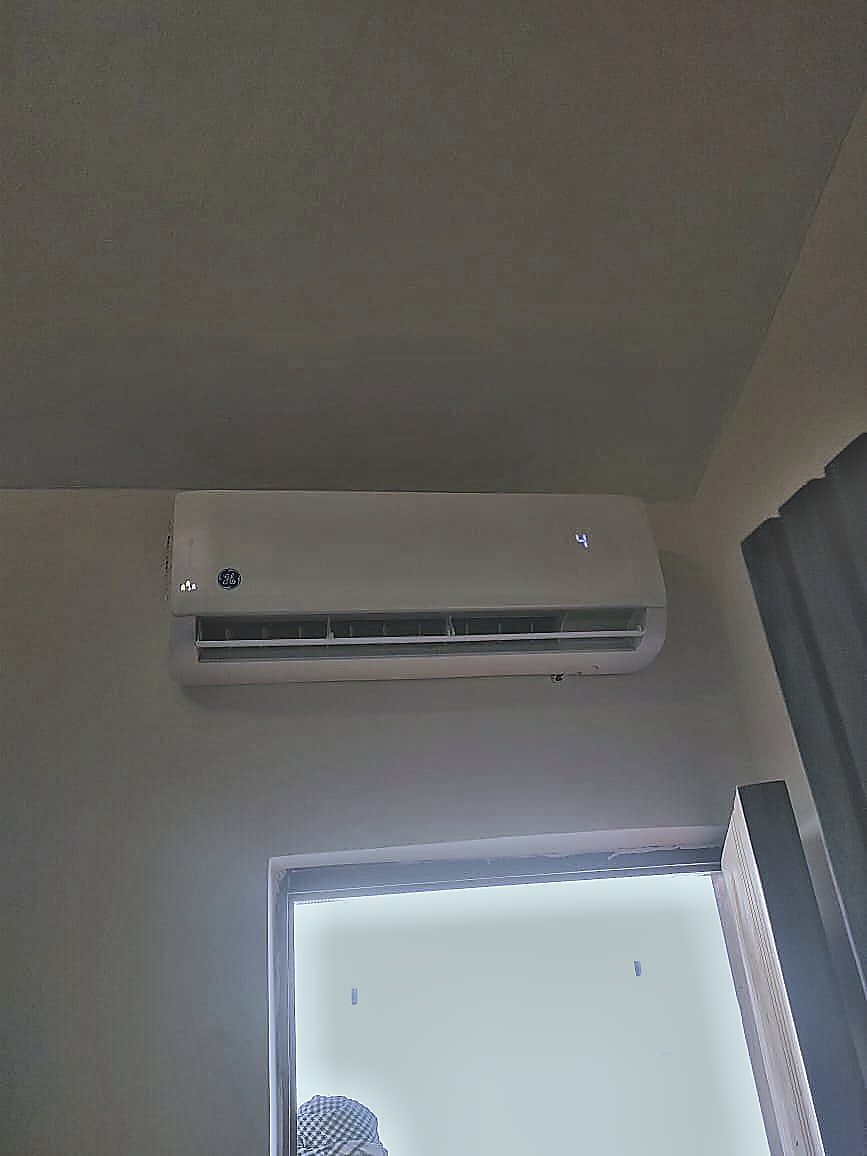
Air Conditioning & Ventilation
Air conditioning is the system nobody thinks about until it fails, and then it fails visibly: a brown stain spreading across a new gypsum ceiling, a bedroom that never gets cold because the unit was chosen from a catalogue, an outdoor condenser eaten through by three seasons of salt.
See moreElectrical & Smart Home
Electrics are invisible until they are a problem.
See moreGypsum & Decorative Ceilings
The ceiling is where lighting, air conditioning and joinery all arrive at the same plane, which is why it is the first thing an eye catches when something is out.
See moreWork we have done
Photo gallery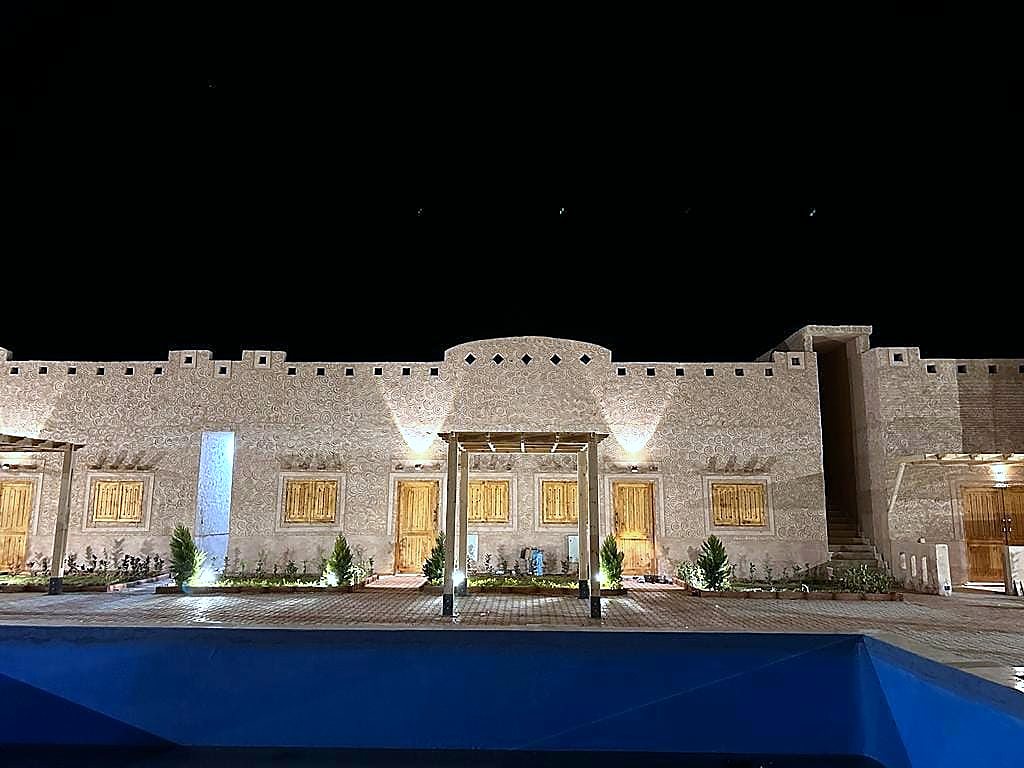
El Moghra
Turnkey build & finish · Desert lodge · Completed
View project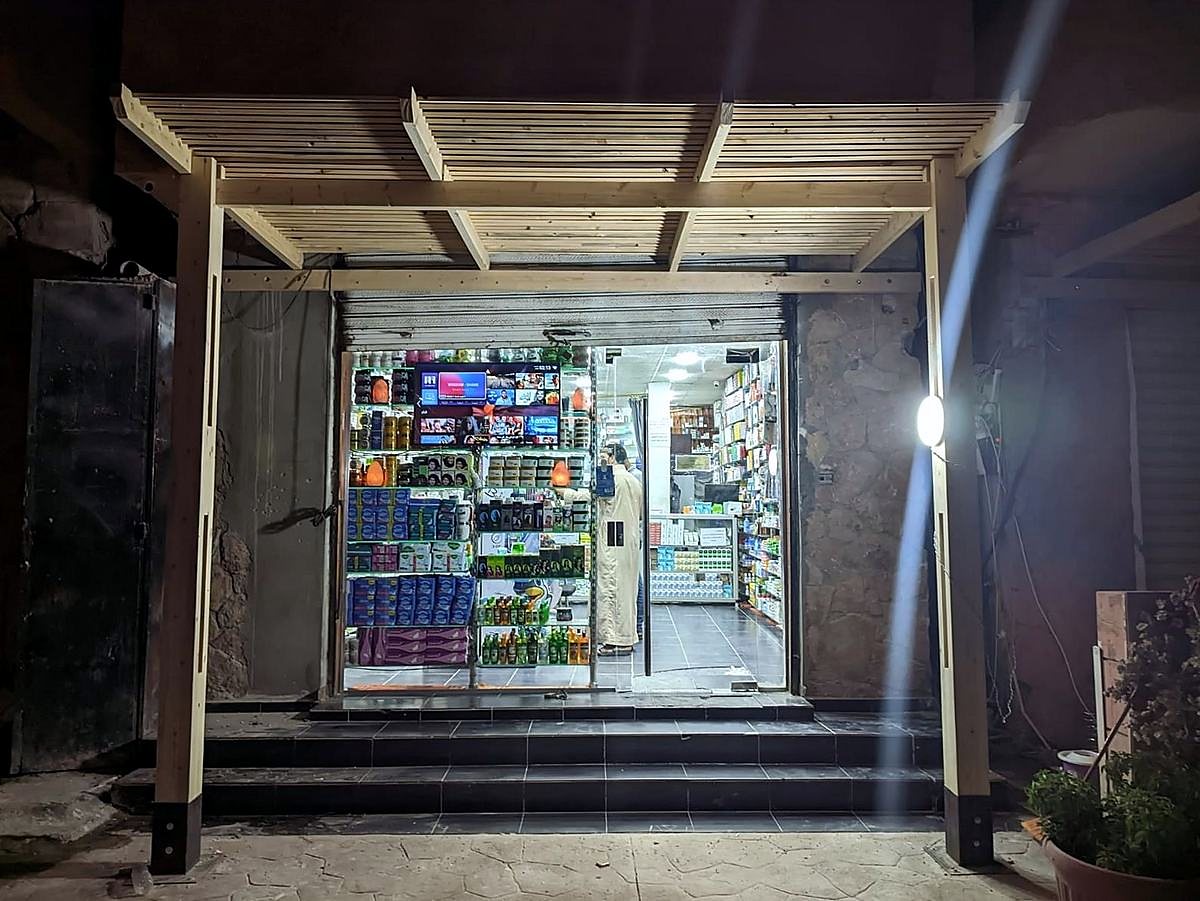
Market Street, Siwa
Façades, pergolas & shopfronts · A street of shops · Completed
View project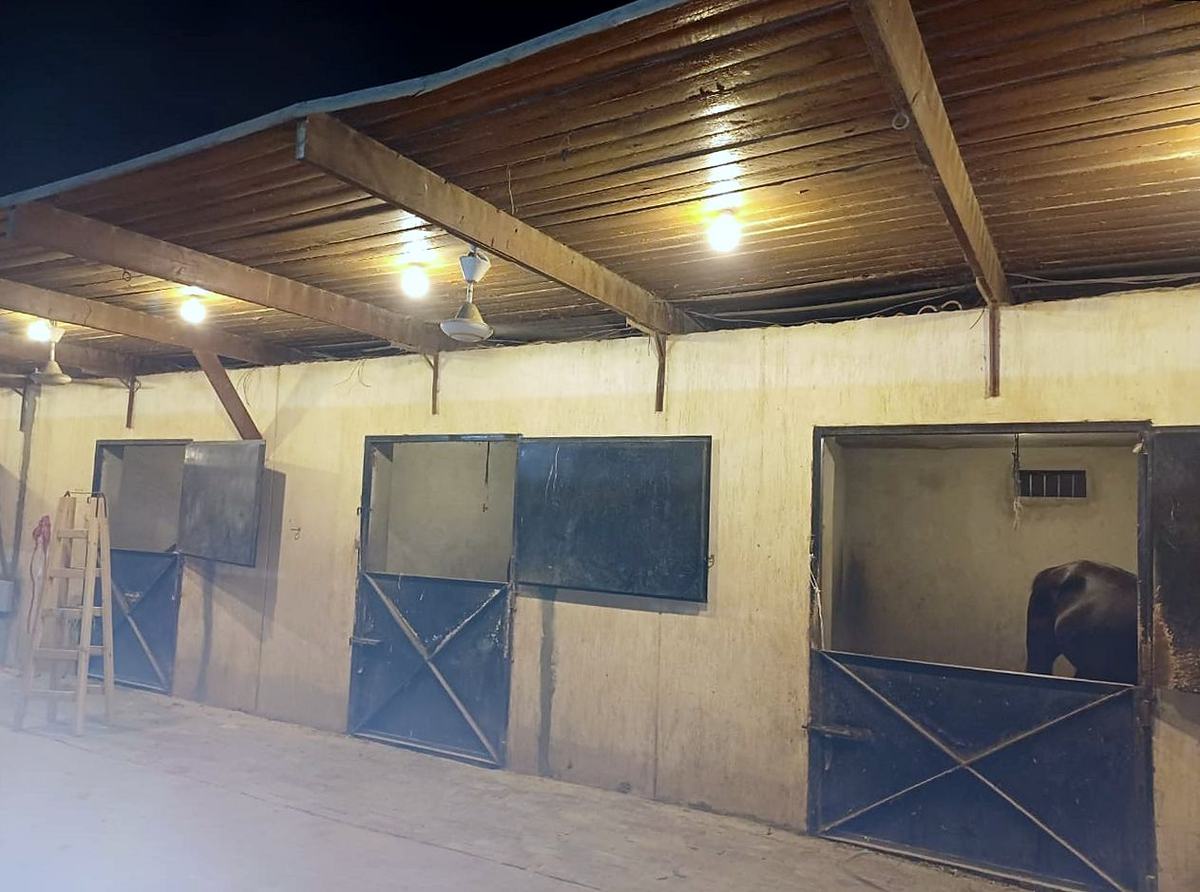
The Equestrian Yard
Stables, arena & yard · Working yard · In progress
View projectQuestions people ask
Where should the outdoor unit go in an Alexandria building?
My air conditioner drips onto the neighbours’ balcony. What do I do?
What size air conditioner do I need for a room?
Split or concealed air conditioning for a flat?
How often should air conditioning be serviced, and what does it involve?
How much does air conditioning installation cost in Alexandria?
Read next
Alexandria
See more Areas · AlexandriaAluminium windows in Alexandria: supply and installation
Choosing aluminium windows in Alexandria starts with the place: salt air, wind on high floors, street noise and winter…
See more Areas · AlexandriaGypsum board in Alexandria: ceilings, drops and hidden lighting
The quality of gypsum board in Alexandria shows in what you cannot see: galvanised steel framing, moisture-resistant board in…
See more Finishing · by current stateRenovating older apartments
Older apartments in Alexandria have generous rooms, high ceilings and details that are hard to find today, and also wiring…
See more Guides · MaterialsFinishing by the sea: what lasts and what fails
A finish that lasts for years in Cairo can fail within a few seasons on the North Coast. Salt, humidity, sun, sand and long…
See more Guides · HandoverTaking handover: what to check before you sign
Handover is the last moment when defects are easy to fix. Go through the unit room by room, with the power and water on, and…
See more Guides · Before you startThe finishing BOQ: every line that should be written down
A muqaysa, or bill of quantities, lists every job and material in your finish with its unit and specification. Read properly, it…
See more