Finishing · by property
Building finishing, from lobby to roof
Finishing a building is not finishing one flat multiplied by the number of floors. There are shared areas every resident uses every day, a façade that represents the whole building, a roof that hurts the top floor if it is waterproofed badly, and units that must all come out at the same standard. Here is the order of work that saves you doing things twice.
What a building owner needs
A building owner needs a plan for three levels of work, each with its own timing: the shell and its materials; then the shared parts — lobby, stair, façade, roof and services; then the units themselves.
The first decision to settle is how the units will be handed over, because it changes the whole order of work:
| Handover | Suits | Watch for |
|---|---|---|
| Fully finished to one spec | Owners selling or letting ready units, or housing the family. | Buyers do not choose the materials, so a calm specification and consistent quality across every unit work best, with a written spec buyers can check. |
| Semi-finished | Buyers who want to choose their own floors, bathrooms and kitchen. | What semi-finished means varies from seller to seller, so list its items in the contract: plaster? electrical and plumbing first fix? windows? |
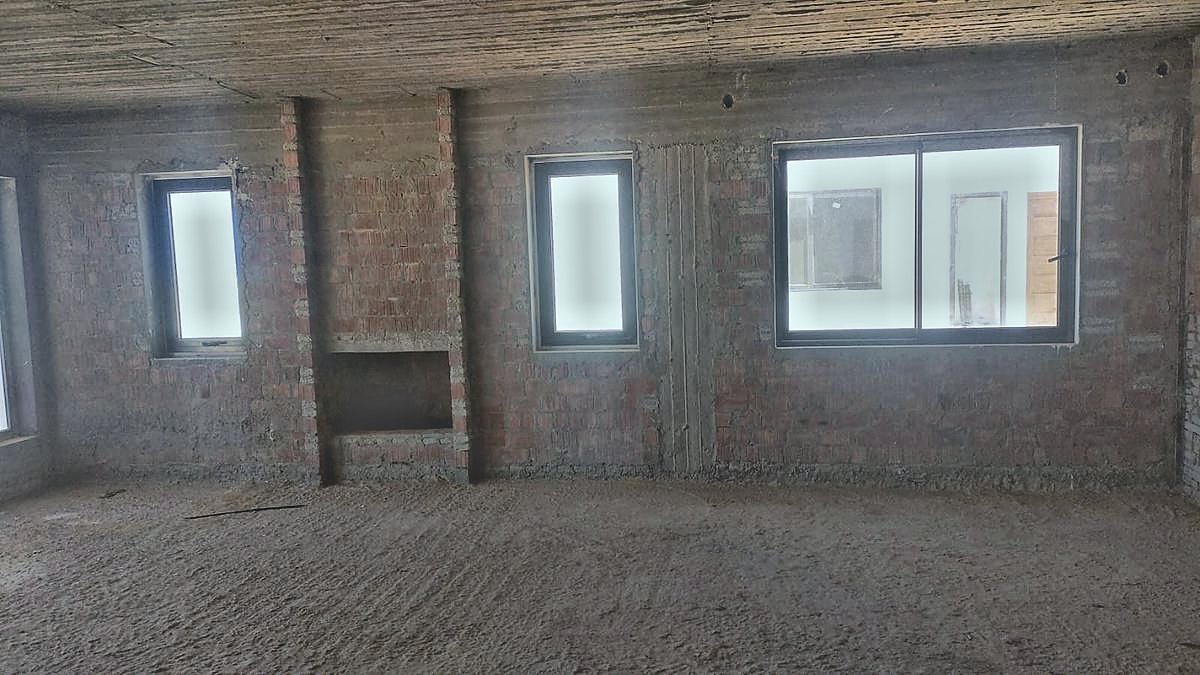
| Red brick (bare shell) | Buyers who want to start from scratch with their own layout. | The building stays a work site for a long time after people move in, so protect the lobby, stair and lift, or hold back their final finish. |
Whichever you choose, the shared areas are the owner’s responsibility, and they make the first impression on every buyer and resident.
The building lobby
A lobby needs a hard floor that takes traffic and the sand and water carried in from the street, walls that are easy to clean, and good light, because it is the most used and most seen part of the building.
- Floor: granite or a hard marble, honed, or grooved at the outside steps, because a polished floor is slippery when wet.
- Walls: marble or porcelain cladding to a sensible height, or washable paint, with a skirting that takes knocks and mop water.
- Lift surround: a marble or stainless frame around the lift door, because knocks during furniture moves damage this spot more than any other.
- Mailboxes and intercom: positions and wiring set before the cladding, so the stone is not cut open after it is fixed.
- Ceiling and lighting: a gypsum board ceiling with concealed light or downlights, on a motion sensor or timer.
- Main door: wrought iron, or aluminium and glass, with a lock released from the flats through the intercom.
- A gentle ramp beside the steps where space allows, for prams, older residents and furniture.
The stairwell and balustrade
Every resident uses the building stair daily and furniture goes up it, so it needs a hard stone such as granite or a dense marble, rounded nosings with anti-slip grooves, and a sturdy balustrade fixed into the concrete.
- Every step the same height, checking the first step at the entrance and the last at each landing, because changes in floor thickness alter them.
- A stone colour that does not show dirt and footprints quickly, with matching skirting to protect the walls.
- An iron or stainless balustrade with a continuous handrail; near the sea, 316 stainless, or hot-dip galvanised steel before painting.
- Light on every landing on a motion sensor or timer, and a clear switch by each flat door.
- Timing: while the units are still being finished, either hold back the stair stone until the heavy work is done or protect it well, because materials and tools going up to the flats are what break steps most.
Stone, nosing and balustrade details are on the stone stairs and balustrades page.
The façade and permits
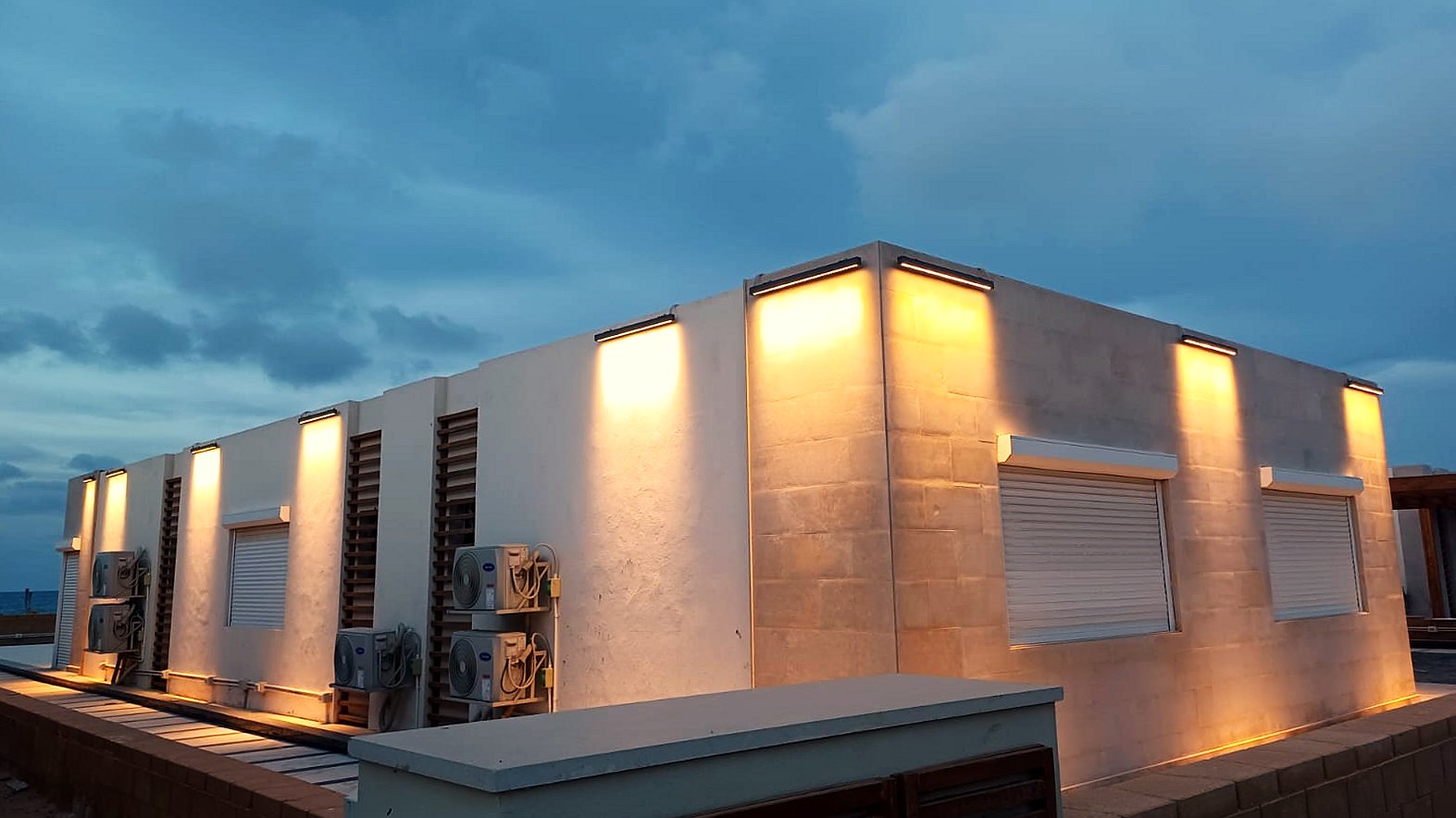
A good building façade is designed as one piece for the whole building: one material and colour scheme, with places planned in advance for AC outdoor units, drainpipes and satellite dishes.
What spoils most building façades after finishing is AC units hung at random, exposed pipes and a dish on every balcony. The fix is to plan outdoor unit positions and pipe and cable routes from the start, and to install a central satellite system for the building.
Before you change a façade’s materials, colours or form, ask the district office or city authority that covers the property what is required, because the procedure differs with the location and the kind of work. If the building is occupied and has other owners, agree with them or with the occupants’ association before you start.
The façade materials themselves — stone, marble, granite and paint — and how they are fixed are on the façades page.
The roof and shared services
The roof and shared services are parts nobody sees, but any mistake in them reaches every flat, so they are built and tested before the upper floors are finished.
- Roof: continuous waterproofing and insulation, falls to the drains and a flood test before any finish, so the top floor never pays for a leak.
- Water tanks and pumps: bases that do not puncture the waterproofing, and a pump that can be reached for service, away from bedrooms.
- Water: an isolating valve for each flat, so one flat can be shut off without cutting water to the whole building.
- Drainage: vertical stacks with rodding access you can reach, not buried behind marble.
- Electrics: a meter room or panel to the electricity company’s requirements, a separate cable to each flat, and stair and lobby lighting on the services meter.
- Low current: spare conduit for internet, intercom and the central dish from the services room to every flat.
- Lift: check the lift company’s requirements for the shaft and any machine room before finishing around it, and fit the door surround once the floor levels are set.
Order of work, and every unit to one spec
A building is finished like a production line: one written specification, a model unit approved first, then each trade moving from one flat to the next in the same order.
One written specification
A list of every item in the flat — floors and porcelain, sanitary ware, doors, windows and electrical points — so no unit differs from another because of what was on the market on the day.
A model unit
One flat is finished first and approved by the owner, so any problem in the design or the materials shows up before it is repeated in every unit.
Heavy work first
Electrical and plumbing first fix and plaster on every floor before the final finishes, so heavy materials never pass over finished floors and steps.
Materials from one lot
Marble and porcelain are ordered in quantities that cover every flat from the same lot, because colour can vary between batches.
Shared areas last
Lobby and stair stone and the final paint go in after the heavy work in the flats, or early with good protection if they must.
One handover list for every unit
Each flat is checked against the same list — walls, tiles, electrics, plumbing, doors and windows — before it goes to a buyer or a resident.
Supply for the building, from shell to finish
Supply-only is available: you can buy shell and finishing materials without contracting us to build, or include them in a finishing contract.
- Shell materials: reinforcing steel, cement, bricks and blocks, sand and aggregate.
- Finishing materials: porcelain and ceramics, paints and waterproofing, plumbing and electrical materials.
- Stone: marble and granite for the lobby, the stairs and the flats from a catalogue of 94 Egyptian stones, in quantities from the same lot.
On a finishing contract you pay each supplier directly and the tax invoice is in your name, so you know exactly what each material costs, with no margin hidden in it.
Itmam and building finishing
We visit the building as it stands today — a shell, an occupied building or an old one that needs renovating — measure it, and give you a written, itemised quotation before work starts, with the shared areas and the units as separate items.
And if you only have the land so far, we build it too, from the plot to handover. Lobby and stair marble is templated, cut and installed by the same team, and balustrades, doors and metalwork are made in our own workshops.
On a finishing contract you pay each supplier directly and the tax invoice is in your name; our fee for supervision and execution is agreed in writing before we begin. We work in Alexandria, on the North Coast and in New Cairo, and elsewhere in Egypt when the job suits us.
Departments for this
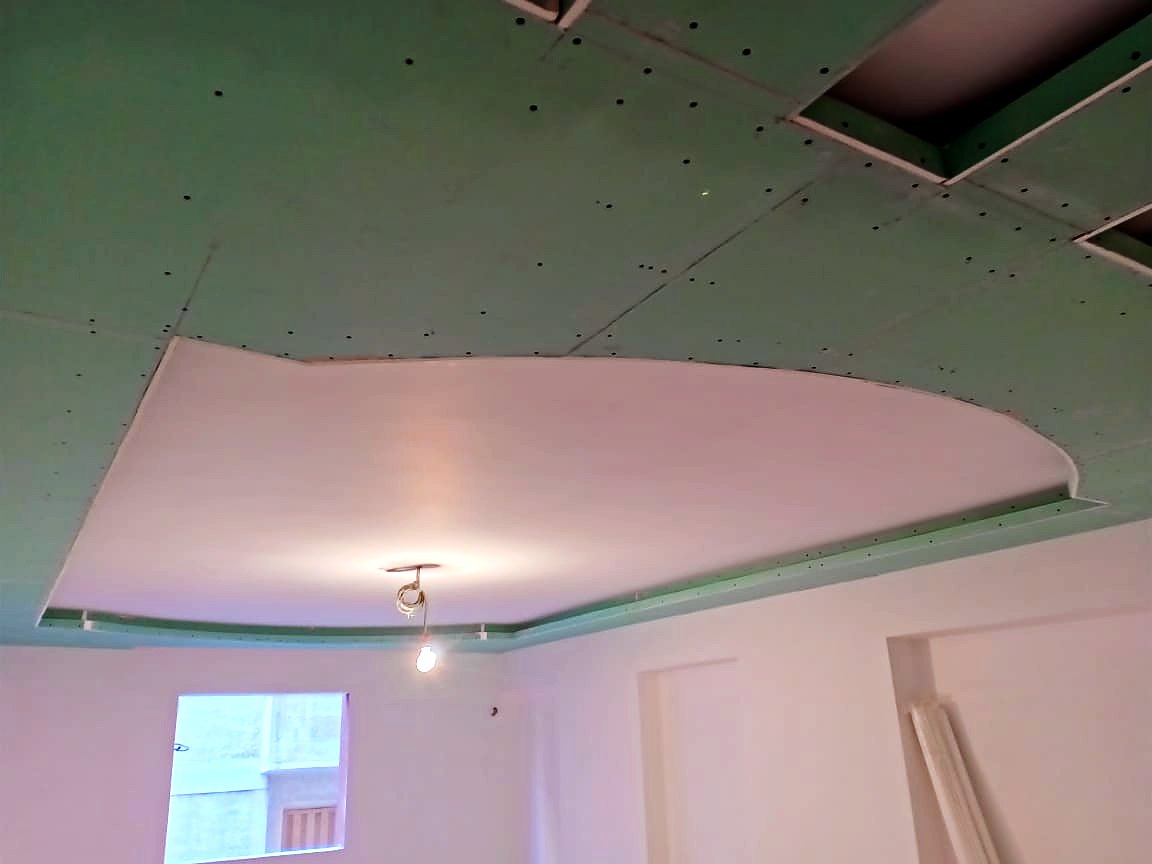
Full Home Renovation
This is the contract most of our clients actually want: one company, one programme, one written quotation.
See more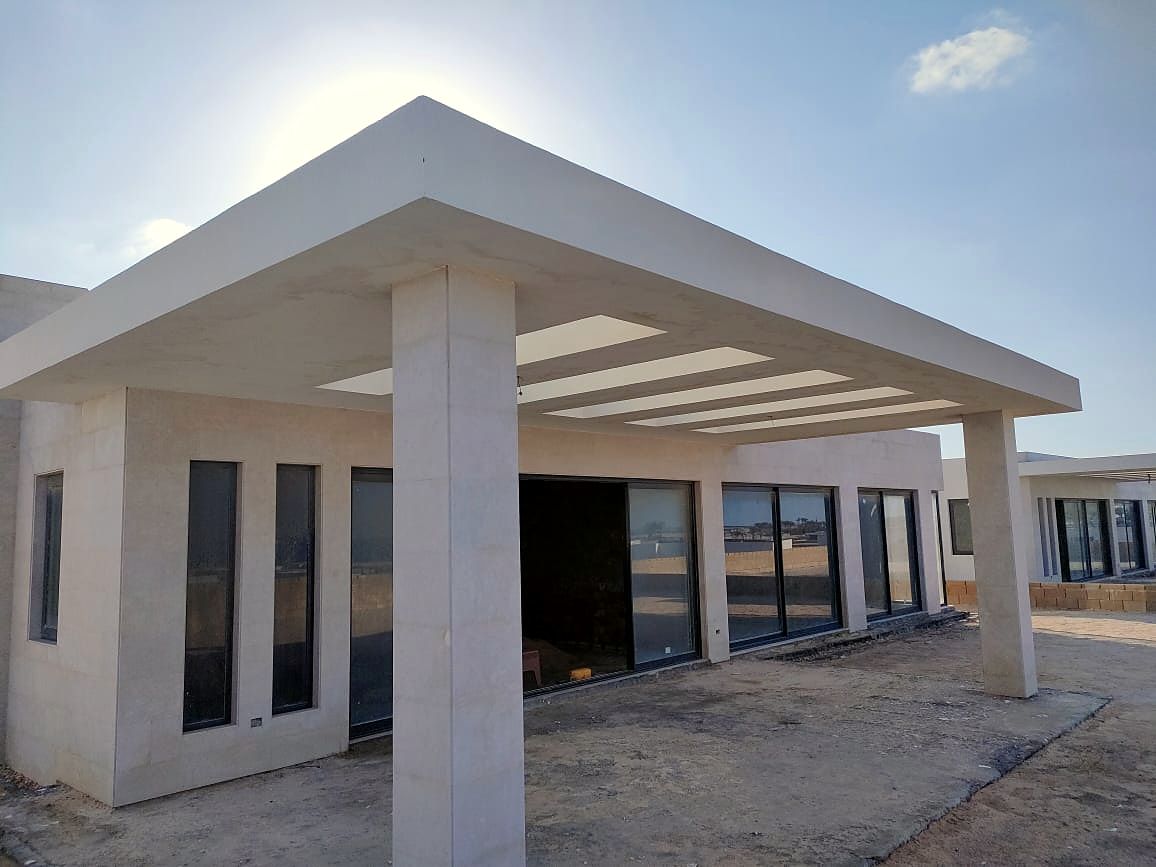
Build From Land
Most people who buy a plot in Egypt become their own main contractor by accident — a mason through a cousin, a plumber who comes when he can, a carpenter who turns up after the tiles are already down, and fifteen invoices nobody reconciles.
See more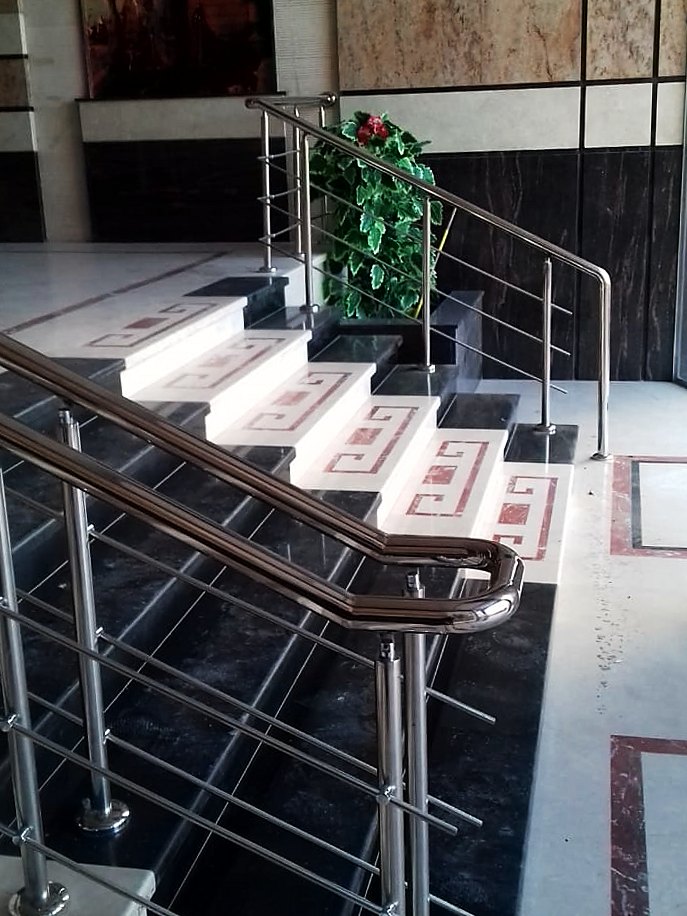
Marble
We buy marble at the block, not off a photograph.
See more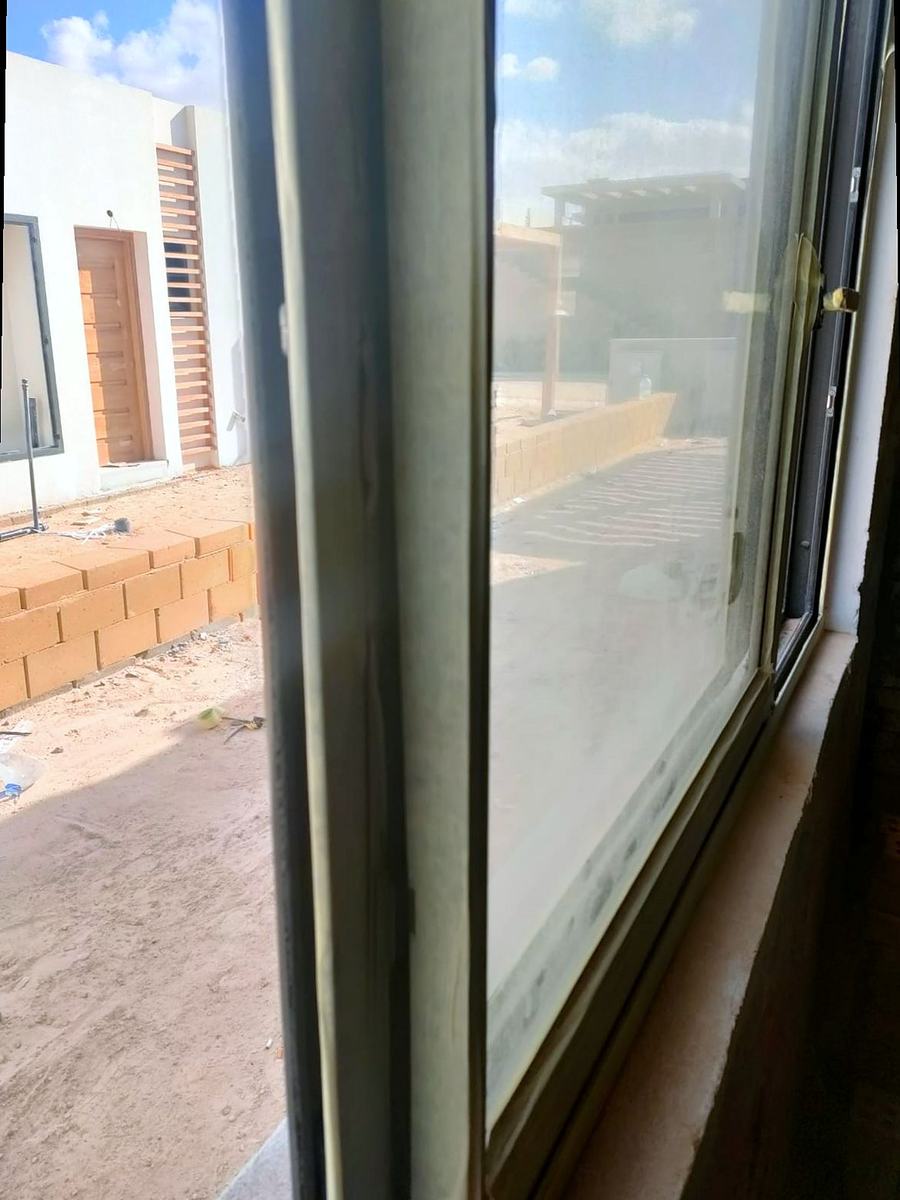
Windows & Doors
The window is the most expensive mistake in an Egyptian villa.
See more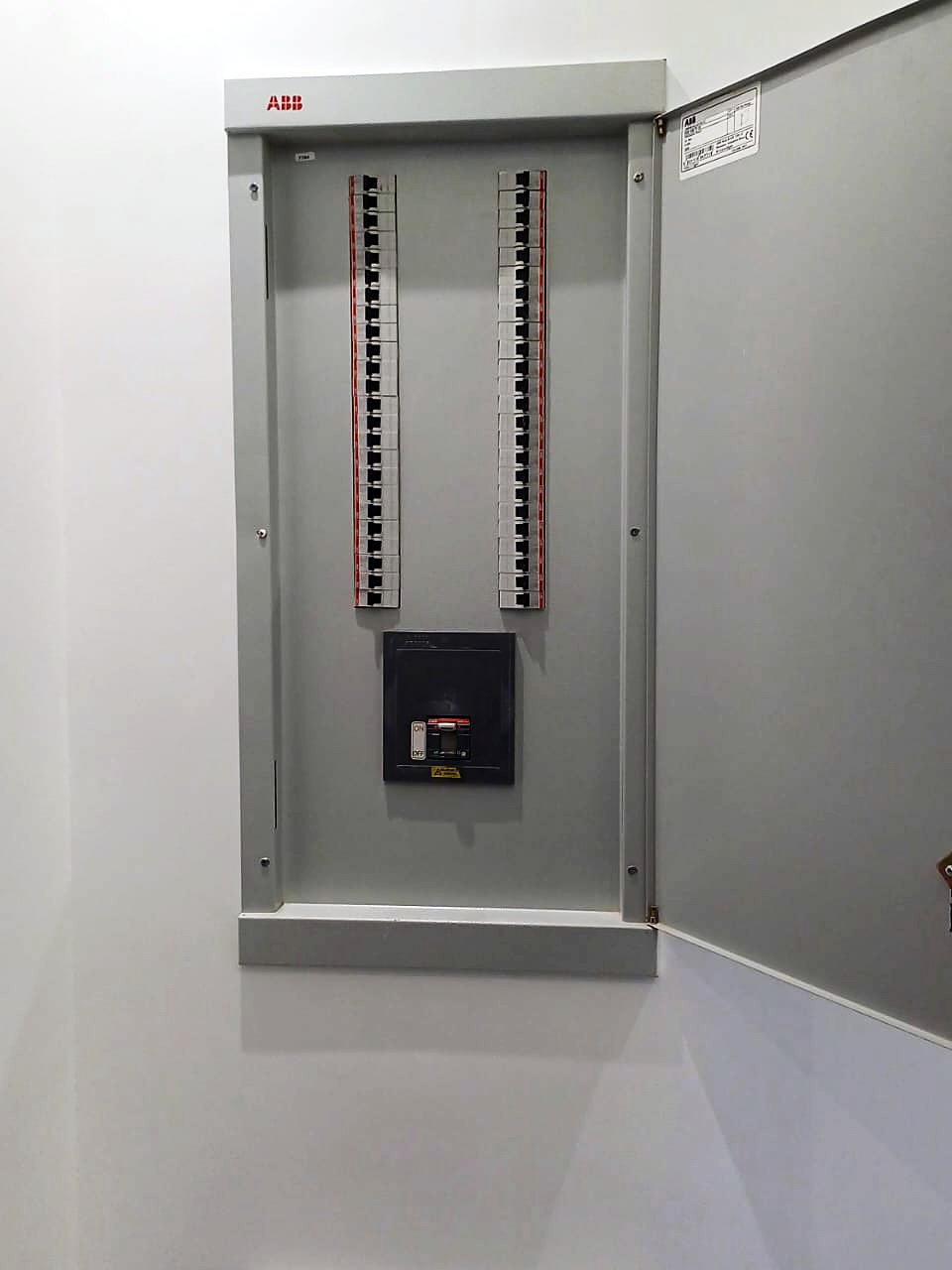
Electrical & Smart Home
Electrics are invisible until they are a problem.
See more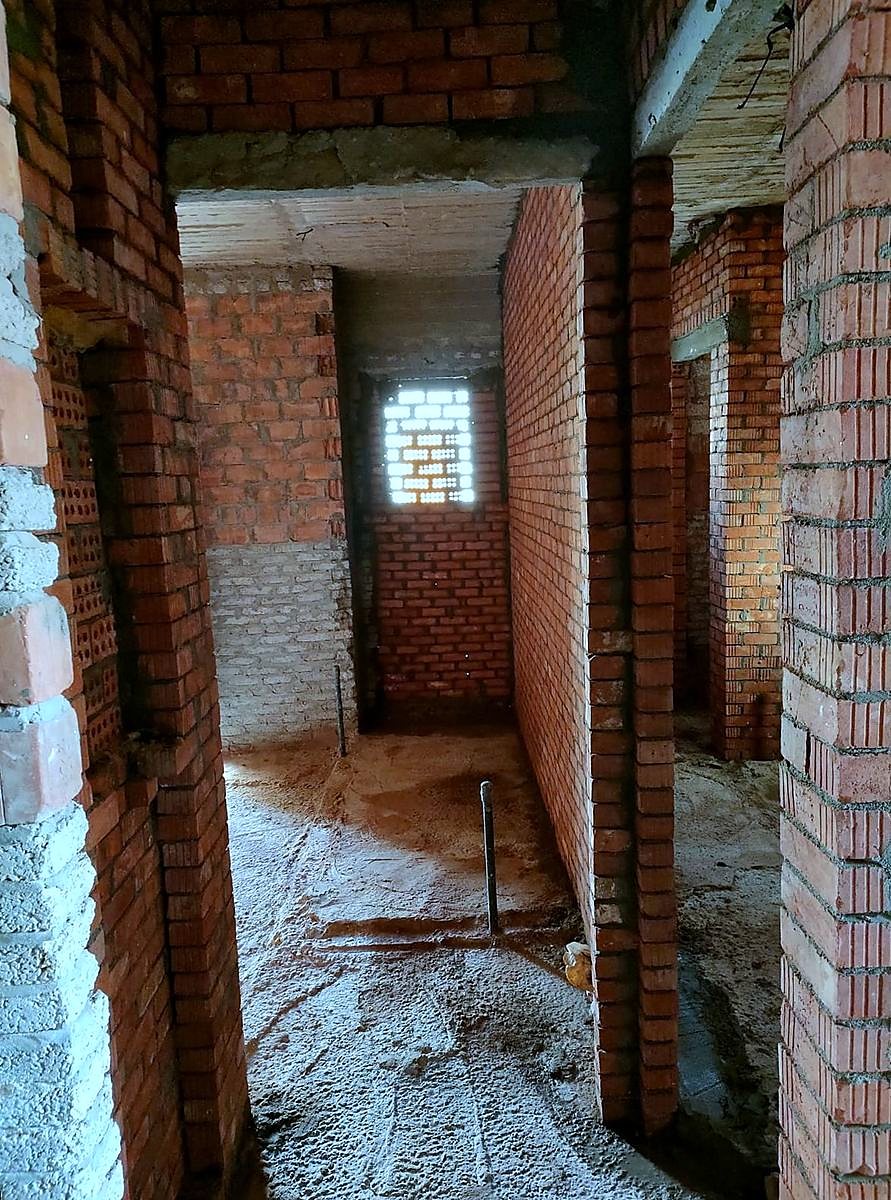
Steel & Rebar
Reinforcement steel leaves our yard by the tonne, cut and bent to your own bar bending schedule if you want it, with no obligation to let us pour a single column.
See more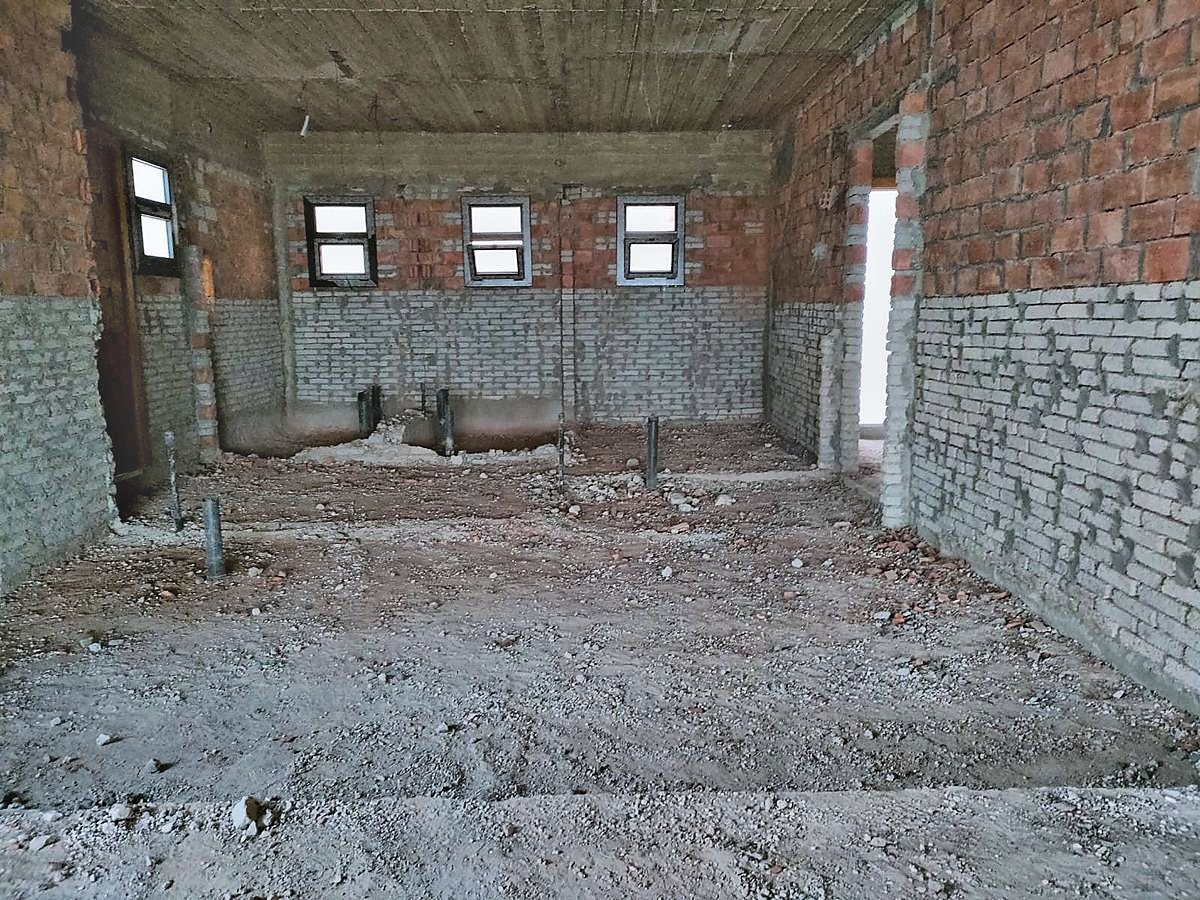
Cement
You can buy cement from us by the bag, by the pallet or by the bulk tanker without hiring us to build anything.
See moreWork we have done
Photo gallery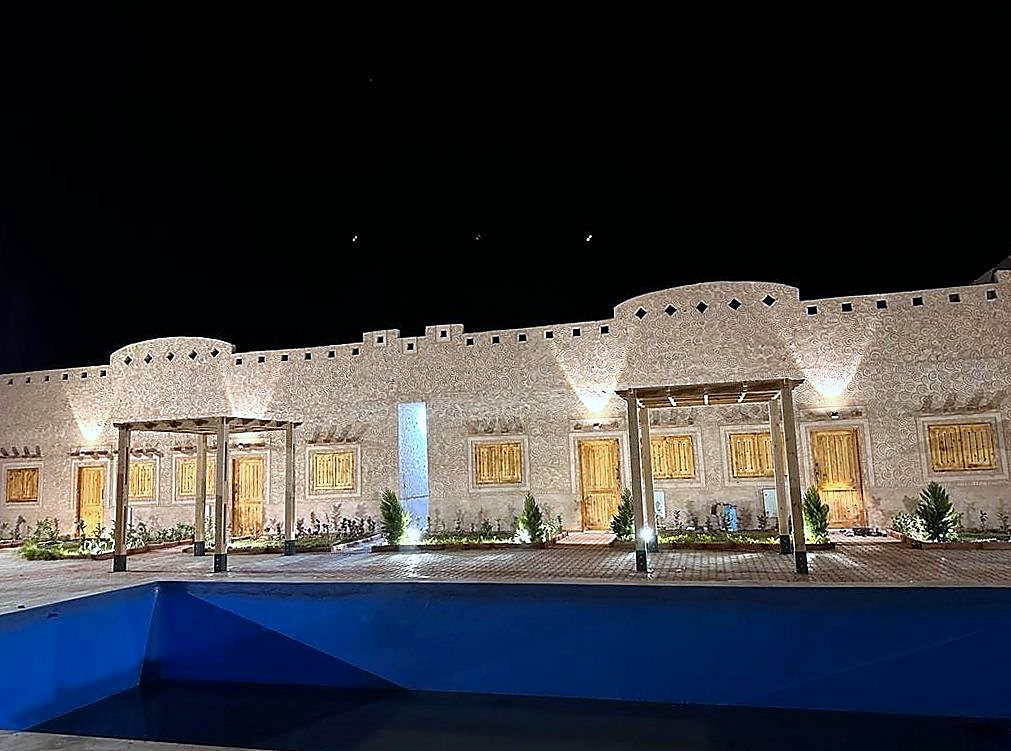
El Moghra
Turnkey build & finish · Desert lodge · Completed
View project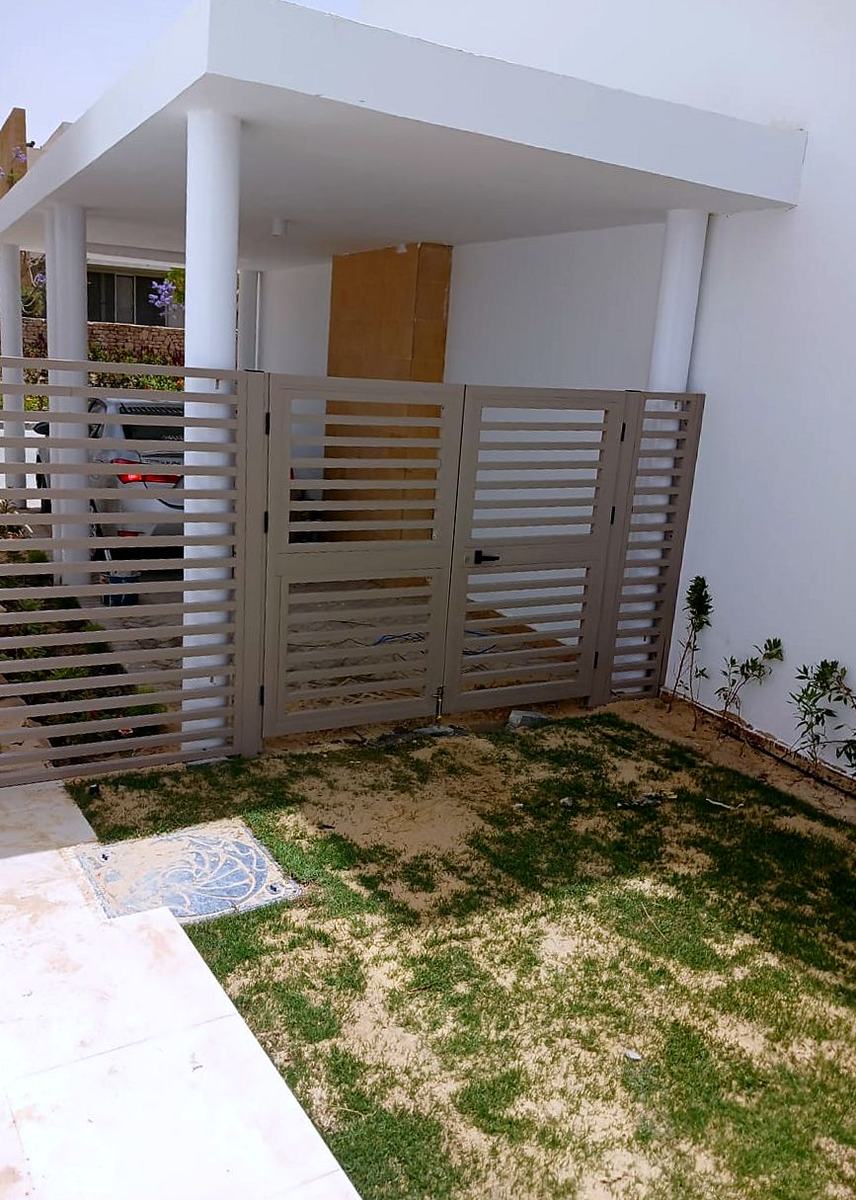
Sea-view Villa — Marble & Brass
Turnkey finishing · Villa · In progress
View project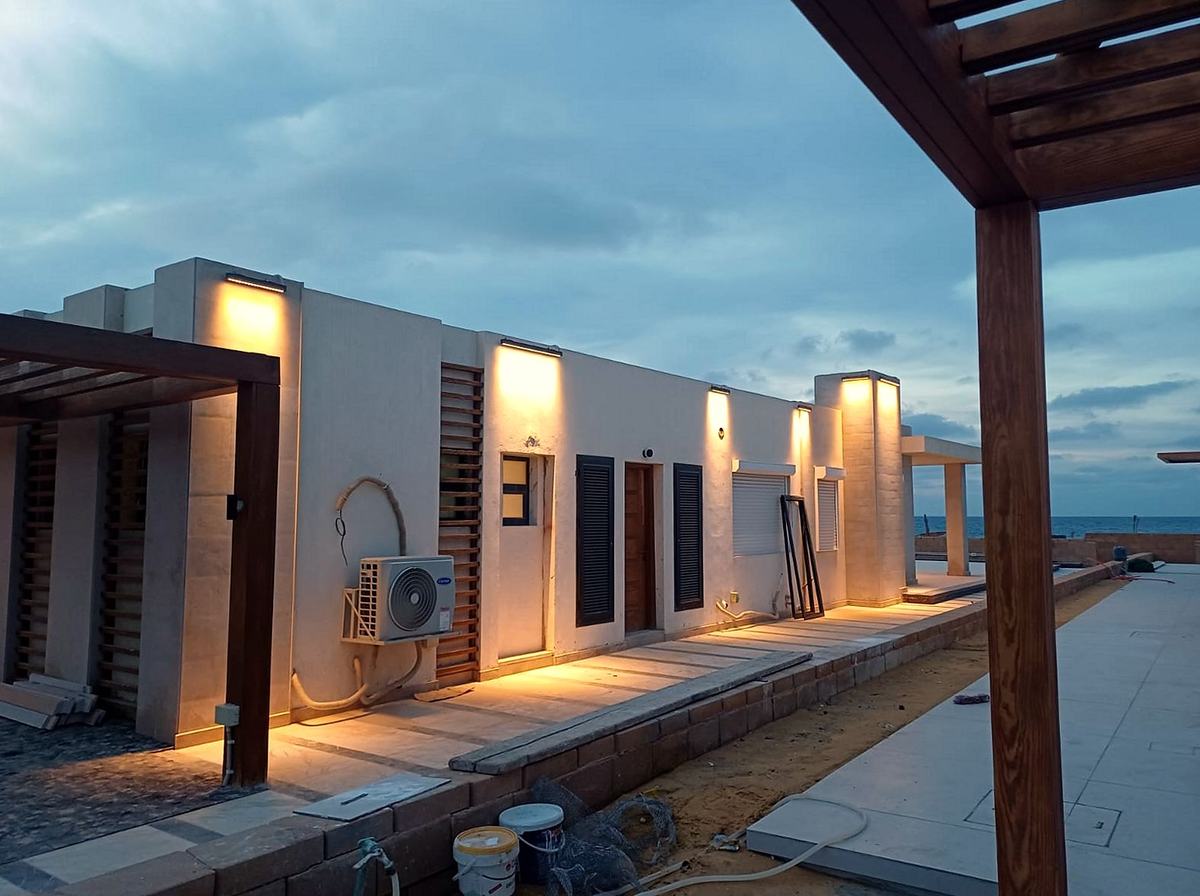
Pool Villa — Oak & Rattan
Exterior, pergola & interiors · Villa · In progress
View projectQuestions people ask
What is a building lobby usually finished in?
How much does it cost to finish a building?
Can you finish every unit to one spec for sale?
Do I need a permit for the building façade?
Do you supply rebar and cement at the shell stage?
Should I start with the lobby and stair, or the flats?
Read next
Stone stairs and balustrades
The stair is the most walked-on part of a house and the place someone is most likely to trip. So the stone, the edge of each…
See more Finishing · exteriorsVilla façades
The façade is the first thing anyone sees of a villa, and the part that faces the sun, rain and salt every day. Here are the…
See more Finishing · elementsRoof and bathroom waterproofing
Waterproofing is a layer nobody sees once the finishing is done, which is why its mistakes show late: a stain on the neighbour’s…
See more Finishing · by propertyRoof terrace and penthouse finishing
A roof becomes either the best place in the house or the source of problems for everyone below it. The difference is the order…
See more Finishing · by current stateCompleting a semi-finished flat without ripping it out
Semi-finished does not mean half the work is done. It means someone else has already done work that you will build on, so you…
See more Finishing · by current stateFrom red brick to keys
Took handover of a unit in red brick? Then everything is still ahead of you, and this is the best moment to make the decisions…
See more Finishing · by levelFinishing levels in Egypt, item by item
Lux, super lux and ultra super lux are words the whole market uses, and every company means something slightly different by…
See more Guides · Before you startThe finishing BOQ: every line that should be written down
A muqaysa, or bill of quantities, lists every job and material in your finish with its unit and specification. Read properly, it…
See more Guides · before you signThe finishing contract, clause by clause
Most finishing disputes start with something the contract did not say. This is a general checklist of the clauses an owner…
See more Guides · HandoverTaking handover: what to check before you sign
Handover is the last moment when defects are easy to fix. Go through the unit room by room, with the power and water on, and…
See more