Areas · Alexandria
Ceramic and porcelain tiles in Alexandria: choosing, supply and fitting
Choosing ceramic and porcelain tiles in Alexandria starts with the room itself: a damp bathroom, a balcony facing the sea or a wide reception, and with the state of the old floor underneath. Here is how the types differ, how tiles should be laid, and what to check in a tiler’s work before you accept it. With us, tiles are available supply-only with adhesive and grout, and laying is done by our team as part of a finishing job.
Ceramic, porcelain or large format? Choose by the room
Porcelain is denser and absorbs far less water than ceramic, so it belongs on wet and outdoor floors; glazed ceramic suits walls and quiet indoor floors.
| Where | Best choice | Watch for |
|---|---|---|
| Bathroom and kitchen walls | Glazed ceramic or porcelain | A flat wall before tiling; bathroom walls are usually tiled up to the false ceiling |
| Bathroom floor | Matt porcelain with a slip rating for wet areas | Falls towards the floor drain; smaller tiles follow a fall more easily than large ones |
| Kitchen floor | Porcelain | Takes oil, water and daily cleaning |
| Balcony near the sea | Porcelain made for outdoor use, with a non-polished surface | Salt, sun and temperature swings: a flexible adhesive, movement joints, and a fall outwards, away from the door |
| Reception and corridors | 60 × 60 porcelain, or large sizes such as 60 × 120 and 80 × 80 | Large formats need a genuinely flat floor, full adhesive coverage and a tiler who has laid them before |
Full-body porcelain carries its colour right through the tile, so a chip on an edge or a stair nosing does not show a different colour.
Slip resistance: safe bathroom and balcony tiling
For bathroom tiling and balconies, choose tiles by the slip rating printed for wet use, not by the word ‘anti-slip’ on the box.
- Bathroom floors and around the shower: a matt or lightly textured surface, and never a polished tile on a floor that gets wet. As a working guide, R10 suits indoor wet areas such as bathrooms and kitchens.
- Balconies, terraces and entrances: a higher rating than the bathroom floor, R11 as a guide, because rain and sand make the surface more slippery.
- Do not buy the highest rating available: heavy texture holds dirt, needs scrubbing rather than mopping, and is unpleasant on bare feet. The right answer is the lowest rating that is genuinely safe for the place.
- Stairs: full-body porcelain on the nosings, because the edge is the first thing to chip.
If the bathroom is being renovated, the waterproofing and a water test before tiling matter more than the tile itself.
An old floor: take it up or tile over it?
Tiling over old tiles only works if the old tiles are firm and do not sound hollow, the floor is flat, the new height does not foul the doors, and, in a bathroom, the waterproofing and pipes are sound; otherwise lifting the old floor is the honest answer.
- The firmness test: tap every tile with a coin or a screwdriver handle; a hollow sound means a loose tile, and a new tile laid over it will follow it.
- Tiling over old tiles needs an adhesive suited to laying on existing tiles, and a surface cleaned of wax and grease.
- Terrazzo floors in older Alexandria flats: if they are firm and do not sound hollow, they can often be ground and polished instead of lifted.
- Levelling: old floors are rarely level. Set the finished floor level for the whole flat first, then level with a screed and let it dry before tiling.
- Doors and thresholds: new tiles with adhesive or mortar raise the floor, so doors may need trimming at the bottom, and a step can appear at the bathroom, between rooms or at the front door onto the landing. Work out the new height before you buy, and if the difference is large, compare lifting the old floor with altering every door.
- Balconies: the balcony floor stays lower than the room floor at the door, so rain and washing water do not run inside.
Laying tiles: adhesive or a sand-and-cement bed?
A traditional sand-and-cement bed takes up an uneven floor, but dense porcelain and large formats bond better with the right tile adhesive on a flat surface.
- Mortar bed: a layer of sand and cement, commonly about 3 cm thick, under the tiles. It copes with an uneven floor, but it raises the floor and adds weight, and if it does not fill the whole back of the tile, hollow tiles appear.
- Tile adhesive: a thin layer spread with a notched trowel on a flat, dry floor or wall. Porcelain absorbs very little water, so it is usually laid with an adhesive of the class suited to it.
- Large formats: full adhesive coverage under the tile, usually with adhesive spread on its back as well, on a genuinely flat floor.
- Walls: adhesive does not correct crooked plaster, so the wall is accepted flat before tiling.
Ask for the laying method and the adhesive to be written into the quotation, because they change the preparation, the quantities and the finished height. The building-materials calculator works out the cement and sand for a tile bed; adhesive is worked out from the coverage printed on the bag.
Grout and movement joints
Tiles need a joint between them and are never laid edge to edge, because the floor and the tiles move with heat and humidity.
- Joint width: rectified tiles take a narrow joint of about 2 to 3 mm; pressed-edge tiles need a wider one. Spacers keep the width even.
- Grout: cement-based for most places, and epoxy where you want more resistance to water and stains, such as the shower and behind the sink. Joints are filled completely, and grout is cleaned off the tile face before it sets.
- Movement joints: around the edges of the room next to the walls, hidden under the skirting; where two materials meet; over any joint in the concrete; and at intervals in large areas and terraces, as the adhesive maker or the engineer specifies.
- Bathroom corners: where the wall meets the floor, and around the bath and shower tray, are sealed with flexible silicone, not grout, because rigid grout cracks there.
Terraces whose tiles lift and sound hollow after a summer or two almost always failed on the adhesive and the movement joints, not on the tile.
Before you buy: one batch, and the wastage
Buy the whole floor at once and from one batch, because tiles are made in production runs that can differ in shade and actual size even within the same design.
- Each carton carries a shade code and a size code: check they are the same on every carton, and that the grade is the one you ordered.
- Open several cartons and lay tiles from them side by side on the floor before fixing, so any difference shows before the tiles are stuck down, not after.
- Wastage: the tile calculator offers 5% for a straight lay in a large, regular room, 10% for the normal case, and 15% for a diagonal lay or a small room such as a bathroom. Large formats waste more in small rooms.
- Keep a carton or two for repairs, because the same batch may not be available later.
How to check a tiler’s work at handover
Check the tiling before you sign and before the furniture goes in, because tiling faults are hard to put right afterwards.
Tap the tiles
Tap every tile with a coin or a screwdriver handle. A dull, solid sound is fine; a hollow one means the tile is not fully bedded. Mark it, and start with wet areas and doorways.
Look along the floor
Bring your eye close to the floor and look along it, or lay a straight edge across it: no tile edge should stand proud of its neighbour.
The joints
Straight, even in width and completely filled, with no cracks or gaps.
The falls
Pour water on the bathroom and balcony floors: it should run to the drain and not stand in any corner.
Cuts and finish
Clean cuts around the drain, the sanitaryware and the doors, no chipped or cracked tiles, an even shade, skirting tight to the wall, and doors that open without catching on the floor.
Our handover checklist covers the rest of the flat.
Itmam and tiles in Alexandria
Itmam is a finishing and supply company from Alexandria: head office in El Ibrahimya, marble and granite showroom in El Deresa, Moharram Bey. Itmam was founded in 2016, with 20+ years in the trade. Phone and WhatsApp +20 106 926 2572, Saturday to Thursday, 09:00 to 18:00.
We supply ceramic and porcelain tiles with the adhesive and grout to suit them, and supply-only is available if you have your own tiler. Laying is done by our team as part of a finishing job, in a bathroom, a kitchen or a full renovation, and covers the screed, the levels, the waterproofing in wet areas and the laying.
On a finishing contract we visit, measure and give you a written, itemised quotation before work starts. You pay each supplier directly at their price and the tax invoice is in your name; our management fee for supervision and execution is agreed in writing, and we add nothing to the price of materials.
Departments for this
Tiles, Porcelain & Ceramics
Tile is a material people are perfectly happy to buy months before anybody lays it, and we sell it exactly that way — by the lot, with no fitting contract attached.
See more
Bathrooms
Bathrooms are won and lost behind the tiles.
See moreKitchens
A kitchen is the one room where bad manufacturing shows up daily — a door that drops, a drawer that catches, a worktop joint over the sink.
See more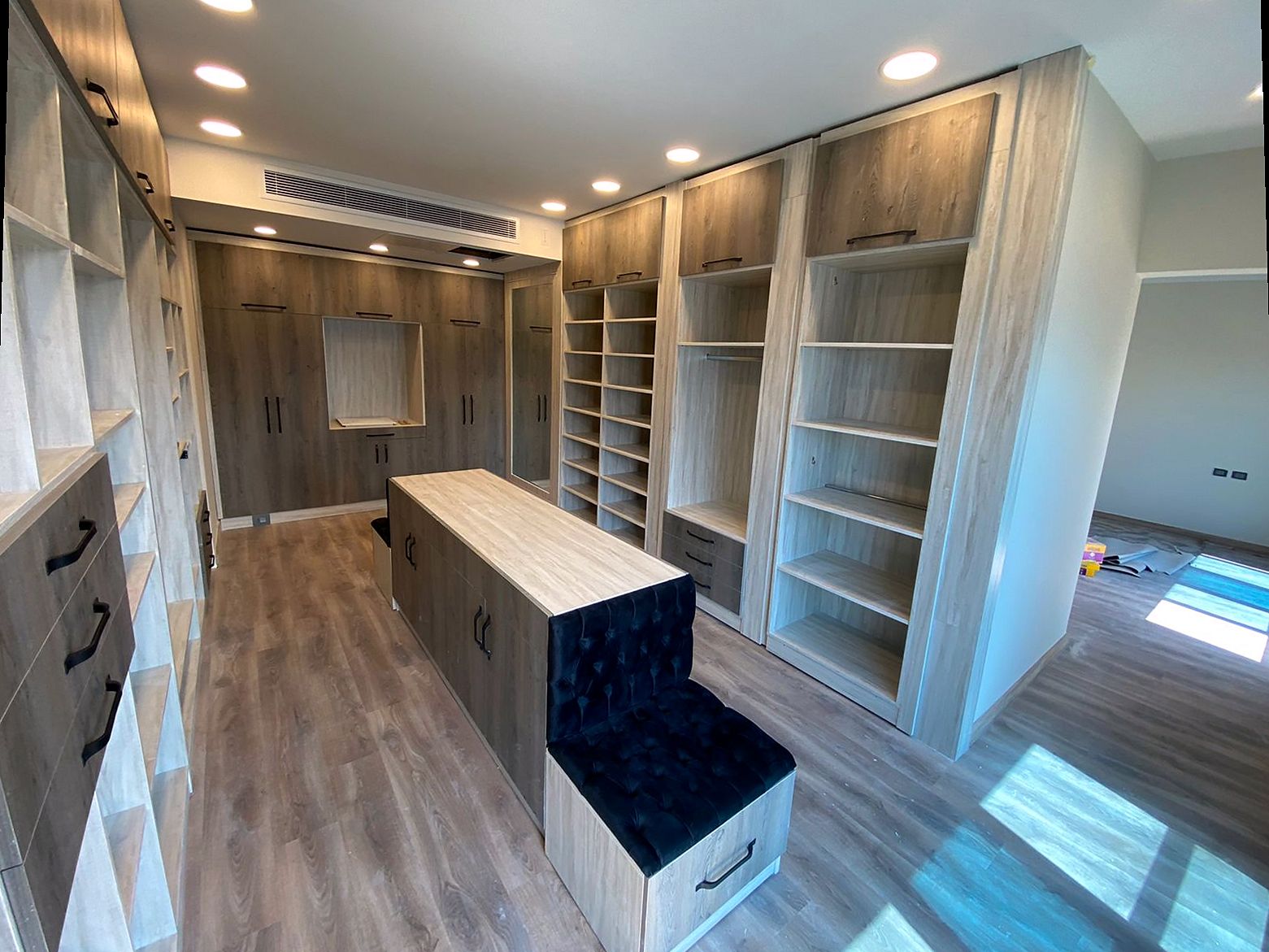
Full Home Renovation
This is the contract most of our clients actually want: one company, one programme, one written quotation.
See moreWork we have done
Photo gallery
El Moghra
Turnkey build & finish · Desert lodge · Completed
View project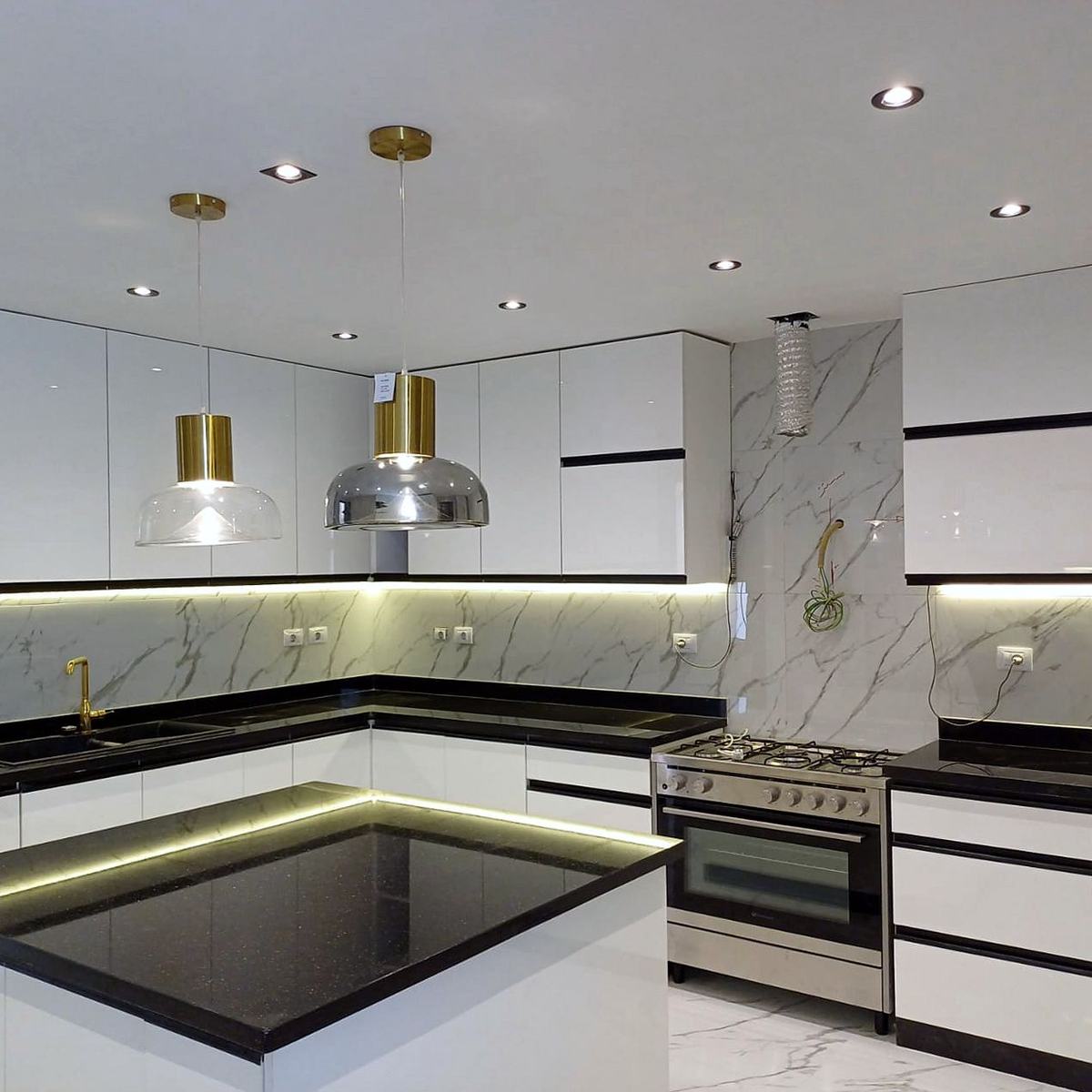
Sea-view Villa — Marble & Brass
Turnkey finishing · Villa · In progress
View project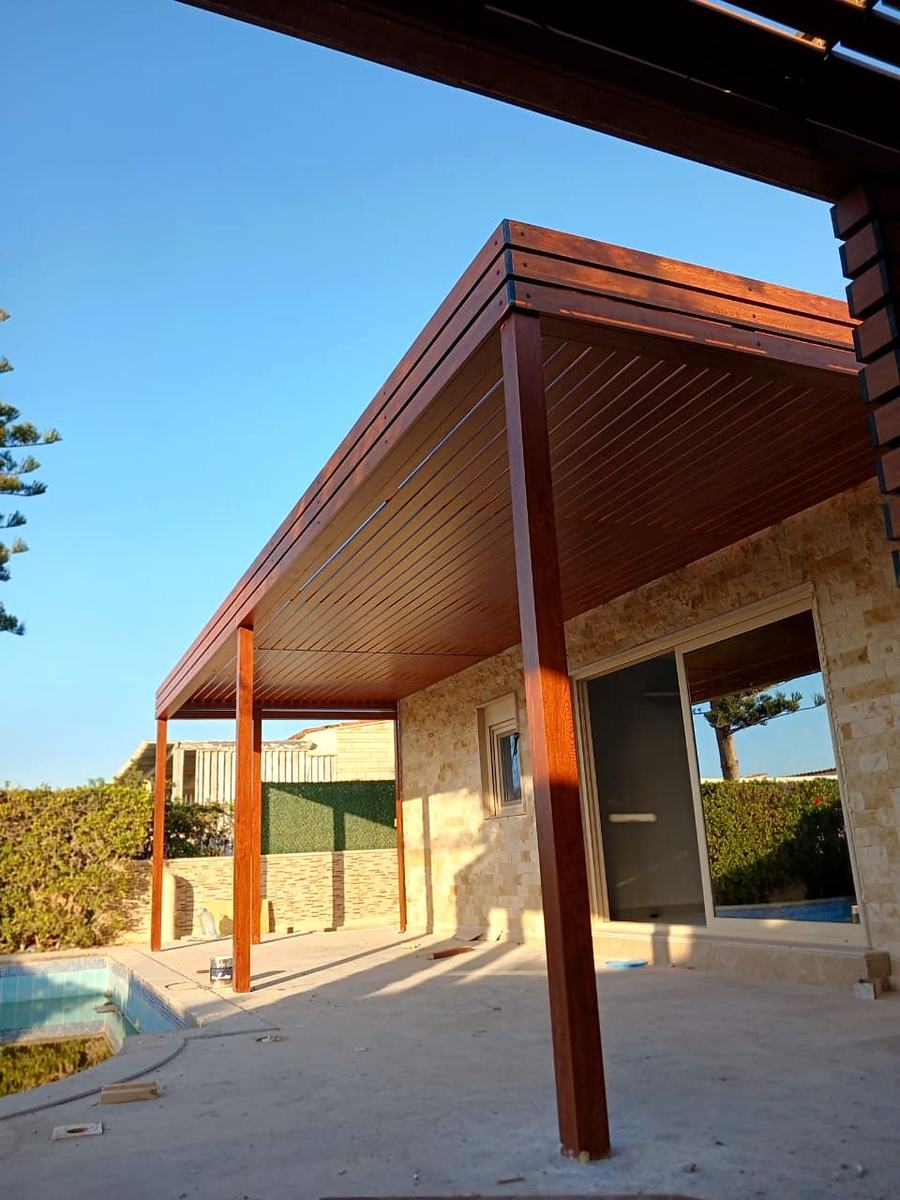
Pool Villa — Oak & Rattan
Exterior, pergola & interiors · Villa · In progress
View projectQuestions people ask
Where can I see tiles in Alexandria before I buy?
Can I lay new tiles over the old ones?
I need a tiler in Alexandria. Do you lay tiles?
What are the best tiles for a bathroom?
How much does tiling cost per square metre?
How can I tell if tiles were laid properly?
Read next
Alexandria
See more Areas · AlexandriaBuilding materials supply in Alexandria, from cement to tiles
Building materials supply in Alexandria goes well when you know exactly what to order, what to check the moment it arrives, and…
See more Guides · Quantity calculatorHow much tile do you need? Work out m², tiles and cartons
The tile you buy is not the room’s area: there is wastage for cuts and breakage, and tile is sold by the carton, not the metre.…
See more Guides · materialsChoosing floors, room by room
Floors cover more of your home than any other finish, and they are the hardest thing to change later. Here is how porcelain…
See more Guides · HandoverTaking handover: what to check before you sign
Handover is the last moment when defects are easy to fix. Go through the unit room by room, with the power and water on, and…
See more Finishing · by current stateRenovating older apartments
Older apartments in Alexandria have generous rooms, high ceilings and details that are hard to find today, and also wiring…
See more Areas · AlexandriaBathroom finishing and renovation in Alexandria
Bathroom finishing and renovation in Alexandria starts with what is under the tiles, not their colour: the waterproofing, the…
See more Areas · AlexandriaKitchens in Alexandria: design, manufacture and installation
A kitchen in Alexandria lives with sea-air humidity, and many sit in older flats with narrow rooms and pipes and wiring that…
See more