Guides · materials
Imported marble, family by family
Imported marble is chosen for looks Egypt does not quarry in volume: bright whites with grey veining, deep browns, black with white veins. Here are the main families, how they compare with Egyptian stone, and what to check before you buy.
What counts as imported marble
Imported marble is natural stone quarried outside Egypt and brought in as blocks, slabs or cut tiles. Most of what is asked for in the market comes from Italy, Spain, Turkey and Greece.
Two things to know before you compare. First, in the trade “marble” covers any calcium-carbonate stone that takes a polish, including many beiges a geologist would call compact limestone, and the care for all of them is similar. Second, names like Calacatta or Emperador describe a look as much as a quarry; one name covers very different selections, and sometimes look-alikes from other countries. Judge the actual slabs, not the name.
Italian whites: Carrara, Statuario and Calacatta
The classic Italian whites come from the quarries around Carrara in Tuscany, and they differ mainly in how white the ground is and how strong the veining runs.
- Carrara: a white to soft grey-white ground with fine, feathery grey veining. The most widely available Italian white, used on floors, walls, bathrooms and vanity tops when you want a calm white rather than a statement.
- Statuario: a brighter white ground with bolder, more defined grey veins. Rarer than Carrara, and chosen for feature walls, book-matched panels, bathrooms and statement pieces.
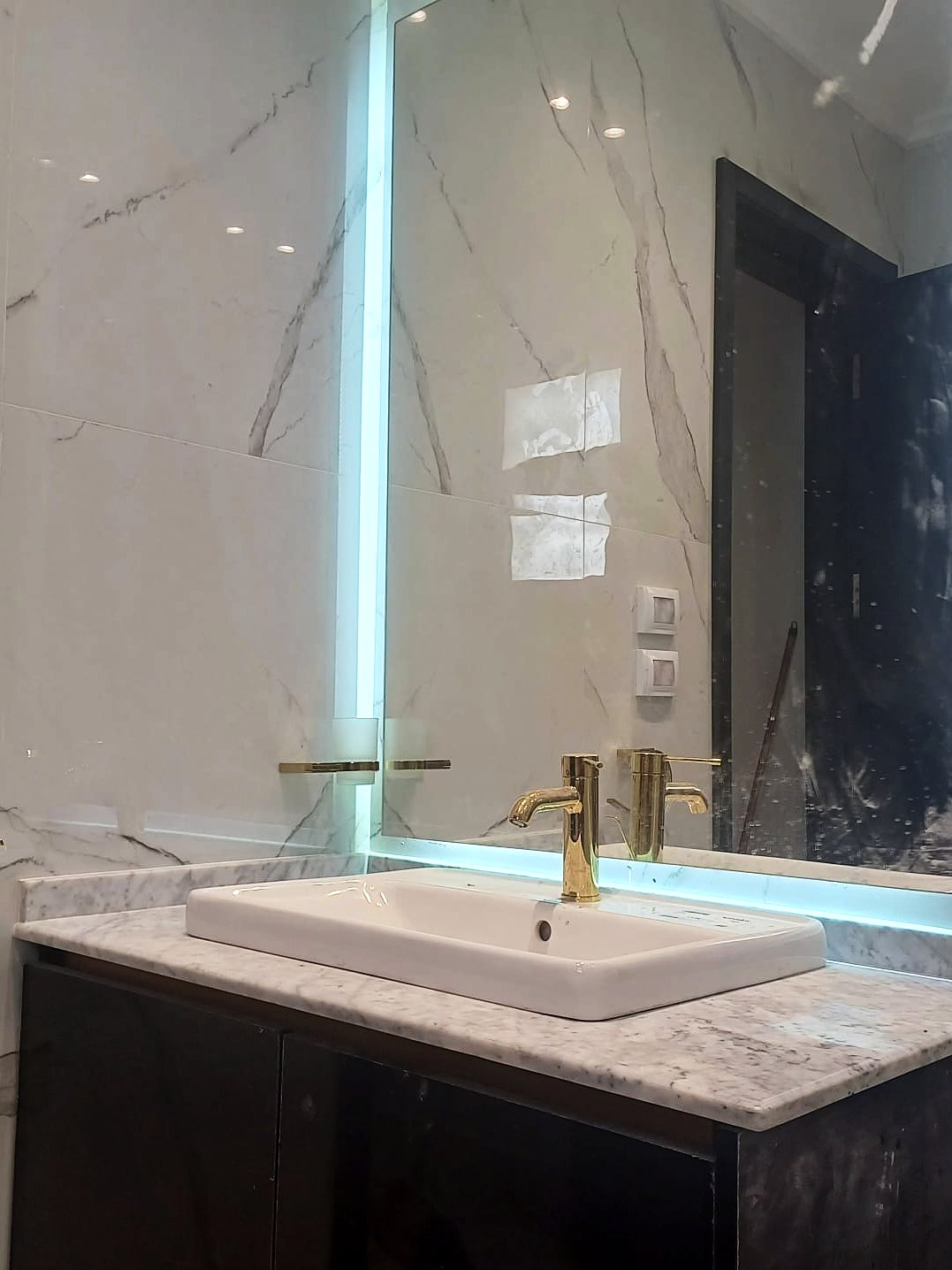
- Calacatta: a very white ground with thick, dramatic veins, grey and often with gold or beige tones. Among the most sought-after whites, and usually given to one surface people stand in front of: a feature wall, a bathroom wall or a kitchen island.
- Botticino and Bardiglio: Italy also exports a warm, close-grained beige (Botticino) and blue-grey marbles (Bardiglio), and both have Egyptian counterparts in our catalogue.
White marble is crystalline and can be slightly translucent, so it is usually fixed with a white adhesive made for natural stone: a grey bed or trapped moisture can show through as shadows or stains.
Spanish marble: Crema Marfil, Emperador and Nero Marquina
Spain’s best-known marbles cover three very different moods: a pale cream, a deep brown and a graphic black.
- Crema Marfil: cream to light beige, the colour of ivory, with fine, irregular veining, from the Alicante region. A calm stone for floors and walls over large areas. Commercial selections differ a lot in colour evenness and in how many veins and filled spots they show, so judge the batch.
- Emperador: brown marble crossed by a dense network of pale veins. Dark Emperador is a deep chocolate brown and Light Emperador a lighter tan, and similar browns also come from Turkey. The veins are natural fractures healed with calcite, so slabs often arrive resin-treated and mesh-backed; check them for open cracks. At its best on walls, in bathrooms and in borders.
- Nero Marquina: a black ground with sharp white veins, from northern Spain. Strong on a feature wall, in a bathroom or in floor patterns, but polished black shows acid marks and scratches more clearly than any other colour.
Turkish and Greek marble
Turkey and Greece supply a wide range of stones: mostly beiges and greys from Turkey and whites from Greece, alongside travertine.
- Turkish beiges: from pale cream to warm beige, some even, some with fine veins or fossil figure, and often offered as an alternative to Crema Marfil and Botticino. Check the selection closely, as with any beige.
- Turkish greys: mid to dark greys with white or lighter veining, for floors, walls and bathrooms with a cooler, more contemporary look.
- Light browns: much of what is sold as Light Emperador comes from Turkey.
- Travertine: a layered calcium-carbonate stone with natural holes, sold filled or unfilled, for floors, walls, terraces and pool surrounds. It is more porous than most marble, so outdoors it needs the right finish and cleaning.
- Greek whites: from very white, sugary, crystalline stones such as Thassos, used in bathrooms and mosaics, to white grounds with grey veining such as Volakas, often considered when a Statuario-type look is wanted.
Egyptian or imported: the comparison
Neither wins everywhere; they do different jobs. This table compares them in general terms, and the actual stone and selection matter more than the country.
| Point | Egyptian marble | Imported marble |
|---|---|---|
| Look | Mostly beige and cream (Galala, Triesta), golden (Sunny Menia) and grey (Milly Gray); very few true whites | Bright whites with grey veining, deep browns, black with white veins, as well as beiges and greys |
| Porosity and care | Calcium carbonate like all marble: etched by acids, needs neutral cleaners and sealing. Density varies by stone; some, such as Hashma Beige and Golden Sinai, are dense enough for outdoor use | The same chemistry and the same care. Whites show stains more, and some stones, such as Emperador, arrive resin-treated and mesh-backed |
| Large slabs and book-matching | Slabs are available in many stones, and some, such as Milly Gray and Fillito, book-match well. Ask what sizes the stone you want comes in | The Italian whites are the classic book-match stones, commonly traded as consecutive slabs from the same block; large sizes depend on the block |
| Availability | Local quarries; stones in steady supply, such as Galala Classic and Silvia Menia, are easier to match on a later order | Arrives by import, so what is available changes; it is confirmed per order, and slabs are best reserved as soon as you approve them |
| Typical uses | Large floors, stairs, wall cladding and bathrooms, and façades in the dense stones | Feature walls, bathrooms, vanity tops, kitchen islands, entrances, and floors where a white or a strong colour is the point |
| Seeing it before you buy | The actual slabs can be seen locally before cutting | Approve the actual slabs, or at least a sample from the same batch, before cutting |
Like an imported look? Egyptian options in our catalogue
If an imported stone is not available when you need it, or you want a local stone for a large area, these are the nearest Egyptian moods in our catalogue. They are alternatives, not copies.
- For the calm of Crema Marfil: Galala Classic, Galala Extra, Crema Egypt, Silvia Menia and Triesta.
- For a white-marble feel: Cleopatra, the closest Egypt comes to a white marble in volume, an off-white with soft grey shadowing rather than hard veins.
- For Botticino: Egyptian Botticino, a warm, close-grained beige with a faint parallel figure.
- For Italian greys such as Bardiglio: Imperial Grey, Milly Gray, New Milly Gray and Royal Grey.
- For the warmth of Emperador: there is no matching Egyptian brown in our catalogue, but Royal Beige, with its brown drift, and Breccia Menia, with its beige and brown fragments, give a warm, patterned surface.
- For black: the Egyptian blacks in our catalogue are granites such as Black Aswan, a hard, dense black without white veins.
- For Calacatta, Statuario, Carrara or Nero Marquina on a kitchen worktop: quartz with that look, such as Calacatta Nile, Statuario Alba, Carrara Mist and Marquina Black in our quartz catalogue. It is engineered, not natural, and lemon and vinegar do not etch it.
Choosing, fitting and caring for imported marble
See the actual slabs
Photos and small samples do not show how the veining moves. Look at full slabs, or at least a sample from the same batch, in daylight and under warm light.
Reserve consecutive slabs for book-matching
A book-matched wall needs slabs cut one after another from the same block, numbered and laid in the same order, so the veins mirror at each joint. Agree the layout on the slabs themselves before cutting.
Check for cracks and treatment
Look at the back and edges of each slab for mesh, resin and open fissures, especially with Emperador and heavily veined stones, and for colour differences across the batch.
Fix it the right way
Use an adhesive made for natural stone, white for white and pale marbles, on a flat, dry base. Seal the stone, and grind and polish floors after laying if you want a flat, continuous surface.
Clean it gently
Neutral cleaners only: lemon, vinegar and many descalers etch marble, wherever it comes from. A sealer reduces staining but does not stop etching, so wipe spills quickly, and keep wet metal and coloured liquids off white stone.
Imported marble from Itmam
Imported marble is available from Itmam. Our online catalogue shows Egyptian stones; for imported marble, what is available, in which selection and slab size, is confirmed per order when we quote.
You can see slabs and samples at our marble and granite showroom in El Deresa, Moharram Bey, Alexandria. Tell us before you come which look you want, so we can tell you what you will be able to see.
Stone is templated, cut and installed by the same team, from our own workshops. We visit, measure and give you a written, itemised quotation before any stone is cut. Supply-only is available; on a finishing contract you pay each supplier directly at their price, the tax invoice is in your name, our management fee is agreed in writing, and we add nothing to the price of materials. Itmam was founded in 2016, with 20+ years in the trade.
Departments for this
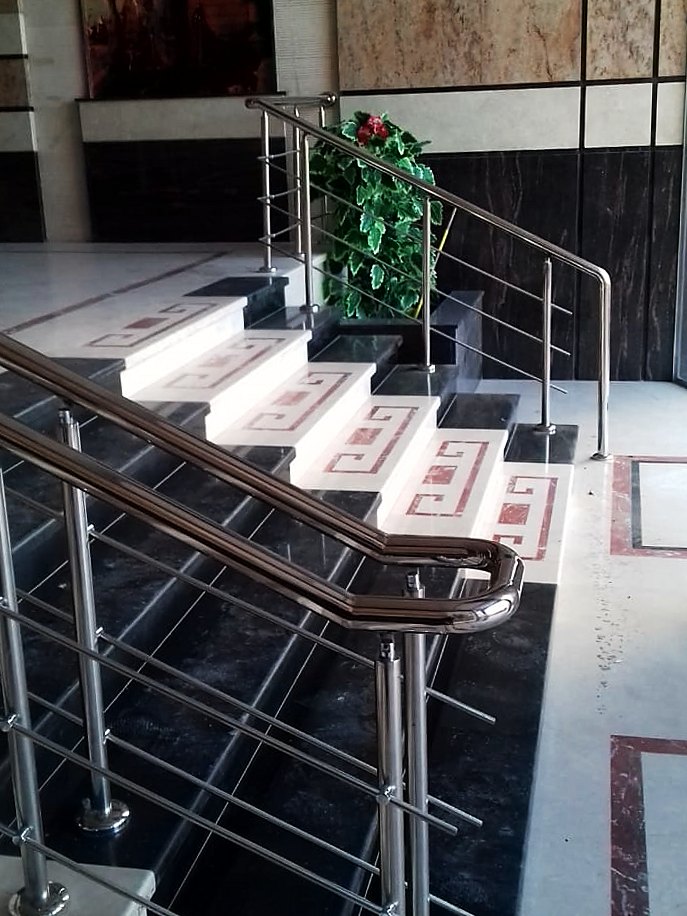
Marble
We buy marble at the block, not off a photograph.
See moreStone Artwork & Engineered Marble
This is the end of the stone business that is closer to cabinetmaking than to tiling.
See more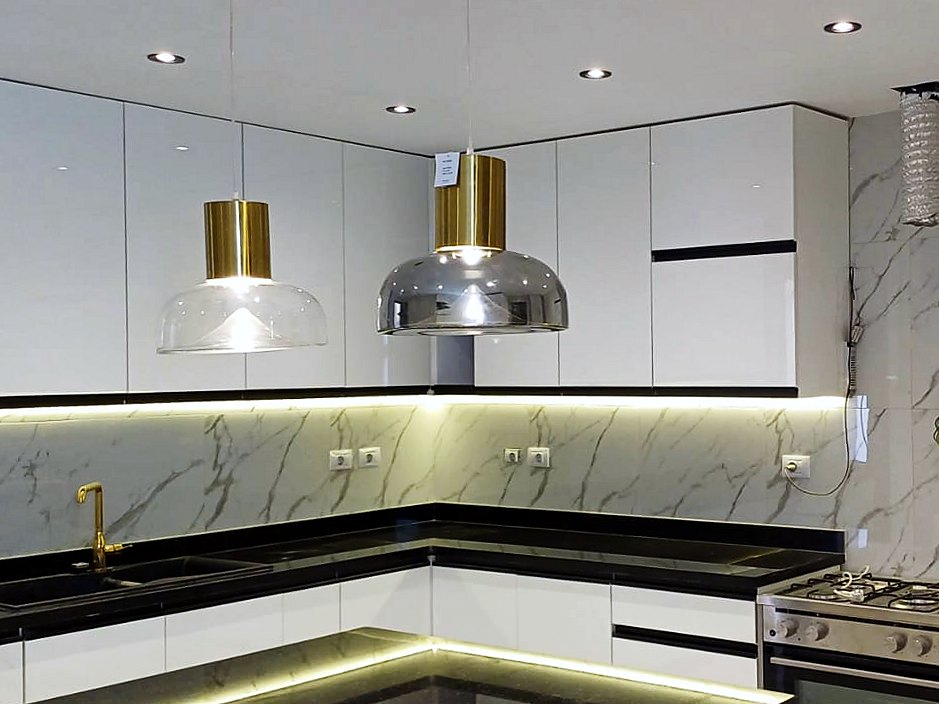
Kitchens
A kitchen is the one room where bad manufacturing shows up daily — a door that drops, a drawer that catches, a worktop joint over the sink.
See more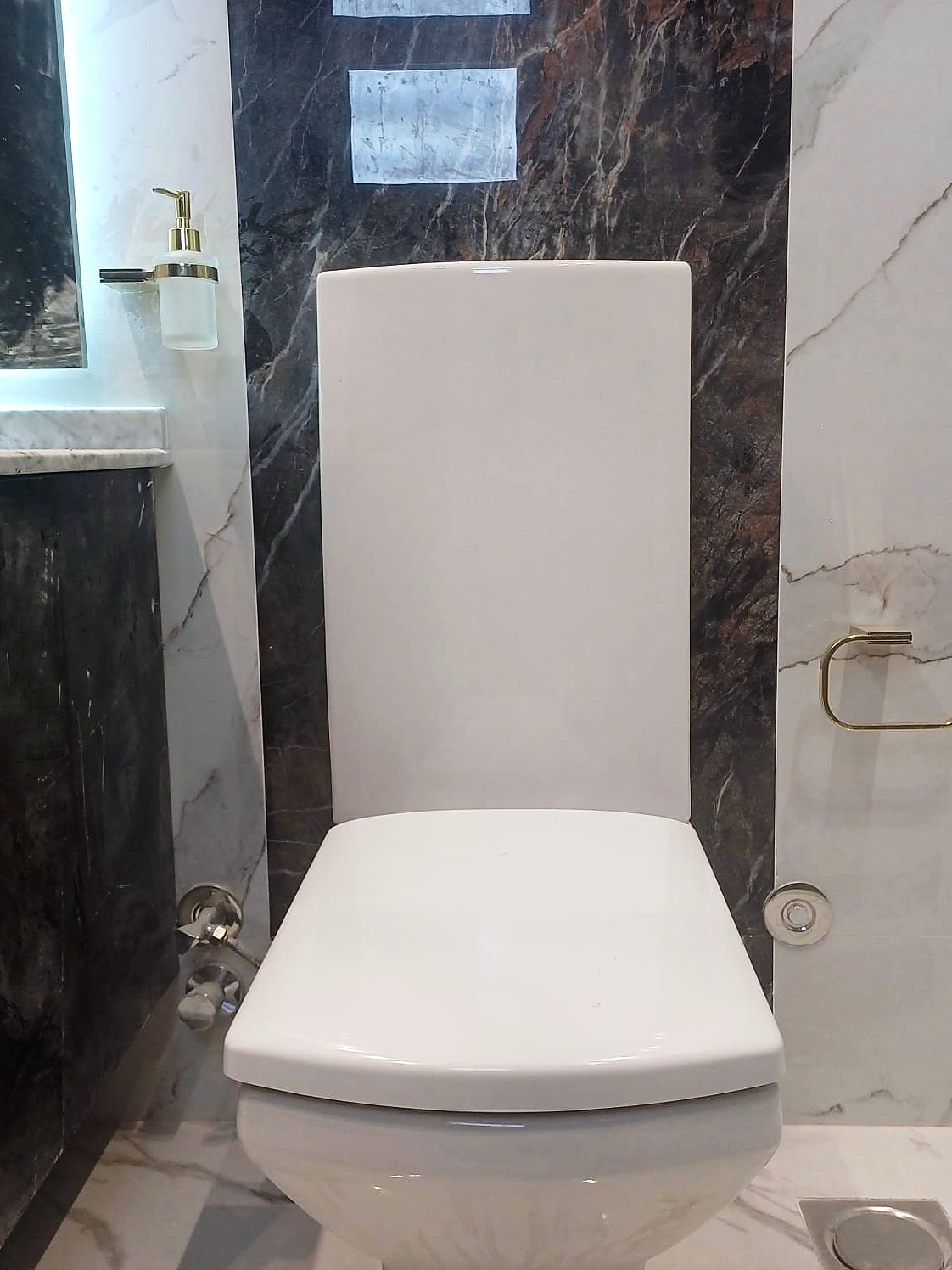
Bathrooms
Bathrooms are won and lost behind the tiles.
See more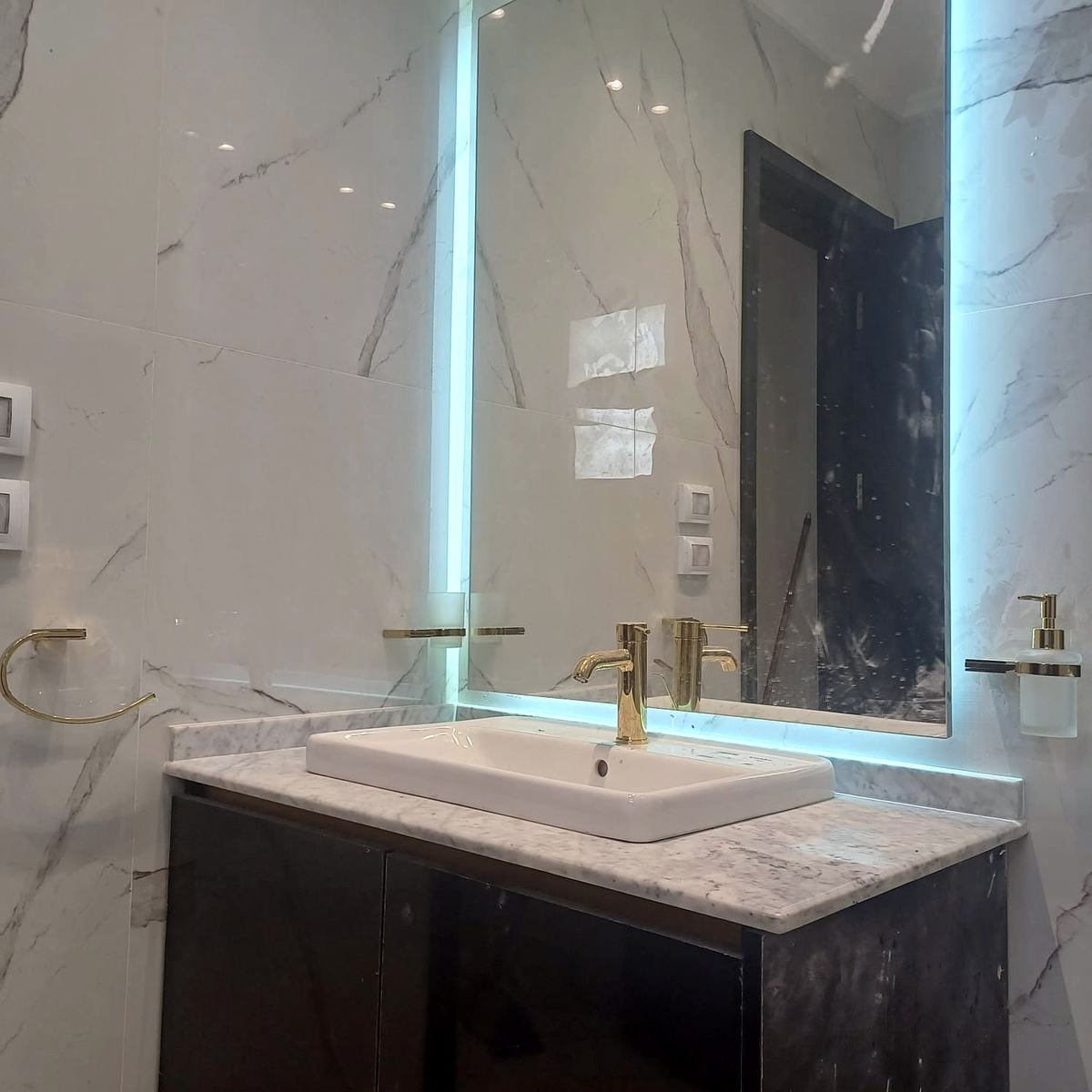
Questions people ask
What are the main types of imported marble?
What is the difference between Carrara, Statuario and Calacatta?
Egyptian or imported marble?
Is imported marble good for kitchen worktops?
What decides the price of imported marble?
Where can I see imported marble in Alexandria?
Read next
Egyptian marble, type by type
Egypt quarries many marbles, and most of them are beige, but they are not interchangeable. Here is what the main types look…
See more Guides · MaterialsMarble, granite or quartz?
All three look beautiful on the first day. The difference shows years later, in a kitchen with lemons, on a stair with sand on…
See more SupplyThe stone catalogue
See more Supply · ShowroomOur marble and granite showroom in El Deresa
Stone is not chosen from a photograph. At our showroom in El Deresa, Alexandria, you see the stone in person, compare finishes…
See more