Guides · Quantity calculator
How much paint do you need? Work out the litres
There is no fixed amount of paint per metre: it depends on the wall and ceiling area, the number of coats and the coverage printed on the can. Enter your room’s sizes or your flat’s floor area in the calculator below to get the area and the litres of paint and sealer, as an estimate until the site is measured.
How paint quantity is worked out
Litres = area to paint × number of coats ÷ the coverage of one litre per coat. The area is the walls, meaning the room’s perimeter × the ceiling height less the doors and windows, plus the ceiling if it is being painted, which is roughly the floor area.
The coverage is printed on the can in m² per litre per coat, and it varies with the product and the state of the wall. So the right calculation starts from the can you are going to buy, not from a general figure.
Work out your paint quantity
Choose ‘one room’ and enter the length, width and ceiling height and the number of doors and windows; the calculator takes off about 1.8 m² per door and 1.5 m² per window, and you choose whether to include the ceiling. Or choose ‘whole flat’ and enter the net floor area and the ceiling height. Then enter the number of finish coats (it starts at two) and the coverage per litre per coat (it starts at 10 m²; type the figure on your can), and tick the sealer coat if you need one.
Enter the measurements first.
Rough paint quantity
| Item | Rough quantity |
|---|
A first estimate. Rough or new plaster drinks more paint, so use the coverage printed on the product and allow a small margin.
You get the area to paint in m², the litres of finish paint, and the litres of sealer if you ticked it, counted as one coat at the same coverage. It is a first estimate; the final quantity comes after measuring on site. If you want to buy, send these quantities with the button and you get a written quotation for the supply.
Example: a 4 × 4 m room with a 3 m ceiling
A 4 × 4 m room with a 3 m ceiling, one door and one window, walls and ceiling painted in two coats, coverage 10 m² per litre per coat, plus a sealer coat:
Walls
Perimeter 16 m × 3 = 48 m², less 1.8 for the door and 1.5 for the window = 44.7 m², about 45 m².
Ceiling
4 × 4 = 16 m², so the total is 60.7 m², about 61 m².
Finish paint
60.7 × 2 ÷ 10 = about 12.1 litres.
Sealer
One coat: 60.7 ÷ 10 = about 6.1 litres.
If the ceiling will be a different colour or a different paint, work the room out twice, with and without the ceiling; the difference is the ceiling. Here the 16 m² ceiling needs about 3.2 litres in two coats, and the walls alone about 8.9 litres.
Paint for a whole flat
In ‘whole flat’ mode you do not need each room’s sizes. The calculator estimates the wall faces with the same rule as the finishing-cost-by-size guide, 2.5 to 3.5 times the net floor area for a 3 m ceiling, adjusted to your ceiling height, and takes the ceilings as roughly equal to the net floor. Example: a flat with about 85 m² of net floor and a 2.9 m ceiling:
- Walls: about 205 to 288 m².
- Ceilings: about 85 m².
- Finish paint in two coats at 10 m² per litre: about 58 to 75 litres.
- Sealer: about 29 to 37 litres.
These figures cover every wall face before the doors, windows and the tiled walls of the bathrooms and kitchen are taken off, so the area actually painted is smaller. A flat divided into many small rooms sits near the top of the range, and an open plan around a large reception near the bottom. For a closer figure, work out each room on its own in ‘one room’ mode and add them up.
What changes the coverage of a litre
The figure on the can is usually for a smooth, well-prepared surface, and a real wall may take more:
- The product itself: every paint covers differently, so type the figure from the can you will buy into the calculator.
- Rough or very absorbent walls, such as new plaster or repaired patches, use more paint, meaning less coverage per litre.
- A change of colour: dark over light, or the reverse, may need a third coat.
- The method: spraying usually wastes more than a roller or brush.
- Thinning: thin only as the product’s instructions say, because over-thinned paint covers less and needs more coats.
So on rough or new walls, type a slightly lower coverage than the can shows, or add a small margin to the result.
Sealer, putty and coats, in order
A new wall is not painted straight away. The usual order:
A dry, clean wall
New plaster must dry out fully before any paint, and how long that takes depends on the weather and the thickness of the plaster. If there is damp or staining, fix the cause before painting.
A sealer coat
On new plaster or repaired patches, to reduce how much the wall absorbs and help what goes on top to hold. The calculator counts it as one coat at the same coverage.
Putty and sanding
One or more knife coats of putty depending on how flat the wall is, sanded between coats. Putty is not in the calculator, because its quantity depends on the state of the wall.
Finish coats
Two coats of paint is normal, and the time between coats follows the product’s instructions.
A previously painted wall in good condition usually needs only cleaning, a light sanding and two coats, with sealer on any patch repaired with plaster or putty.
Before you buy the paint
- Work out each colour separately: the walls in one colour, the ceiling in another, each room in its own.
- Order the whole quantity of each colour at once, because colour mixed in separate batches can differ slightly from one batch to the next.
- Keep a little of each colour for touch-ups after the furniture and fittings go in.
- In the kitchen and bathroom, choose a paint suited to humidity that can be wiped clean.
- Read the can: coverage, thinning and the time between coats all follow the product’s instructions.
Send us the quantities: paint supply
If your quantities are ready and you only need materials, supply-only is available: send the calculator’s result or your areas with the colours and the type of paint and sealer, and you get a written quotation for exactly what you sent.
On a finishing contract we visit, measure and write the painting into the quotation line by line: walls and ceilings in m², the number of coats, the putty and the sealer. You pay each supplier directly at their price, with the tax invoice in your name, and our fee for supervision and execution is agreed in writing before work starts. We work in Alexandria, the North Coast and New Cairo / Fifth Settlement.
Departments for this
Painting & Decorative Finishes
Paint is the finish everybody judges and the trade everybody rushes.
See more
Paint & Coatings
Paint, primer and waterproofing go out by the tin, the pail and the drum to anybody who wants to roll it on themselves or hand it to their own decorator.
See moreGypsum & Decorative Ceilings
The ceiling is where lighting, air conditioning and joinery all arrive at the same plane, which is why it is the first thing an eye catches when something is out.
See moreWork we have done
Photo gallery
El Moghra
Turnkey build & finish · Desert lodge · Completed
View project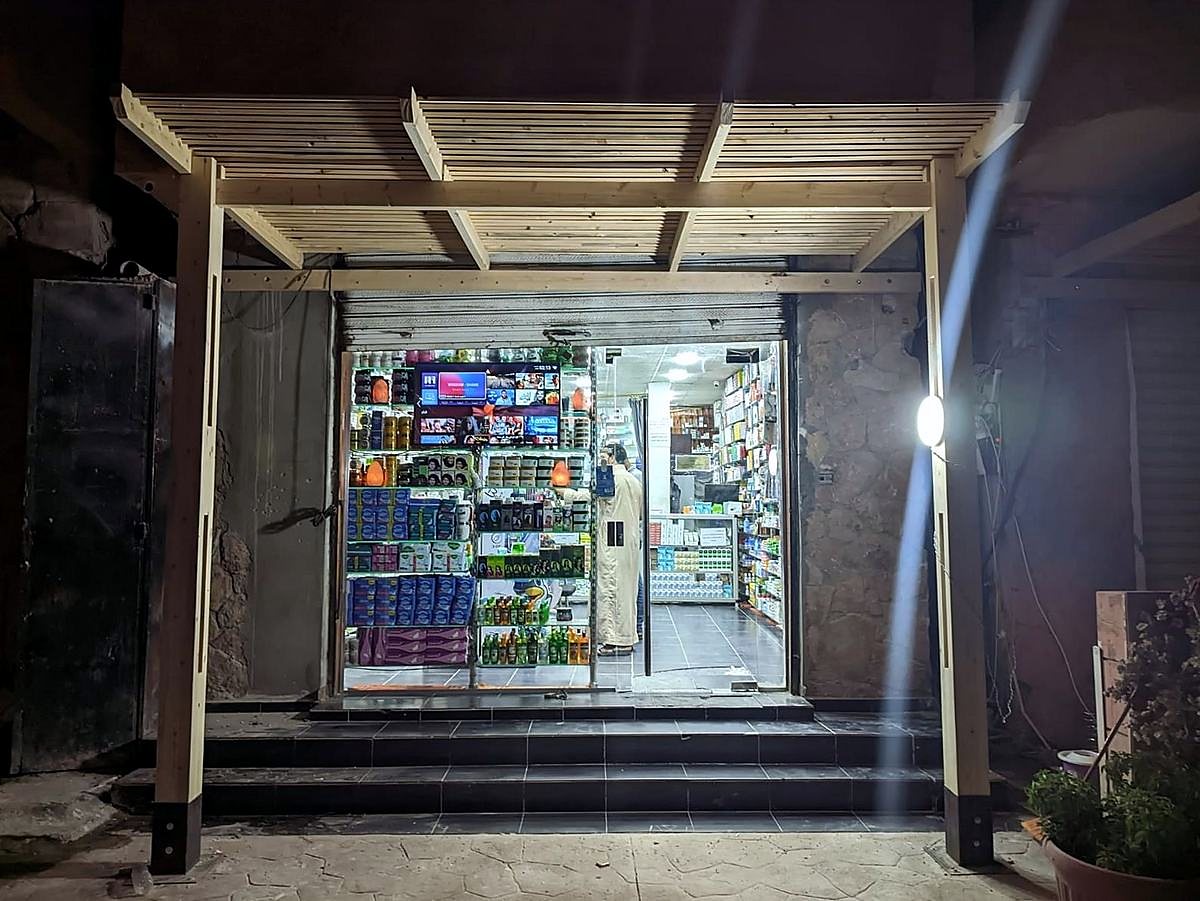
Market Street, Siwa
Façades, pergolas & shopfronts · A street of shops · Completed
View project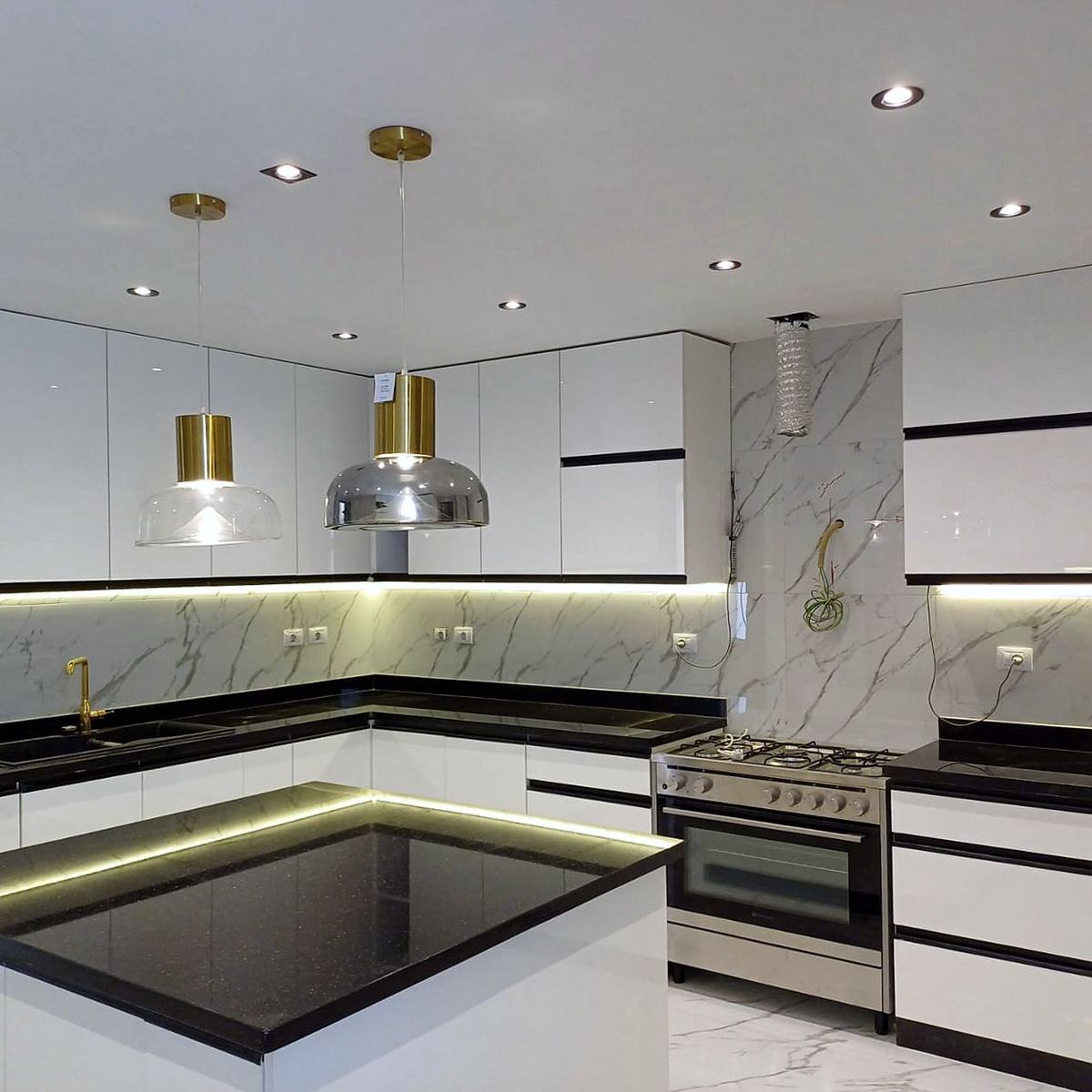
Sea-view Villa — Marble & Brass
Turnkey finishing · Villa · In progress
View projectQuestions people ask
How much paint per square metre?
How many litres for a 4 × 4 m room?
How many litres for a 100 m² flat?
Do I need a sealer before painting?
How many coats of paint do I need?
Read next
Finishing cost by flat size: what scales and what doesn’t
‘How much to finish a 100 m² flat?’ has no honest answer until someone has seen the flat. This page gives you something more…
See more Guides · Quantity calculatorHow much tile do you need? Work out m², tiles and cartons
The tile you buy is not the room’s area: there is wastage for cuts and breakage, and tile is sold by the carton, not the metre.…
See more Guides · repairsDamp walls: find the cause first
Painting over damp hides it for a season, and then it comes back, usually worse. The fix depends on where the water comes from…
See more Guides · Before you startThe finishing BOQ: every line that should be written down
A muqaysa, or bill of quantities, lists every job and material in your finish with its unit and specification. Read properly, it…
See more