Finishing · exteriors
Villa façades
The façade is the first thing anyone sees of a villa, and the part that faces the sun, rain and salt every day. Here are the materials, the fixing methods, and the details that separate a façade that lasts from one that is tired after a few winters.
Choosing the façade material
Each material has its own look, weight and upkeep. These are the common choices and what to watch for with each:
| Material | Strengths | Watch for |
|---|---|---|
| Natural façade stone (such as Hashemi stone) | A warm, natural look, many sizes and surface finishes, and at home in classic and modern designs. | Many types are porous and take up water and salts to different degrees, so they need a breathable protective treatment and a dense type suited to exterior use. |
| Marble | Luxury and distinctive veining; suits entrances, columns and details. | A polished face loses its shine outdoors over time, so honed, sandblasted or bush-hammered finishes age better. Choose a sound, dense marble. |
| Granite | The hardest option and the least absorbent; ideal for the plinth, steps and anything facing the sea. | Heavier than the others, so mechanical fixing is essential at height and for large slabs. Flamed or bush-hammered finishes add texture and grip. |
| GRC | Thin, light panels and ornaments cast in moulds: cornices, columns, arches and window surrounds; well suited to neo-classic designs. | Fixed to the structure with corrosion-resistant brackets, joints closed with a flexible sealant, and finished with a suitable exterior paint. |
| Render and paint | The lightest solution, with many colours and textures, including the scratched and other textured coatings sold in Egypt under local trade names. | Success depends on sound render and proper curing, an alkali-resistant primer and an exterior-grade topcoat. It needs repainting at intervals. |
Many of the best façades combine two or three: granite on the plinth, stone or marble at the entrance and projecting elements, and paint or GRC elsewhere.
Fixing: mechanical or adhesive?
Adhesive suits small, thin, light pieces at low level on sound render. Mechanical fixing suits large, heavy slabs and anything high up, because a piece of stone falling from a façade is a safety matter, not a cosmetic one.
Mechanical fixing means each slab is carried on stainless steel anchors fixed into the structure — kerf cuts in the slab edge, dowels or undercut anchors in the back — sometimes with an air gap behind the stone in what is called a ventilated façade. On some façades, adhesive is combined with mechanical safety anchors.
- If bonded: a cement-based adhesive rated for exterior use and for the stone’s weight, covering the whole back of the slab, never scattered dabs of mortar that leave voids for water.
- Movement joints at each floor level and around openings, filled with a flexible sealant that will not stain the stone.
- A drip groove under sills, cornices and wall copings, so water does not run down the face and leave streaks.
- A setting-out drawing before cutting, so the joints line up with windows and corners.
Façades by the sea
Salt, damp, sun and wind together are the harshest conditions a façade faces, and the difference between one that lasts and one that does not is usually in the hidden details.
Ordinary fixings rust, and rust expands inside the stone, cracking it and leaving brown stains on its face. So on the North Coast we use 316 stainless steel fixings, hot-dip galvanised steel for any supporting frame, and seaside-class powder coating on aluminium.
Choose a dense, low-absorption stone for surfaces that face the sea directly, protect it with a breathable treatment, and wash off the salts that appear on the surface with water, not acid. For paint, use an exterior system made for coastal conditions, not interior paint on an outside wall.
Exterior lighting
Lighting makes the façade at night, and it has to be planned before the cladding goes on, not after:
- Plan cable routes and boxes before the stone is fixed; cutting into finished stone is hard and leaves marks.
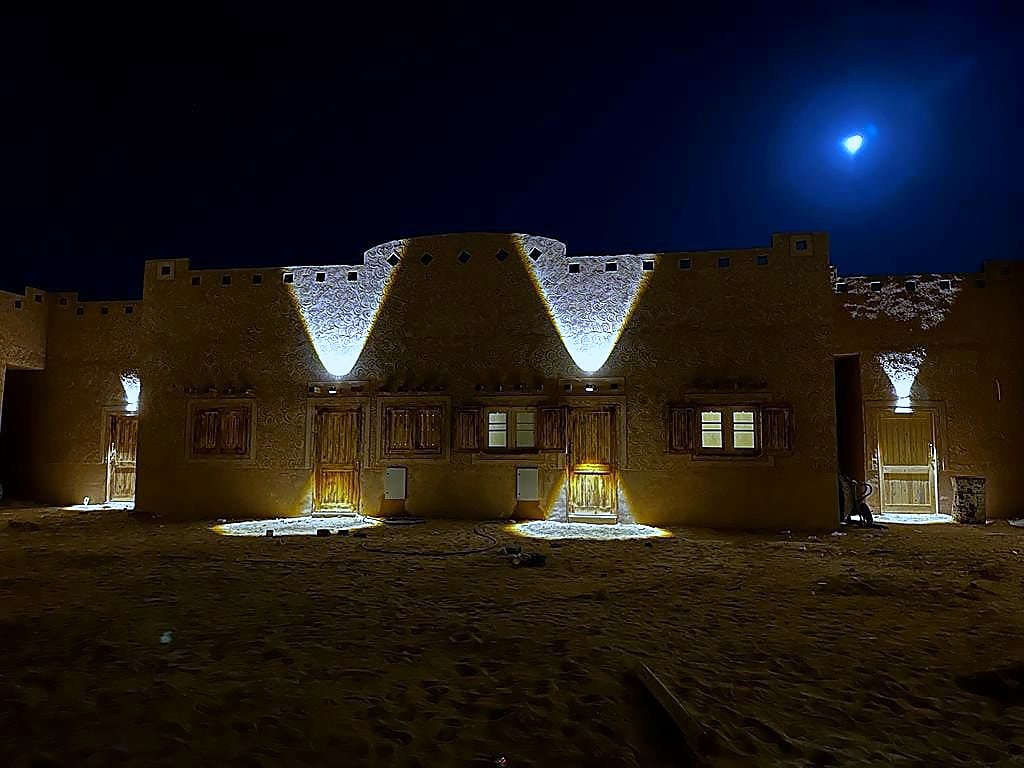
- Uplights or grazing light across the stone bring out its texture, with light at entrances and steps for safety.
- Fittings sealed against water and dust and rated for outdoor use, with corrosion-resistant metals near the sea.
- One warm white across the whole façade, and angles that do not dazzle neighbours or passers-by.
Permits and compound rules
Before you change a façade’s materials, colours or form, ask the authority responsible. The procedure differs with the property’s location and the kind of work, so we do not state a general rule here.
If the villa is outside a compound, check with the district office or the city authority that covers it and ask what is needed before you start. If it is inside a compound, go to the compound management and its rules; many compounds set requirements on exterior appearance, colours and materials, and may ask for drawings and samples before approving.
Make this the first step, before ordering stone or making any piece, so you are not forced to change work already done.
Stone supply only
Yes, supply-only is available. If you have your own installer, or prefer to buy the stone alone, you can choose from a catalogue of 94 Egyptian stones — marble, granite, quartz and onyx — and visit the showroom in El Deresa, Alexandria.
If you want supply and installation together, the stone is templated, cut and installed by the same team, so responsibility does not get lost between whoever cut it and whoever fixed it. If your façade needs a material that is not in the catalogue, such as certain façade stones or GRC pieces, ask us about it when we survey.
Itmam and façades
We visit the villa and measure the façade, then give you a written, itemised quotation before work starts: the material, its size, thickness and surface finish, the fixing method and anchors, and the joints, drips and protection.
Metalwork and stone tops are made in our own workshops, and on the North Coast we hold to the specification we write for the sea: 316 stainless steel, hot-dip galvanised steel and marine-grade hardware.
On a finishing contract you pay each supplier directly and the tax invoice is in your name; our fee for supervision and execution is agreed in writing before we begin. We work in Alexandria, on the North Coast and in New Cairo, and elsewhere in Egypt when the job suits us.
Departments for this
Marble
We buy marble at the block, not off a photograph.
See more
Granite
Granite is the stone you specify when a surface has to survive people.
See more
Stone Artwork & Engineered Marble
This is the end of the stone business that is closer to cabinetmaking than to tiling.
See more
Painting & Decorative Finishes
Paint is the finish everybody judges and the trade everybody rushes.
See more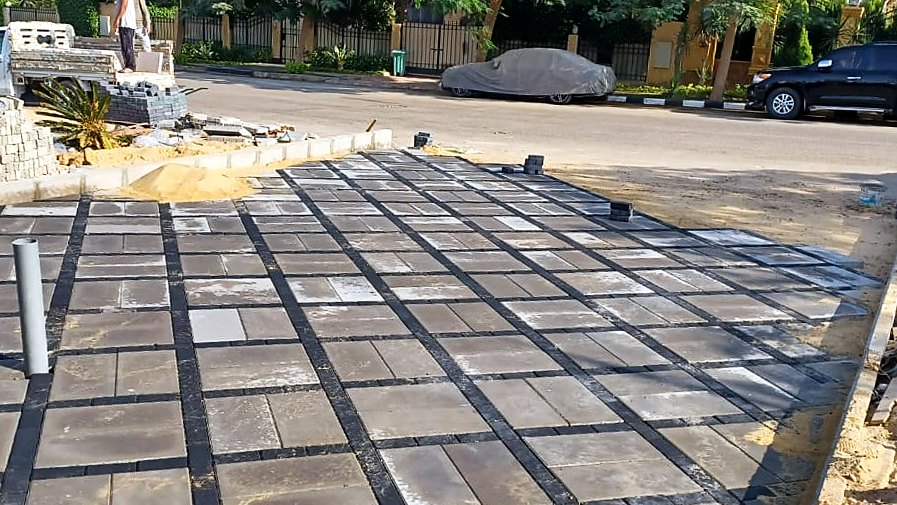
Landscape & Hardscape
Everything between the gate and the terrace edge is hardscape, and it is what a house gets judged on before anyone reaches the front door.
See moreWork we have done
Photo gallery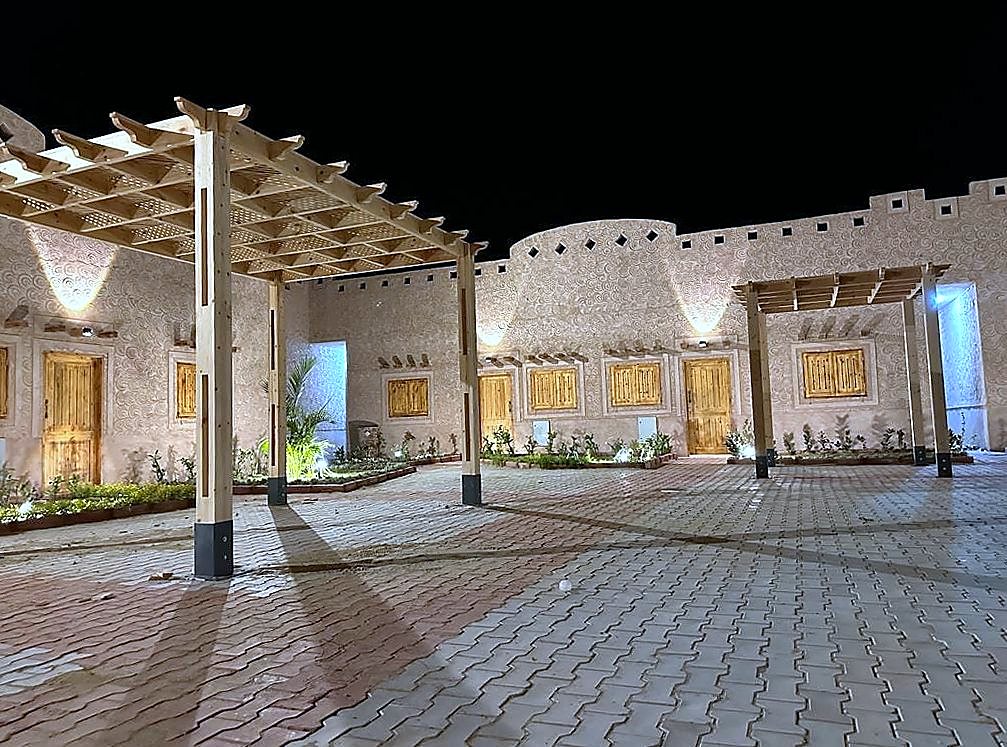
El Moghra
Turnkey build & finish · Desert lodge · Completed
View project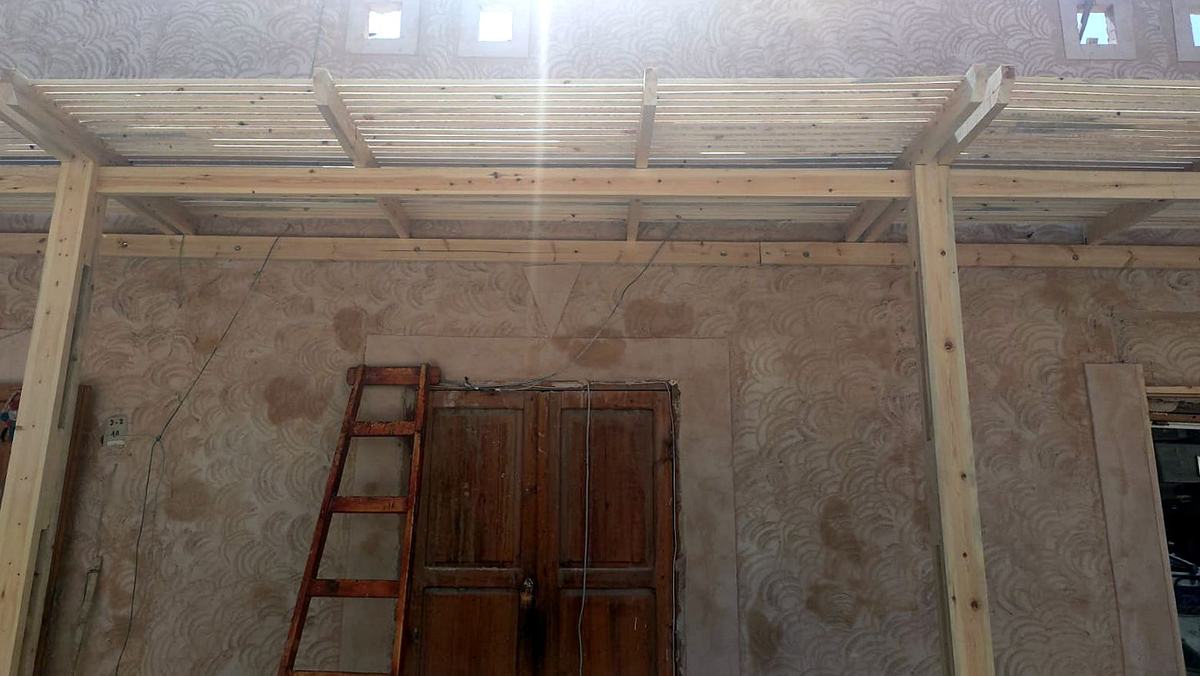
Market Street, Siwa
Façades, pergolas & shopfronts · A street of shops · Completed
View project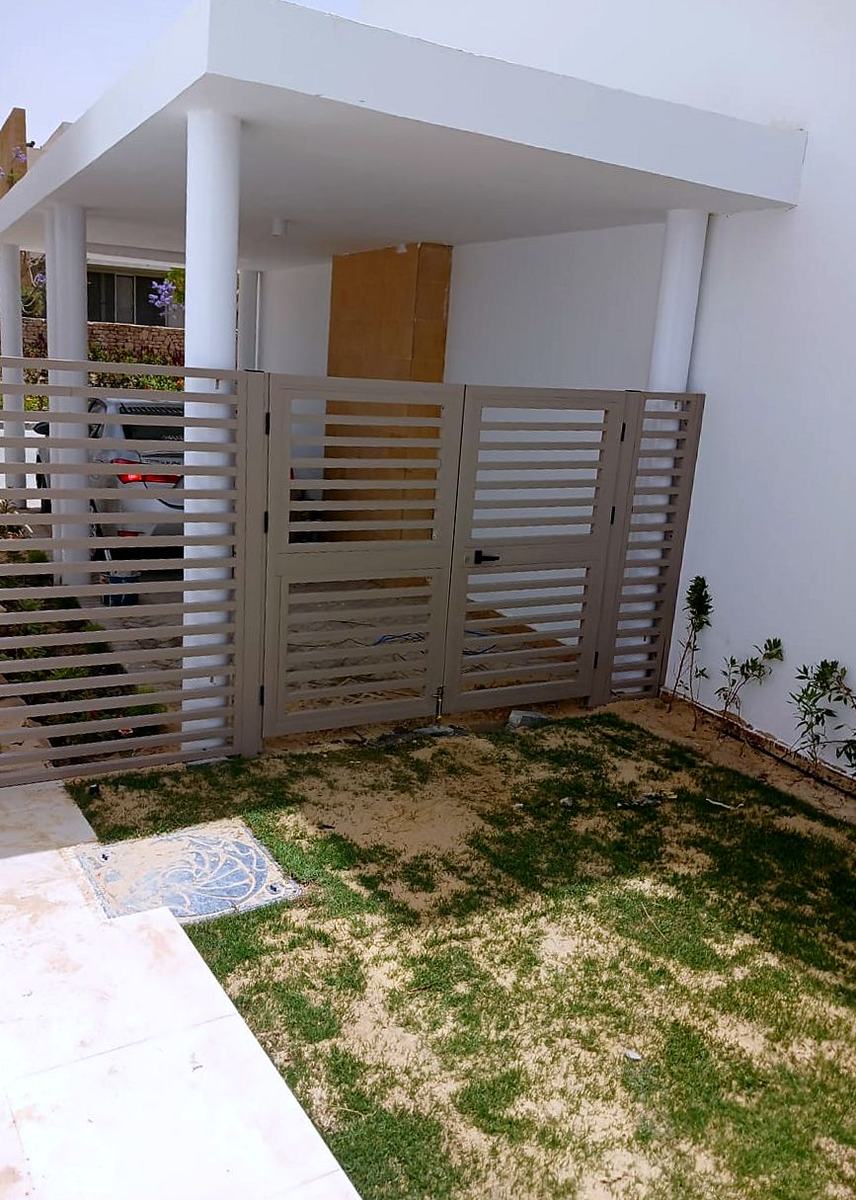
Sea-view Villa — Marble & Brass
Turnkey finishing · Villa · In progress
View projectQuestions people ask
What’s the best material for a villa façade?
Hashemi stone or marble for the façade?
Is mechanical fixing better than adhesive?
Do I need a permit to refinish the façade?
Can I buy the stone only, without installation?
Read next
Villa finishing, inside and out
A villa is not a large apartment. It has several floors, a stair, a roof, a façade and a garden, and all of them need planning…
See more Finishing · by propertyBuilding finishing, from lobby to roof
Finishing a building is not finishing one flat multiplied by the number of floors. There are shared areas every resident uses…
See more Guides · MaterialsFinishing by the sea: what lasts and what fails
A finish that lasts for years in Cairo can fail within a few seasons on the North Coast. Salt, humidity, sun, sand and long…
See more SupplyThe stone catalogue
See more Supply · ShowroomOur marble and granite showroom in El Deresa
Stone is not chosen from a photograph. At our showroom in El Deresa, Alexandria, you see the stone in person, compare finishes…
See more Guides · MaterialsMarble, granite or quartz?
All three look beautiful on the first day. The difference shows years later, in a kitchen with lemons, on a stair with sand on…
See more Areas