Build & MEP
Stables & Equestrian Facilities
Horses break buildings designed for people. We build yards the way a working yard needs them — loose boxes with drainage falls and anti-cast rails, an American barn with a through-draught, a wash bay that actually drains, a tack room that stays dry, and an arena whose footing is a drainage system with sand on top rather than a sandpit with a fence round it.
Scope of works
What we actually do.
Everything below happens inside our business — no subcontracted links in the chain.
- 01
Loose boxes & American barns
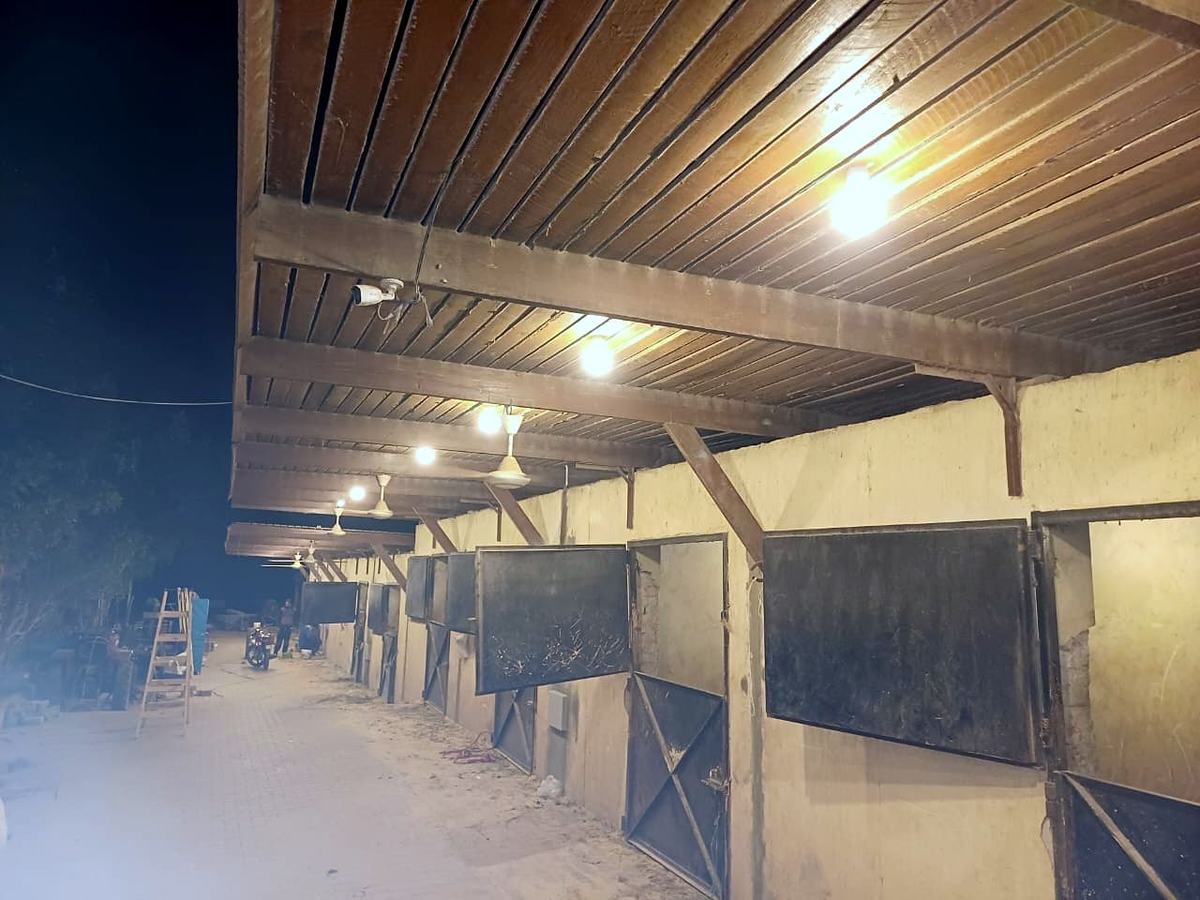
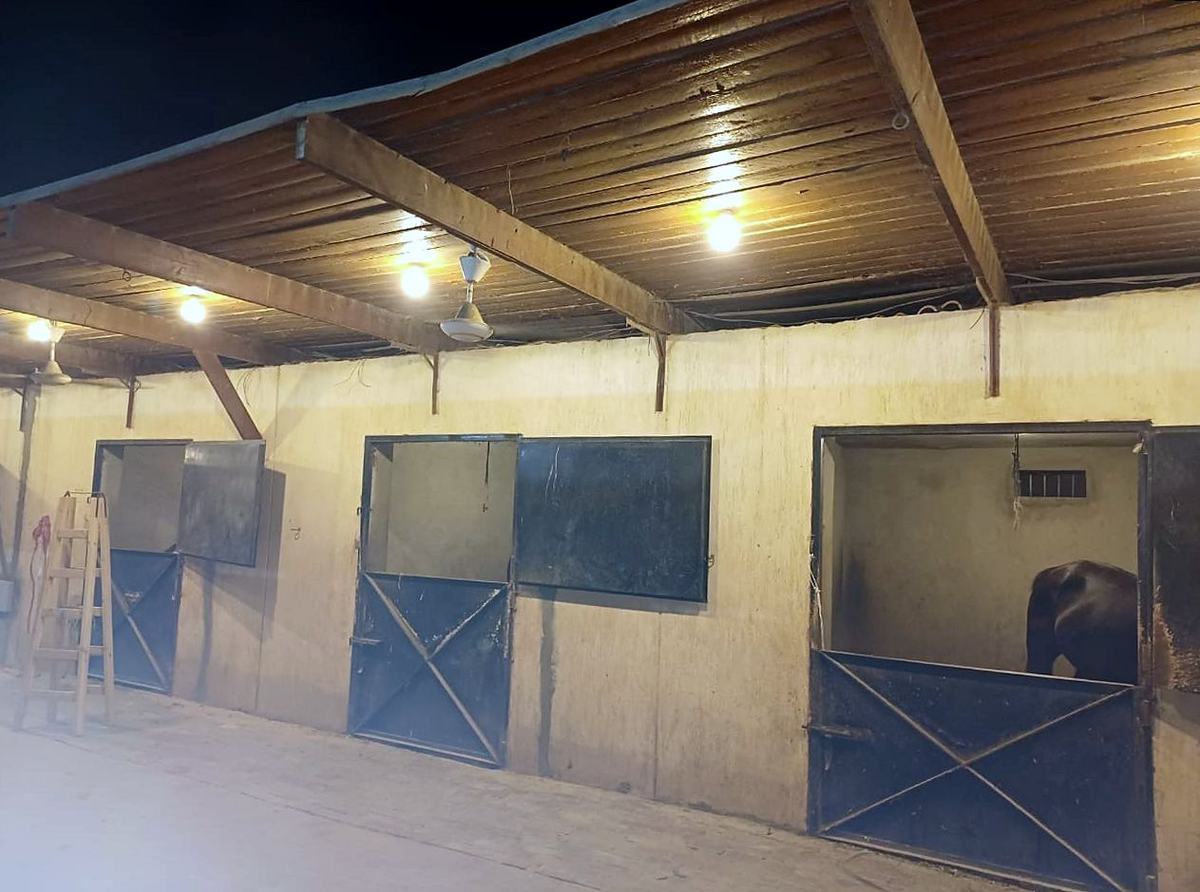
Individual stables at 3.65 x 3.65 m as a working minimum and 4.3 x 4.3 m for larger horses and foaling, with kick-boarded lower walls, anti-cast rails, galvanised grilles and yokes, safe glazing, top-hung sliding or split doors, and ridge and soffit ventilation. American barns with a central aisle wide enough to turn a horse and cross-tie it.
- 02
Outdoor arenas & manages
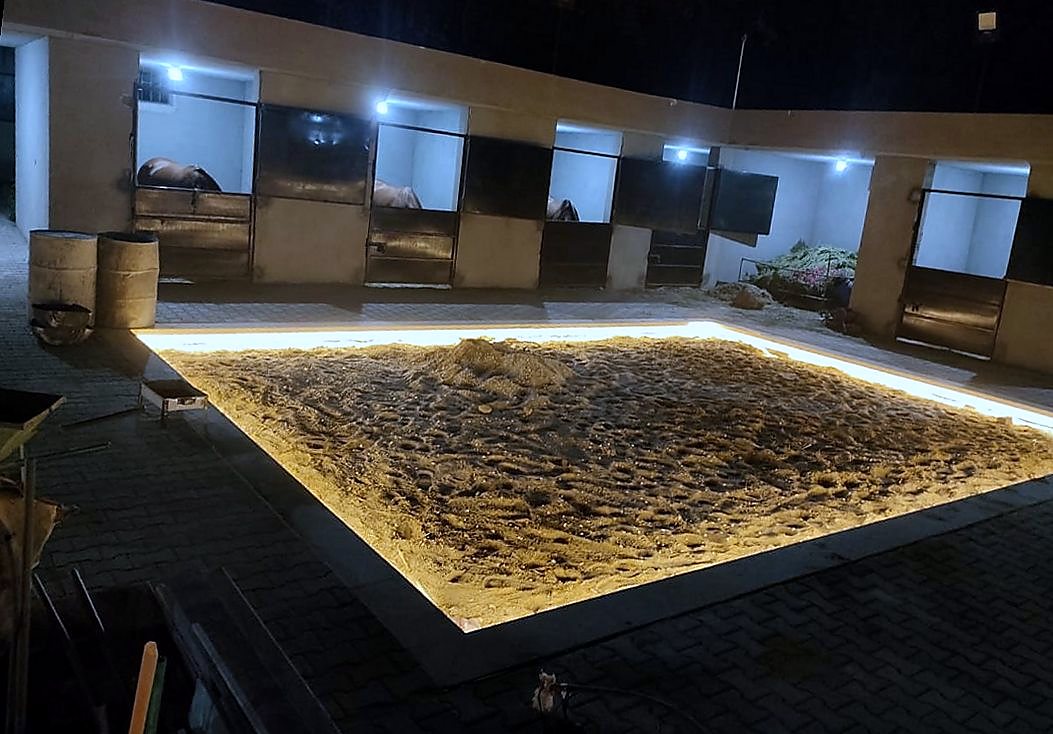
A 20 x 40 m or 20 x 60 m arena built as four layers: a compacted stone base laid to fall, perimeter drainage, a geotextile membrane, and a silica sand and fibre topping at a consistent depth. Kicking boards, gates and mirrors as specified. Get the base wrong and no amount of sand fixes it.
- 03
Horse walkers & lunging rings
Bases and structures for four to six bay mechanical horse walkers — the circular exerciser — with the same drainage build-up as the arena, panelled or electrified partitions and a roof against the sun. Lunging rings and round pens at 15 to 20 m diameter with a kicking board and even footing to the edge.
- 04
Wash bays, solariums, tack & feed stores
Wash bays with non-slip falls to a silt trap, hot and cold supply and a hose boom; horse solariums with the correct height and electrical protection over a wet floor; tack rooms with humidity control, saddle racks and security; and vermin-proof feed and hay stores kept away from the boxes for fire separation.
- 05
Paddocks, turnout & yard infrastructure
Post-and-rail fencing with hot wire, gates a horse cannot lift, automatic water troughs on frost and dust protection, all-weather turnout pens, muck store, hay barn, lorry hardstanding and the yard drainage that connects the whole lot.
Specification
The numbers, before you ask.
| Loose box | 3.65 x 3.65 m working minimum; 4.3 x 4.3 m for large horses and foaling |
|---|---|
| Box floor | Concrete to a 1:60 fall, sealed, with 18–24 mm interlocking rubber matting |
| Arena footing | 10–12 cm silica sand and fibre over membrane, drainage and a compacted stone base |
| Arena size | 20 x 40 m dressage; 20 x 60 m full manage; 25 x 45 m and up for jumping |
| Horse walker | 4–6 bay, 12–18 m diameter, roofed, on an arena-grade base |
| Ventilation | Ridge vent with soffit inlets — no horse stood in still air |
Selection
What we build for a yard
Private stable blockVillas & farms
Two to eight boxes with a feed store, tack room and wash bay, built for an owner who keeps horses at home rather than at livery. Common on the larger plots around Sheikh Zayed and the Sakkara road.
American barnStuds
Boxes either side of a covered central aisle, with cross-ties, a wash bay in the run and stores at one end. Better in wind and dust, and far better to work in through a Cairo summer.
Outdoor arena / sand schoolManage
Base, drainage, membrane and a sand-and-fibre surface built to a specification you can ride on in February. Kicking boards, gates, mirrors and lighting to suit the discipline.
Horse walker & lunging ringExercise
A level, drained, roofed base for a mechanical walker, and a round pen with consistent footing right out to the kicking board so the horse is not working on a slope at the edge.
Wash bay & solariumCare
Non-slip falls, silt trap, hot water and a solarium hung and protected correctly over a wet floor. Small structures that get built badly more often than anything else on a yard.
Paddocks & turnoutLand
Fencing, gates, water, shade shelters and all-weather turnout pens, laid out so horses can be moved without opening the whole yard.
Gallery
Stables & Equestrian in place.
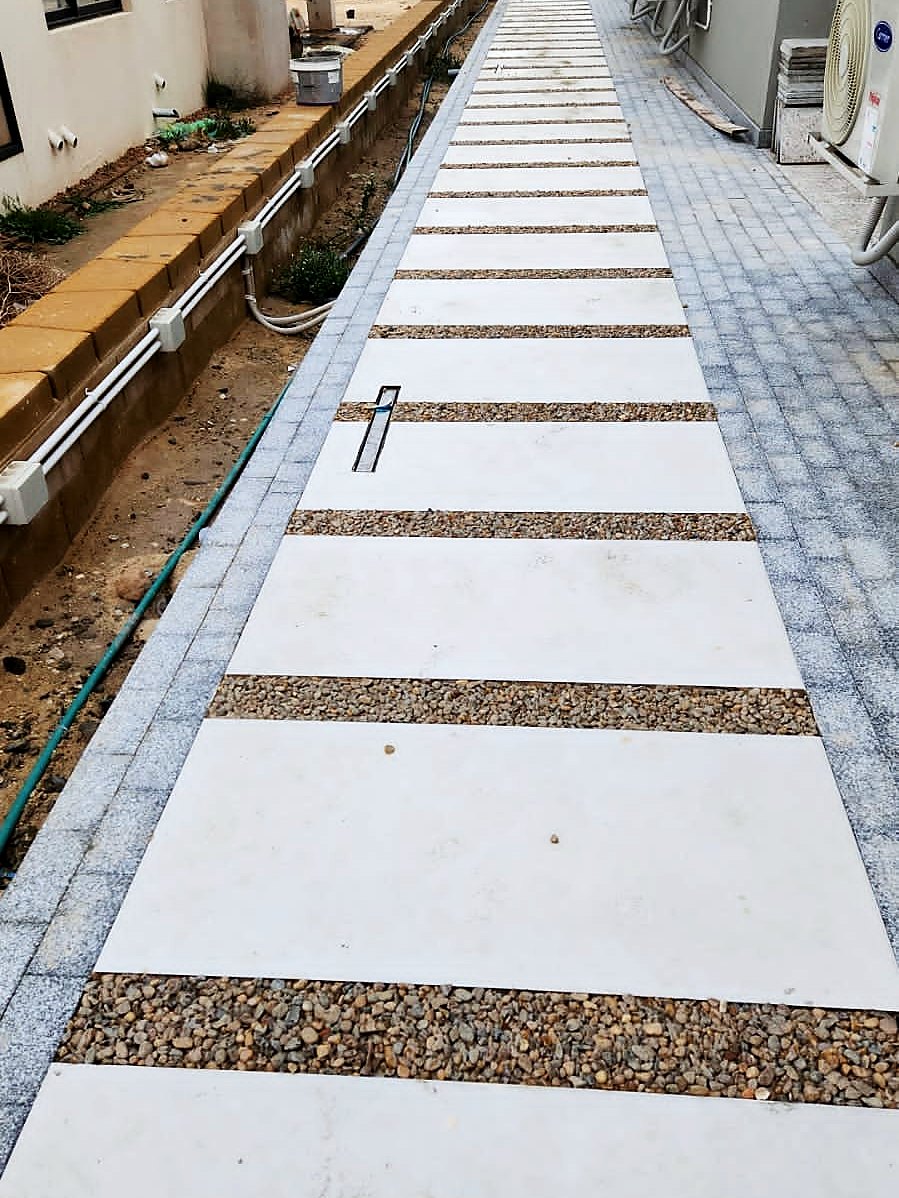
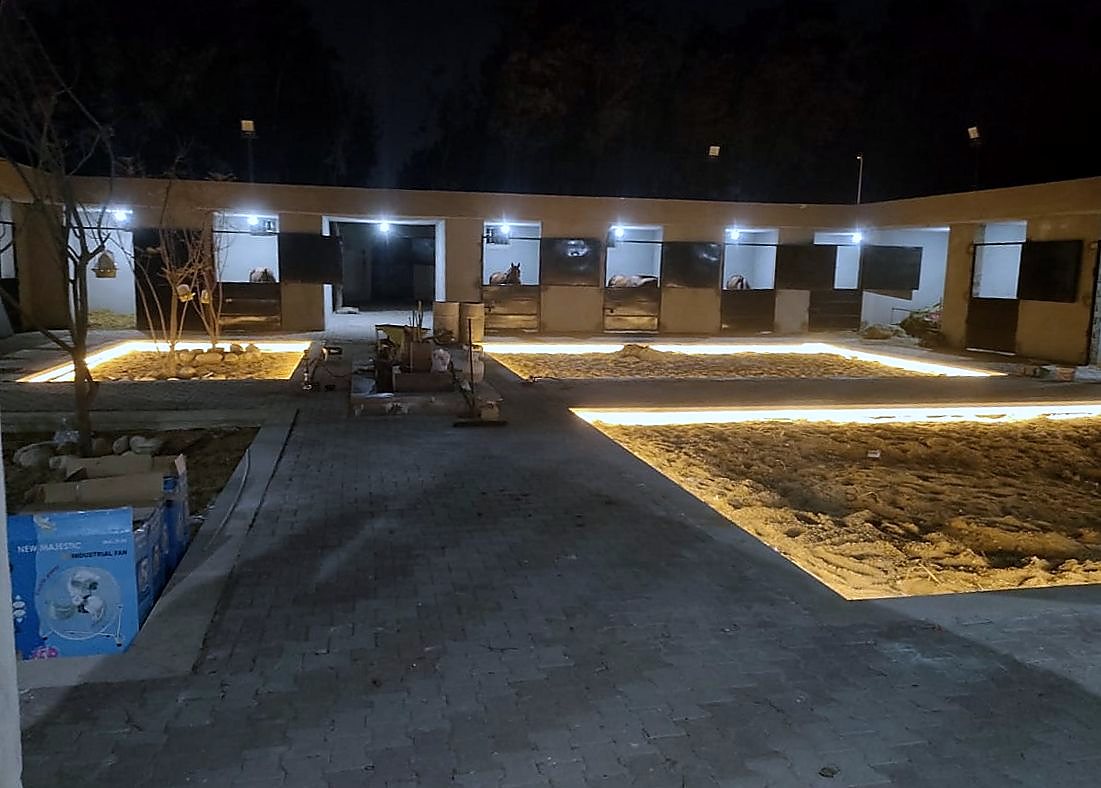
Every photograph on this page was taken on one of our sites during the work. Nothing here is a stock image or a render.
Where it goes
- Private stable yards
- Arabian horse studs
- American barns
- Outdoor arenas & manages
- Lunging rings & round pens
- Mechanical horse walkers
- Wash bays & solariums
- Paddocks, fencing & turnout
Projects featuring stables & equestrian
Where we have used it.
Questions we get asked