
Guides · Before you start
The finishing BOQ: every line that should be written down
A muqaysa, or bill of quantities, lists every job and material in your finish with its unit and specification. Read properly, it is the only fair way to compare two quotations.
What a BOQ is, and why it matters
A BOQ is the job written down line by line: what will be done, in which material, to what specification, and measured in what unit. The prices sit against those lines, and the total is simply their sum.
It matters because a single figure for ‘full finishing’ tells you nothing. Two quotations can look far apart and describe different jobs, or look close while one hides a missing bathroom, a lower grade of tile or no debris removal. Only when both are written against the same lines can you see what you are actually being offered.
A good BOQ also protects the job after signing. It is the reference for what was agreed, for checking the work at handover, and for pricing any change along the way.
The main sections, and what each line should say
Most finishing BOQs follow the order of the work. The units below are the usual ones. Quantities and prices belong to your own unit, so they are left out here on purpose.
| Section | What each line should specify | Usual unit |
|---|---|---|
| Demolition and removal | What comes out, debris carried off site, protection of what stays | m² or lump sum |
| Masonry | Block or brick type, wall thickness, new openings and lintels | m² |
| Electrical first fix | Points by type, cable sizes, conduit, the panel and its breakers | Point, or each |
| Electrical second fix | Brand and range of sockets and switches; light fittings if included | Each |
| Plumbing first fix | Pipe material (for example PPR), supply and drain points, pressure test | Point, or per room |
| Sanitaryware and mixers | Brand, model and who supplies them; installation on its own line | Each |
| Air conditioning | Split or concealed, copper and drain runs, ducts, units if included | Per unit, or linear metre |
| Plaster | Bonding coat, dots and screeds, internal or external, thickness | m² |
| Waterproofing | Material, number of layers, turn-up height on walls, flood test | m² |
| Screed and floors | Screed thickness; tile or stone type, size and grade; adhesive or mortar; skirting | m²; skirting by linear metre |
| Wall tiling | Tile type and size, tiling height, trims and corners | m² |
| Gypsum board | Board type (standard or moisture-resistant), flat or with bulkheads, access hatches | m² or linear metre |
| Paint | The whole system: sealer, filler, number of coats, paint type and finish | m² |
| Doors and joinery | Door core and face material, frame, ironmongery, finish | Each |
| Aluminium and windows | Profile system, glass type and thickness, colour and coating, hardware | m² or each |
| Marble and stone | Stone name, thickness, finish, edge detail; sills, stairs and tops | m² or linear metre |
| Kitchen | Carcass and front material, worktop, hardware; appliances if included | Linear metre or lump sum |
| Cleaning and handover | Final clean, debris removal, snag repairs | Lump sum |
Every line: unit, specification, supplier
Each line should answer these questions. If one is missing, the line can be read two ways, and it usually is.
- The unit: square metre, linear metre, each, point or lump sum. A lump sum is fine for a small item, but a large one hides quantities you cannot check.
- The specification: material, brand or grade, size, thickness and finish. ‘Porcelain 60×120, first grade’ can be compared; ‘good porcelain’ cannot.
- Who supplies it: the contractor, you, or a named supplier, and whether the line is supply and install or install only.
- What is included: preparation, adhesives, trims, protection and cleaning for that item.
- How it is measured: net area as built or area on the drawing, and whether the final account is re-measured.
How to compare two quotations line by line
Put them in the same order
List both quotations against one set of sections, using the table above. Any line that appears in one and not the other is your first question.
Match the units
If one prices floors by the square metre and the other as a lump sum, ask for the quantity behind the lump sum so the two can be compared.
Compare specifications, not totals
The same tile size and grade, the same paint system and number of coats, the same door core. A difference in the total usually traces back to a difference here.
Read the exclusions
Debris removal, protection of finished work, water and power on site, scaffolding, and anything marked ‘by the client’. Every exclusion is a cost that has moved to you.
Check the provisional items
Some lines are left as an allowance because the item has not been chosen yet. Make sure each allowance describes a real item and has not been set low to make the total look smaller.
Check the terms around the numbers
How long the quotation is valid, payment stages tied to finished work, how changes are priced, and whether quantities are re-measured at the end.
Red flags in a quotation
- One line for the whole job: ‘super lux finishing, all inclusive’ with no breakdown.
- ‘Inclusive’ with no specification: inclusive of what, and to which grade?
- Materials described by adjective, such as ‘excellent’, ‘imported’ or ‘first class’, with no brand, size or grade.
- A total given before anyone has visited and measured the unit.
- Missing lines that every job has: debris, protection, waterproofing tests, cleaning.
- Quantities well below what the drawing shows, to be ‘adjusted later’.
- No date, no validity period, and no company name or address on the document.
When something changes during the job
Changes are normal; unwritten changes are where disputes begin. Every change should be written as a line added to or removed from the BOQ, with its unit, specification and price, and agreed before the work is done.
Keep the original BOQ exactly as it was signed, and add changes as numbered variations. At the end, the final account is the original plus and minus those variations, and nothing else.
How Itmam writes the quotation
We visit and measure first, then give you a written, itemised quotation before any work starts: every job and every material on its own line. You can hold it up against any other quotation, line by line.
On a finishing contract you pay each supplier directly and the tax invoice is in your name, so materials appear on the supplier's own invoice. Our fee is for supervision and execution, and it is agreed in writing before work starts.
If you only need materials, supply-only is available: send the quantities or the drawings and you get a written quotation for exactly what you sent.
Departments for this
Full Home Renovation
This is the contract most of our clients actually want: one company, one programme, one written quotation.
See more Visualisation
Design & Engineering
We draw it before we build it.
See moreTiles, Porcelain & Ceramics
Tile is a material people are perfectly happy to buy months before anybody lays it, and we sell it exactly that way — by the lot, on trade terms, with no fitting contract attached.
See moreWork we have done
Photo gallery
El Moghra
Turnkey build & finish · Desert lodge · Completed
View project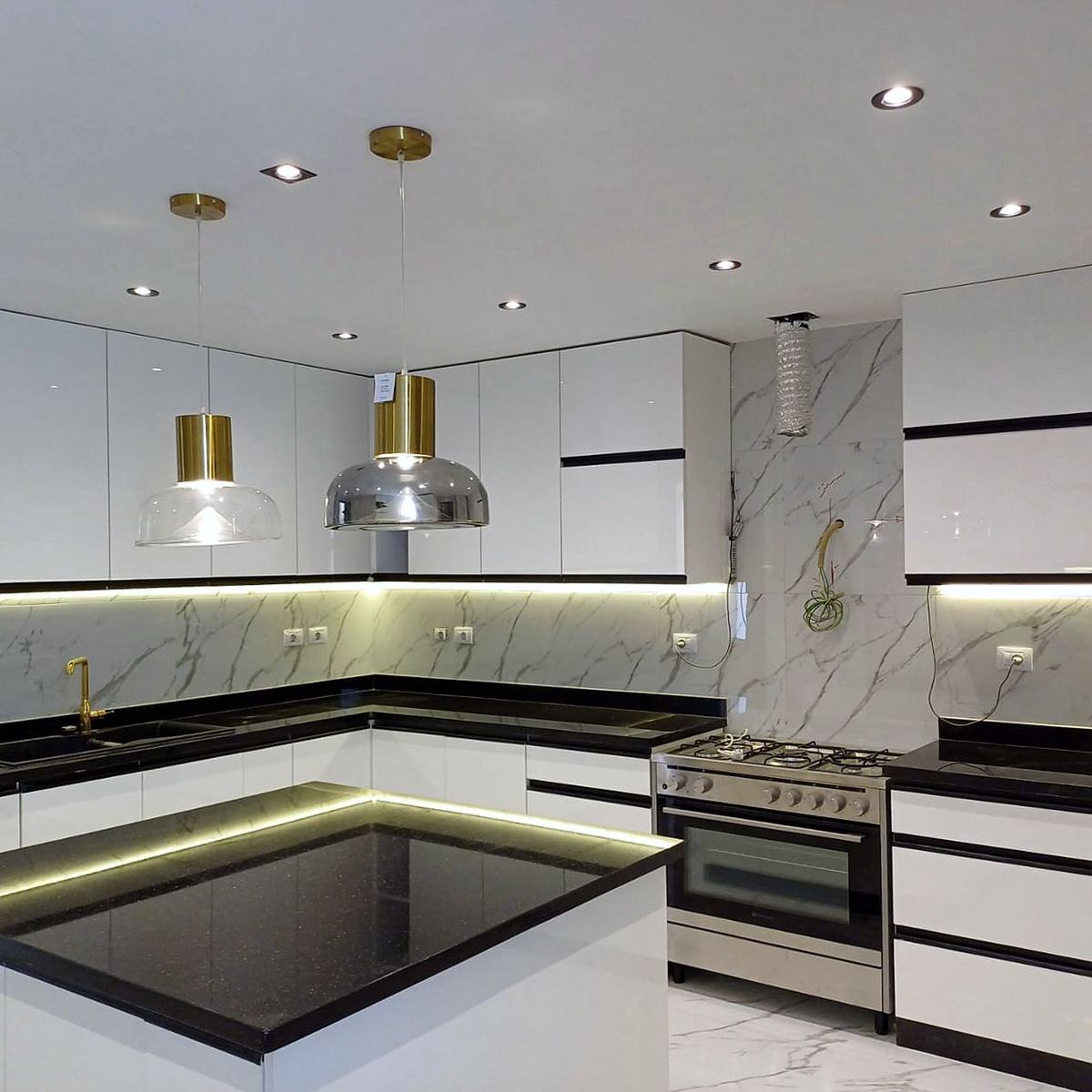
Sea-view Villa — Marble & Brass
Turnkey finishing · Villa · In progress
View project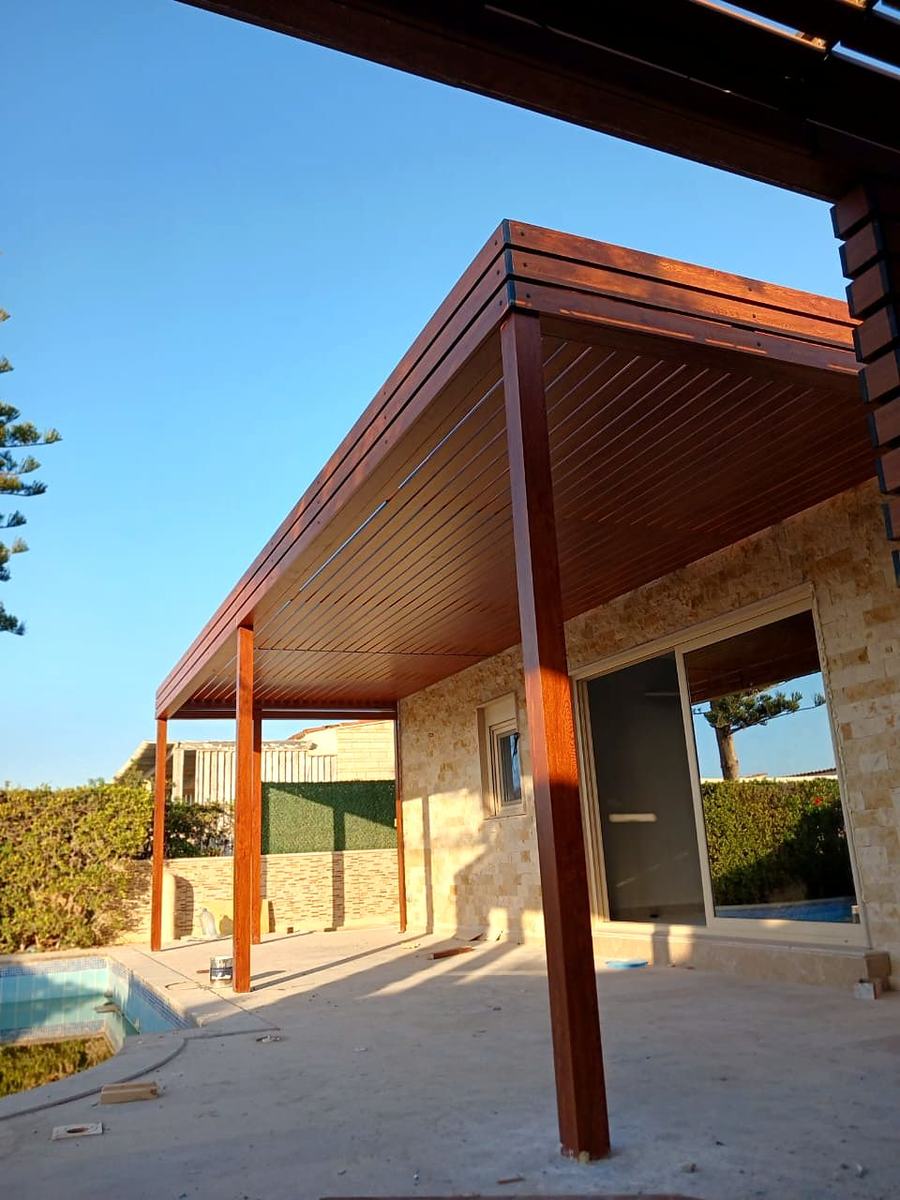
Pool Villa — Oak & Rattan
Exterior, pergola & interiors · Villa · In progress
View projectQuestions people ask
What is a finishing BOQ (muqaysa)?
Is there a ready-made BOQ template?
Why do quotes for the same flat differ so much?
Who should prepare the BOQ, me or the contractor?
What happens to the BOQ if I change something mid-job?
Are the quantities in the BOQ final?
Read next
Finishing levels in Egypt, item by item
Lux, super lux and ultra super lux are words the whole market uses, and every company means something slightly different by…
See more Finishing · by current stateFrom red brick to keys
Took handover of a unit in red brick? Then everything is still ahead of you, and this is the best moment to make the decisions…
See more Guides · Before you startChoosing a finishing company without regrets
There is no best finishing company for everyone, only the right one for your job. These are the questions and checks that…
See more Guides