Guides · materials
Choosing floors, room by room
Floors cover more of your home than any other finish, and they are the hardest thing to change later. Here is how porcelain, ceramic, marble and parquet compare, and which belongs in which room.
The comparison in one table
No floor wins everywhere: porcelain is the all-rounder, marble is the natural luxury, and parquet is the warm one that does not like water.
| Floor | Durability | Look | Upkeep | Comfort | Wet areas | Best rooms |
|---|---|---|---|---|---|---|
| Porcelain | Very hard and dense; takes wear and water | Any look, including stone, wood and concrete effects | Low: wash, and keep the grout clean | Hard and cool underfoot | Yes, with a slip-rated surface | Everywhere, including kitchens, bathrooms and balconies |
| Ceramic | Softer, porous body under a glaze | A wide range of colours and patterns | Low, but chips show the body colour | Hard and cool | Walls yes; floors only in light use | Walls, and quiet interior rooms |
| Natural marble | Softer than granite and porcelain; scratches and etches | Natural veining, one of a kind | Medium: neutral cleaners, sealing, polishing again over time | Hard and cool, pleasant in summer | Only honed or textured, and sealed | Reception, entrances, stairs |
| HDF laminate parquet | A tough wear layer, but swells if water reaches the core | Wood effect in many tones | Low: a damp mop, never a wet one | Warmer and quieter | No | Bedrooms and dry living areas |
| SPC | Rigid core that does not swell with water | Wood or stone effect | Low | Warmer than tile, firm | Kitchens and humid flats, not showers | Bedrooms, living areas, kitchens |
| Wood parquet | Real timber that can usually be sanded and refinished | Natural wood grain | Higher: protect from water and strong sun | The warmest and softest | No | Bedrooms and studies |
Porcelain or ceramic: the real difference
Porcelain is denser and absorbs far less water than ceramic, which is why it belongs on floors that work hard. Both are fired clay tiles; the difference is in the body.
- Porcelain is made from finer clay, pressed and fired at a higher temperature, so it is vitrified and absorbs very little water. It takes heavy traffic and outdoor use.
- Ceramic has a more porous body under a glazed face. It is lighter and easier to cut, and fine for walls and light-traffic floors, but not for terraces or busy corridors.
- Full-body porcelain carries its colour right through, so a chipped edge does not show a pale scar. Glazed porcelain has a printed surface on a porcelain body.
- Rectified tiles have ground, square edges that allow narrow joints; pressed edges need wider joints.
- For wet areas, buy against the slip-resistance rating printed for that use, not the word 'anti-slip' on the box.
Room by room
Choose the floor by what happens in the room, not by what looks best in a showroom.
- Reception and living room: marble or large-format porcelain. Both read as one calm surface; marble brings natural veining, porcelain asks for less care.
- Bedrooms: parquet, SPC or porcelain. Parquet and SPC feel warmer and quieter; porcelain is easier if you want one floor through the whole flat.
- Kitchen: porcelain is the safe choice, because it takes oil, water and daily cleaning. Marble marks from acids, and HDF parquet suffers around the sink.
- Bathrooms: slip-rated porcelain on the floor, porcelain or ceramic on the walls. Marble works if it is honed or textured and sealed.
- Balconies and terraces: porcelain made for outdoor use, or a textured stone. Avoid polished surfaces and anything that swells.
- Entrance and corridors: put your hardest-wearing floor here, because grit carried in on shoes is what scratches floors.
Humidity in Alexandria and on the coast
Humid air and damp slabs are the main reason floors fail in Alexandria and on the North Coast, so check for moisture before choosing anything made with wood fibre.
- HDF parquet swells at the joints when moisture gets in, whether from a wet mop, a leak or a damp slab. It suits dry, ventilated rooms only.
- SPC copes far better with humidity because its core does not absorb water, though it still needs a flat, dry base.
- Ground-floor flats can have moisture rising through the slab. Have it checked before laying any timber or laminate, and treat the cause first.
- Porcelain and stone are not harmed by humid air. Marble in a seafront flat benefits from sealing, and from mats that stop sand reaching it.
- Chalets that stand closed for months need floors that tolerate trapped, humid air, and porcelain and stone are the safe choice there.
If a wall or floor is already damp, read our guide to damp walls before you choose a finish.
Preparation decides the result
A floor is only as flat and as long-lived as the base under it, so the screed and the levels matter more than the tile.
- The screed must be level and fully cured before laying. Large-format tiles need a genuinely flat base and full adhesive coverage.
- Wet areas need waterproofing and a water test before the floor goes on, with falls towards the floor drain.
- Set the finished floor levels for the whole flat first, so doors, thresholds and different materials meet at the same height.
- Leave movement joints where the base needs them and around the edges of large areas.
- Order the whole floor from one shade batch, with extra for cuts and breakage, so you are never hunting for a matching box later.
- Marble floors are usually ground and polished after laying, to level the joints and bring up the finish.
- Parquet and SPC need a dry, flat screed and the underlay their maker specifies, and they go down at the end, after the wet trades have finished.
Keeping floors in good shape
Every floor needs some care, and the right routine is set by the material.
- Marble: a neutral cleaner, never lemon, vinegar or descalers; wipe spills; reseal and re-polish when the walking paths dull.
- Porcelain: ordinary cleaning; keep the grout lines clean, and sealed where they get wet.
- HDF parquet: a dry or barely damp mop; wipe up water at once; felt pads under furniture.
- SPC: a damp mop; do not drag heavy furniture; keep strong direct sun off it with curtains or blinds.
- Wood parquet: keep indoor humidity steady, and refinish the surface when it wears.
How Itmam handles floors
We supply marble from our catalogue of 94 Egyptian stones, and porcelain and ceramic tiles with the adhesive and grout to suit them. Supply-only is available.
On a finishing contract the floors are part of the work: the screed, the levels, the waterproofing in wet areas and the laying. Stone is templated, cut and installed by the same team.
We visit, measure and give you a written, itemised quotation before work starts, so you can see the material, the preparation and the laying item by item. You pay each supplier directly, the tax invoice is in your name, and our fee for supervision and execution is agreed in writing.
Departments for this
Tiles, Porcelain & Ceramics
Tile is a material people are perfectly happy to buy months before anybody lays it, and we sell it exactly that way — by the lot, on trade terms, with no fitting contract attached.
See moreMarble
We buy marble at the block, not off a photograph.
See moreFull Home Renovation
This is the contract most of our clients actually want: one company, one programme, one written quotation.
See moreWork we have done
Photo gallery
El Moghra
Turnkey build & finish · Desert lodge · Completed
View project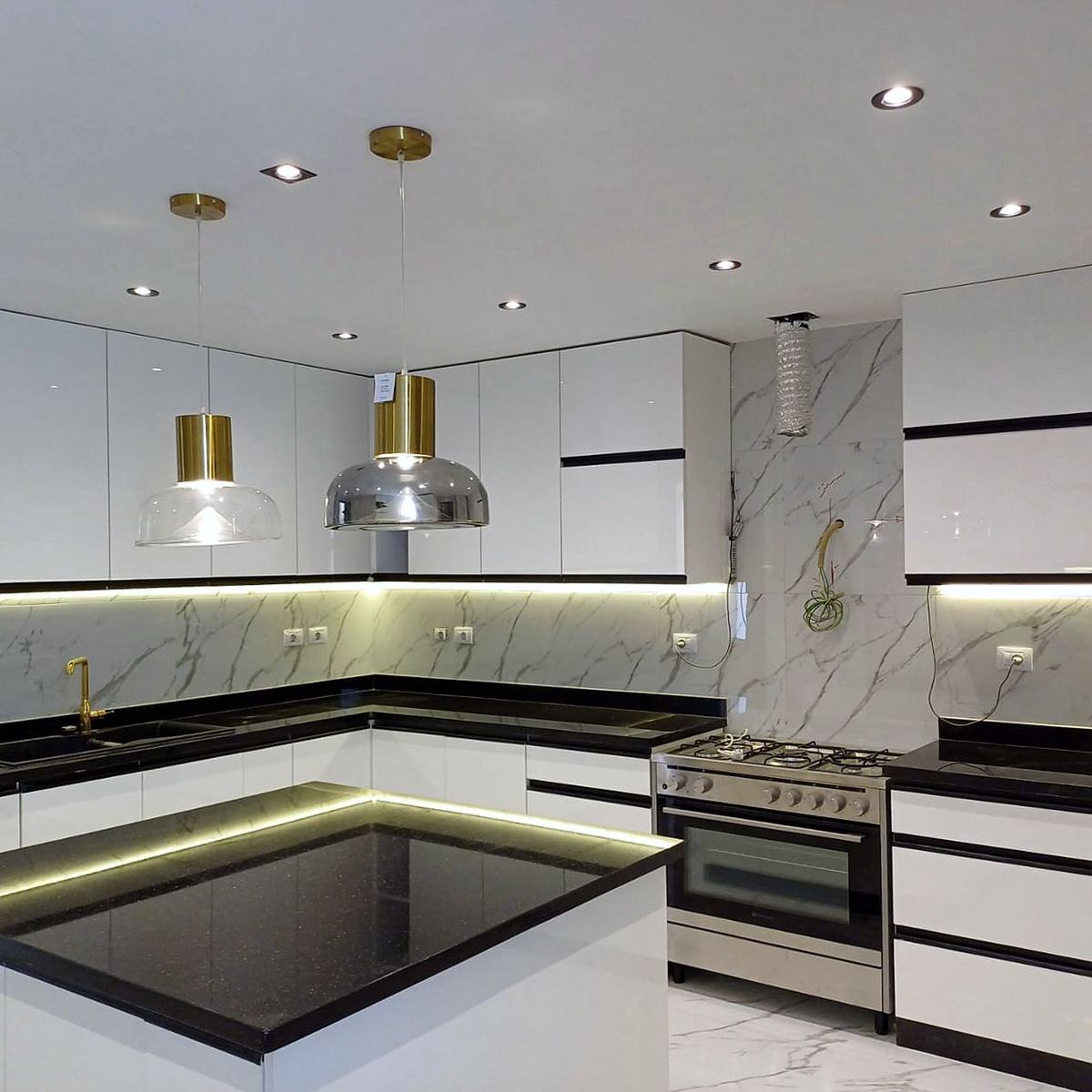
Sea-view Villa — Marble & Brass
Turnkey finishing · Villa · In progress
View project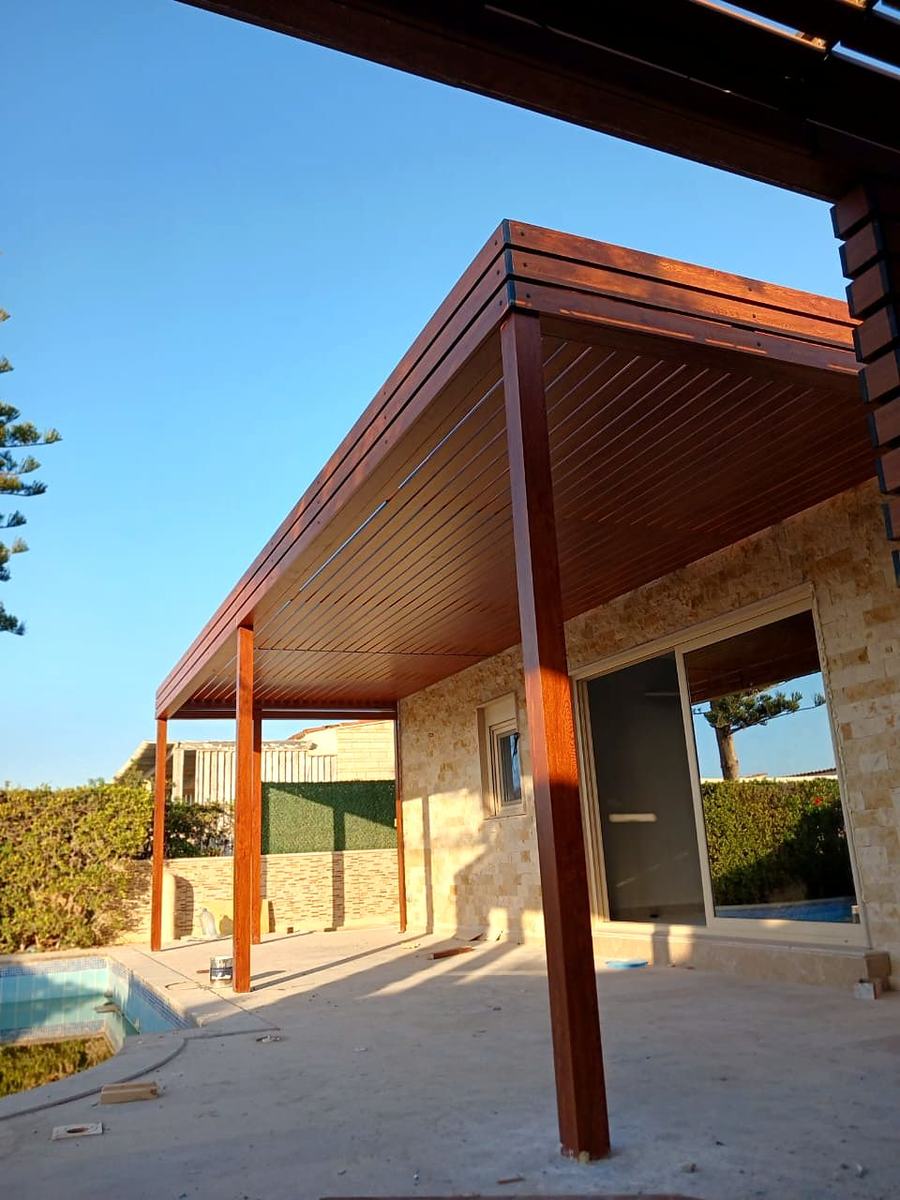
Pool Villa — Oak & Rattan
Exterior, pergola & interiors · Villa · In progress
View projectQuestions people ask
Porcelain or marble for floors?
Ceramic vs porcelain: what's the difference?
Does parquet work with Alexandria's humidity?
What is SPC flooring?
How often does marble need polishing?
What floor is best for a kitchen?
Read next
Egyptian marble, type by type
Egypt quarries many marbles, and most of them are beige, but they are not interchangeable. Here is what the main types look…
See more Guides · MaterialsMarble, granite or quartz?
All three look beautiful on the first day. The difference shows years later, in a kitchen with lemons, on a stair with sand on…
See more