Decoration · by style
Wall finishes: stone, wood and panels
A feature wall can be stone, wood, mouldings, effect paint or wallpaper, and each has a place where it shines and a place where it fails. The right choice depends less on the photo you liked and more on the wall itself: how dry it is, how flat it is, and how the room is used.
Start with the wall, not the picture
Before choosing a finish, answer four questions about the wall. They narrow the options faster than any catalogue.
- Is it dry? Damp patches, salt marks or bubbling paint must be treated at the source first. No finish survives moisture coming through from behind.
- Is it flat and sound? Thin finishes such as paint, microcement and wallpaper show every wave; heavy ones such as stone need solid masonry behind them.
- What runs inside it? Pipes, cables and sockets must be located before anyone drills.
- How is the room used? A busy corridor, a bathroom, a kitchen splashback and a wall behind a bed each need a different level of toughness and cleaning.
In Alexandria and on the North Coast, add a fifth question: how humid is the air? Sea air, and holiday homes closed for months, are hard on wood, wallpaper and some adhesives.
The options compared
The table compares the common wall finishes on what matters day to day. It is a guide, not a ranking: each suits some rooms and not others.
| Finish | Look | Toughness | Humidity | Cleaning and change |
|---|---|---|---|---|
| Natural marble or stone | Real veining with depth; never repeats | Very hard-wearing; marble is etched by acids | Good when sealed and fixed correctly | Wipes clean; removal means breaking it out |
| Marble-effect sheet (PVC or SPC) | A printed image of stone that repeats | Can scratch and dent; keep away from heat | The face resists water; the wall behind must be dry | Easy to wipe; easier to remove than stone |
| Wood veneer and timber slats | Warm; slats add rhythm and depth | Good, but shows marks | Needs a dry wall, and moisture-resistant board in humid homes | Dust settles between slats; panels can be refinished |
| Panels and mouldings | Classic or modern-classic frames | Good; gypsum can chip at low level | Fine on a dry wall | Repainted with the wall |
| Effect paint and microcement | A continuous surface with no joints | Varies; microcement is hard once sealed | Good with the right sealer on a stable base | Wipeable; can be recoated |
| Wallpaper | Any pattern or texture, quickly | Moderate; seams lift if knocked | Weak in damp or closed-up homes | Vinyl types wipe clean; strips off for a change |
Natural stone, and marble-effect sheet
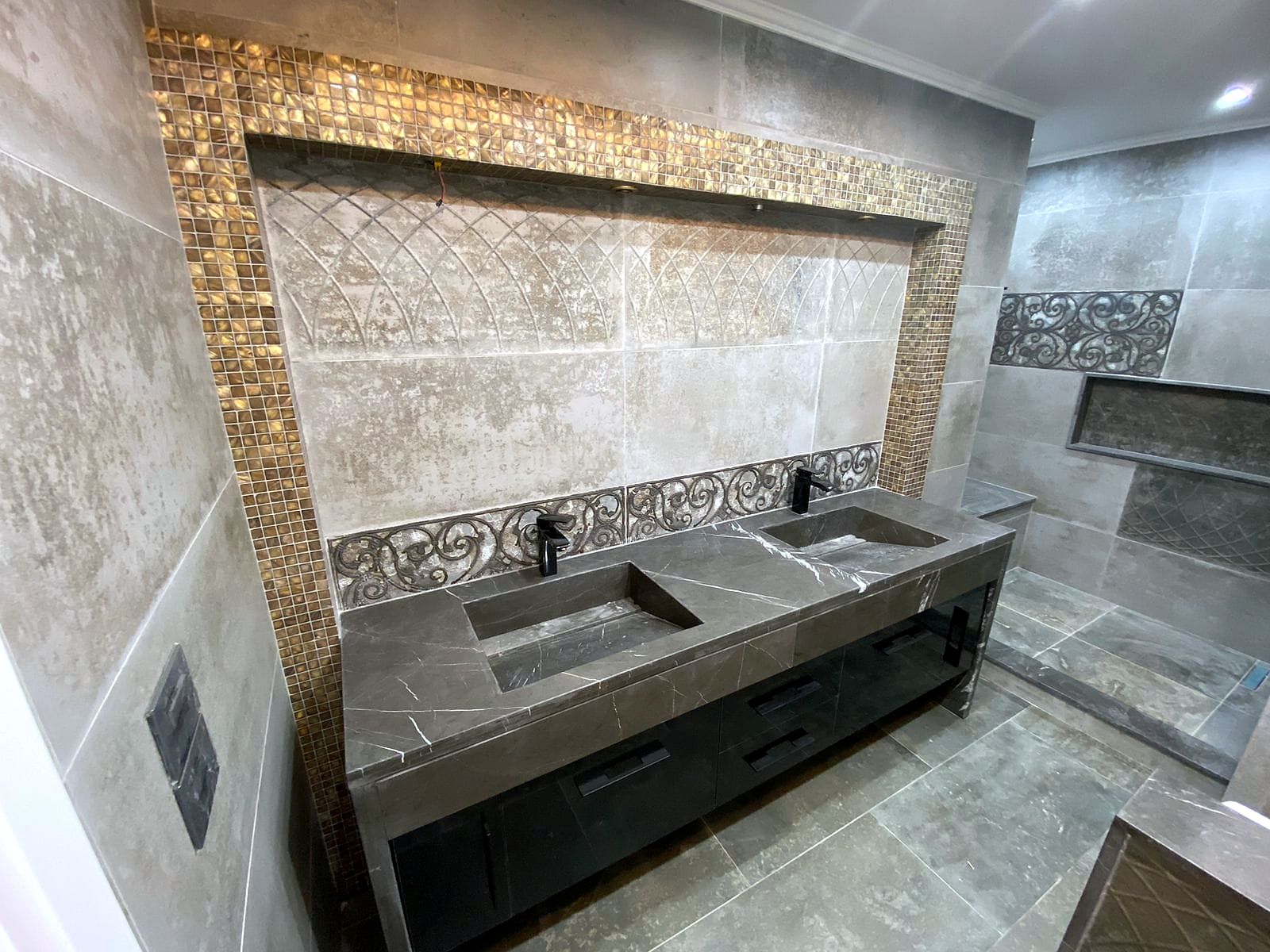
Natural marble has a depth no print can copy: the veining changes from slab to slab, and light moves across a polished or honed face. Book-matched slabs, two consecutive slabs opened like a book so the veins mirror each other, make one wall the focal point of a room; split-face and textured stone give a rougher, more natural look.
Stone is heavy, so the fixing matters as much as the slab. Small, light pieces at low height can be set in a suitable adhesive on a sound wall; large slabs and anything high up need stainless mechanical fixings into the masonry, not into plaster or gypsum board alone. Draw the joints, and where sockets and switches cut through, before any slab is cut.
Marble-effect sheet is a printed layer on a PVC or SPC panel, glued to a flat wall: light, quick to fit and easy to wipe, but it scratches more easily than stone and, close up, reads as a print. Use it for a fast refresh, not on the wall meant to be the centrepiece.
Wood, slats and upholstered panels
Wood is the warmest wall finish and the easiest way to soften a modern room.
- Veneered panels: real wood veneer on MDF or HDF gives an even grain across a wall. Order it from one batch with the nearby doors and wardrobes, so the tones match.
- Timber slats: vertical slats add height and rhythm and can hide a door or cables. Slats on an acoustic felt backing also help reduce echo in a large reception.
- WPC slats: a wood-plastic composite that copes with humidity better than MDF, useful near the sea or in a corridor that gets knocked.
- Upholstered panels: fabric or velvet behind a bed adds softness and quiet, on a dry wall.
- Moisture: never fix wood to a wall with any sign of damp. Fix it on battens with an air gap behind, use moisture-resistant board in kitchens, bathrooms and coastal homes, and leave small expansion gaps at the edges.
Panels and mouldings
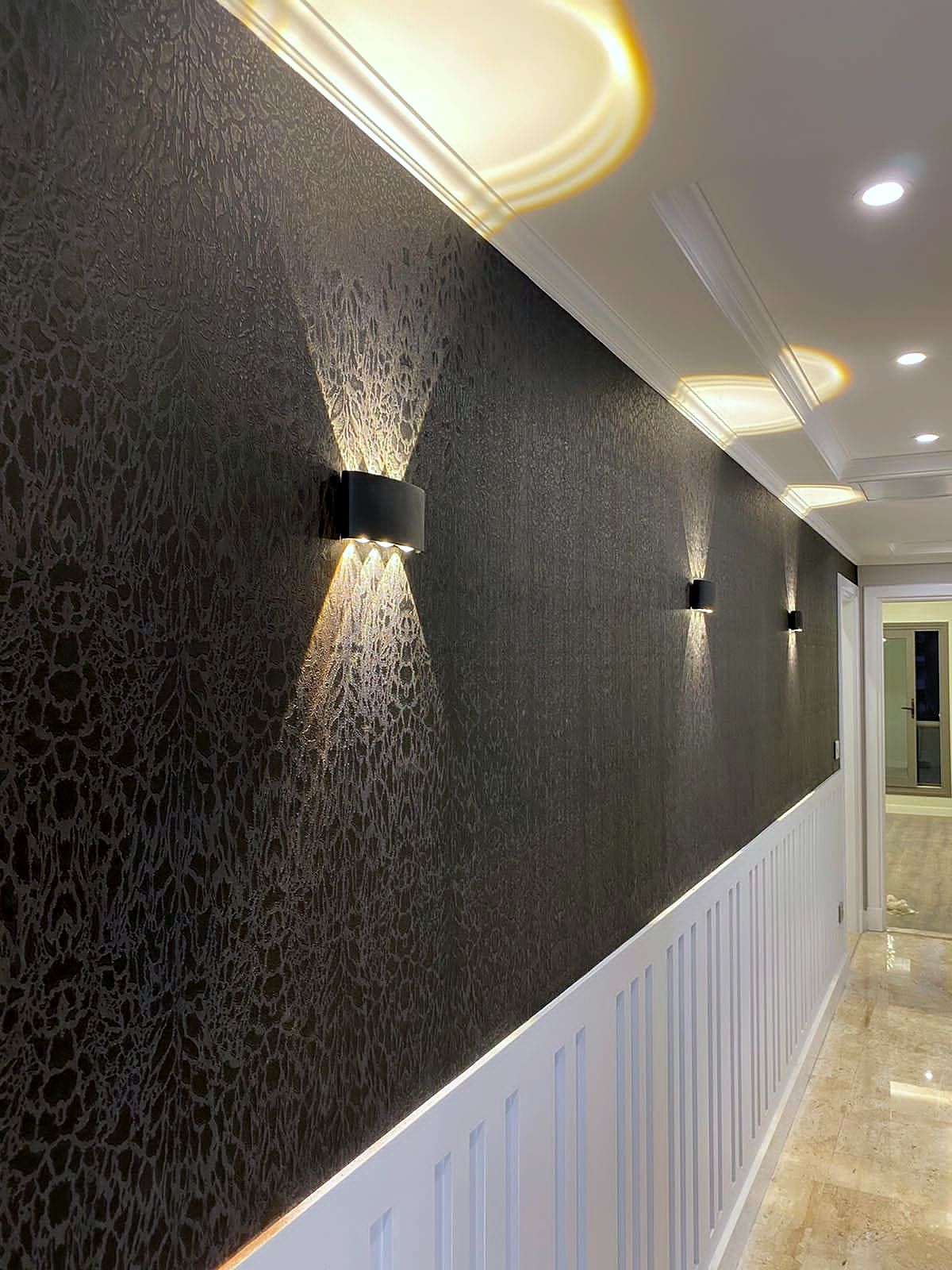
Panels are moulded frames applied to a wall, the classic way to give a plain wall proportion. They suit neo-classic and modern-classic rooms, and only look right when their sizes follow the room: lined up with doors and windows, at heights that relate to the furniture, with equal spacing between frames. Fix socket, switch and TV bracket positions first, so no socket cuts through a moulding.
They come in gypsum, polyurethane or wood. Gypsum gives crisp classic profiles but can chip at low level; polyurethane is light and less likely to crack with small movement; wood suits panelled walls that match the doors. Most are painted the wall colour, or a shade lighter or darker for contrast.
Effect paint, microcement and wallpaper
These are the thinnest finishes, so they depend most on the plaster beneath them.
- Effect paint: Venetian plaster (stucco) is a lime-based finish laid on in thin coats and burnished to a soft sheen; textured and metallic paints add depth or shimmer. Best on one feature wall rather than a whole home.
- Microcement: a thin cement-based coating with no joints, on walls and even floors. Cracks in the wall behind can come through, so the base must be stable; in showers it needs waterproofing beneath and the right sealer on top.
- Wallpaper: the quickest way to add pattern. Vinyl types wipe clean; non-woven types are easier to hang and strip. In humid homes, especially by the sea or in flats closed for months, it can lift at the seams or grow mould behind, so keep it to dry walls in well-ventilated rooms.
Whatever the finish, preparation decides the result: filling, sanding, a primer that suits the surface, and a check under side light before the final coat.
Before you clad any wall: fixing and moisture
Most failed wall finishes fail because of the wall, not the material:
Find the source of any damp
Trace stains and salt marks to their cause, whether a leaking pipe, the roof, rising damp or condensation, and fix it first.
Let new plaster dry
Fresh plaster holds a lot of water. Closing it under wood, wallpaper or sealed coatings too early traps that moisture inside.
Locate pipes and cables
Mark every pipe, cable and junction box before drilling, and keep access panels for valves rather than sealing them behind stone or wood.
Fix into the real wall
Heavy cladding goes into brick or concrete with fixings suited to its weight, never hung from plaster or gypsum board alone unless a reinforcement was built in for it.
Allow for movement and light
Leave expansion gaps where wood meets floors, ceilings and corners, and keep stone joints even and filled. Decide any light that washes the wall before cladding: grazing light flatters stone and slats, but shows a wall that is not flat.
How Itmam builds feature walls
A feature wall often joins several trades: stone, joinery, gypsum, paint and electrics. Itmam does finishing, decoration and supply, and our fitted pieces (kitchens, wardrobes, doors, vanities, metalwork and stone tops) are made in our own workshops. Stone is templated, cut and installed by the same team, so joints, sockets and fixings are worked out once, before cutting.
You can choose marble, granite, quartz or onyx from our catalogue of 94 Egyptian stones, or see stone in person at our showroom in El Deresa, Alexandria. We visit, measure and give you a written, itemised quotation before work starts, and supply-only is available if you have your own installer.
Departments for this
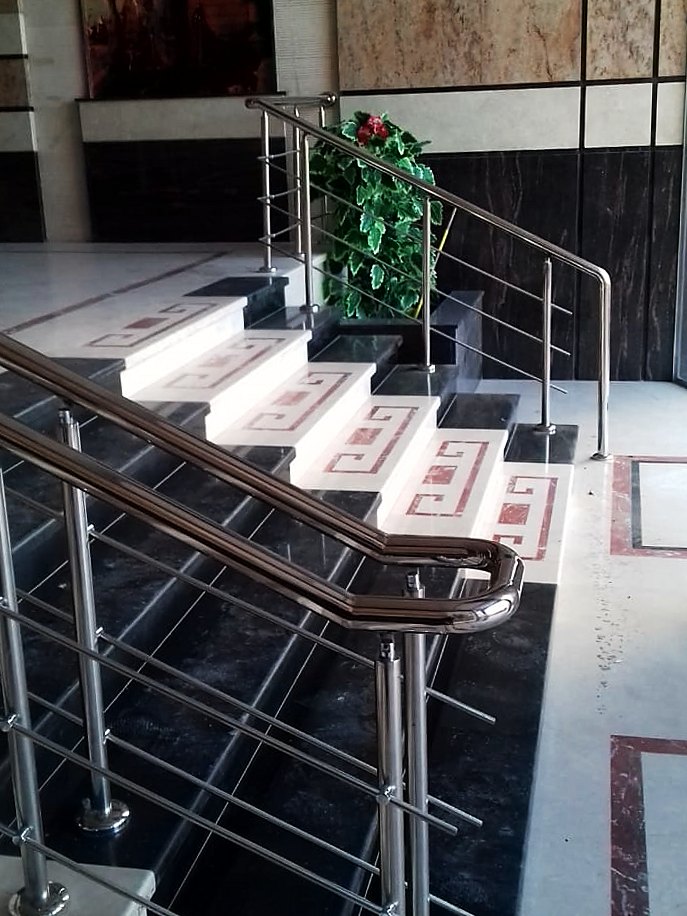
Marble
We buy marble at the block, not off a photograph.
See moreStone Artwork & Engineered Marble
This is the end of the stone business that is closer to cabinetmaking than to tiling.
See more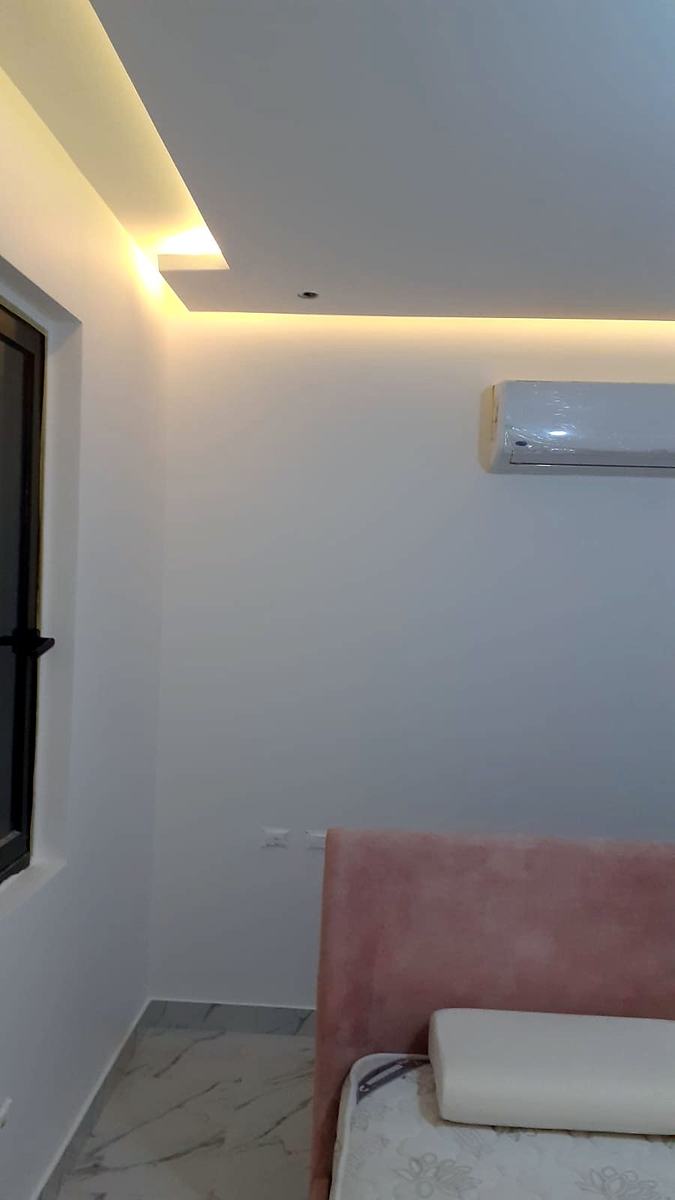
Painting & Decorative Finishes
Paint is the finish everybody judges and the trade everybody rushes.
See more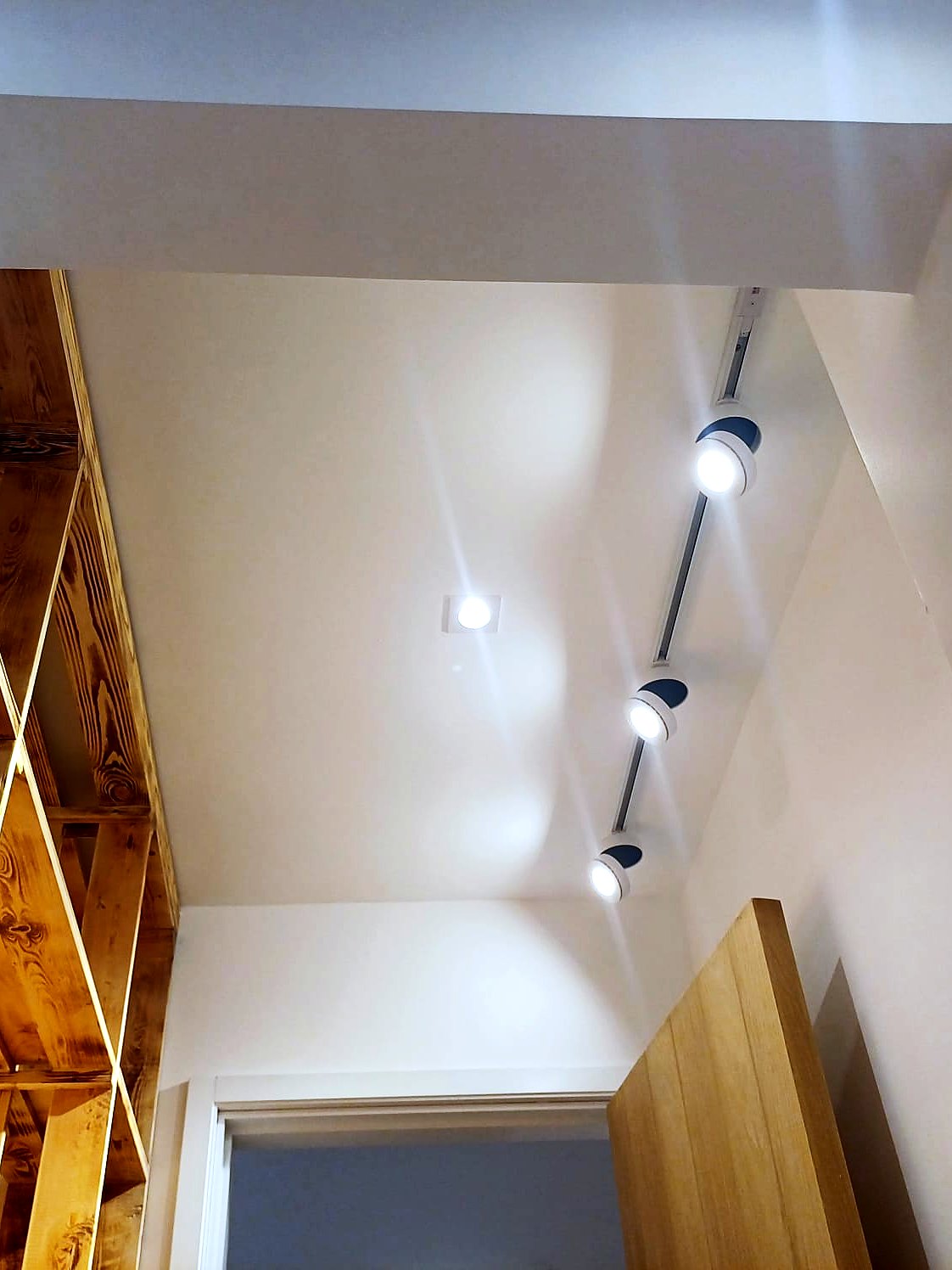
Gypsum & Decorative Ceilings
The ceiling is where lighting, air conditioning and joinery all arrive at the same plane, which is why it is the first thing an eye catches when something is out.
See more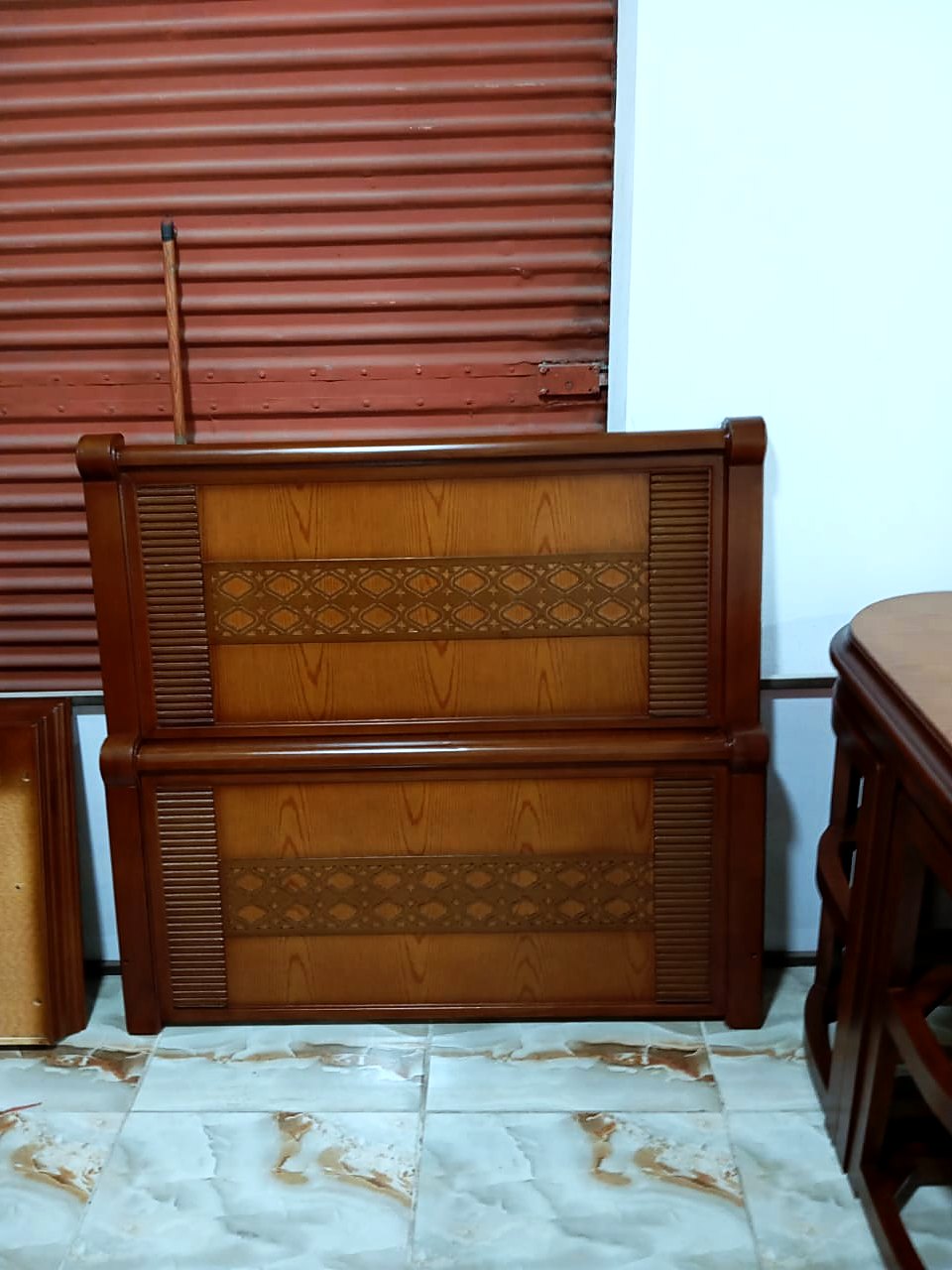
Furniture Manufacturing
We run our own furniture workshop, which means the bed, the wardrobes, the desk and the internal doors of the same villa are cut, jointed, sprayed and delivered by one team on one programme.
See moreWork we have done
Photo gallery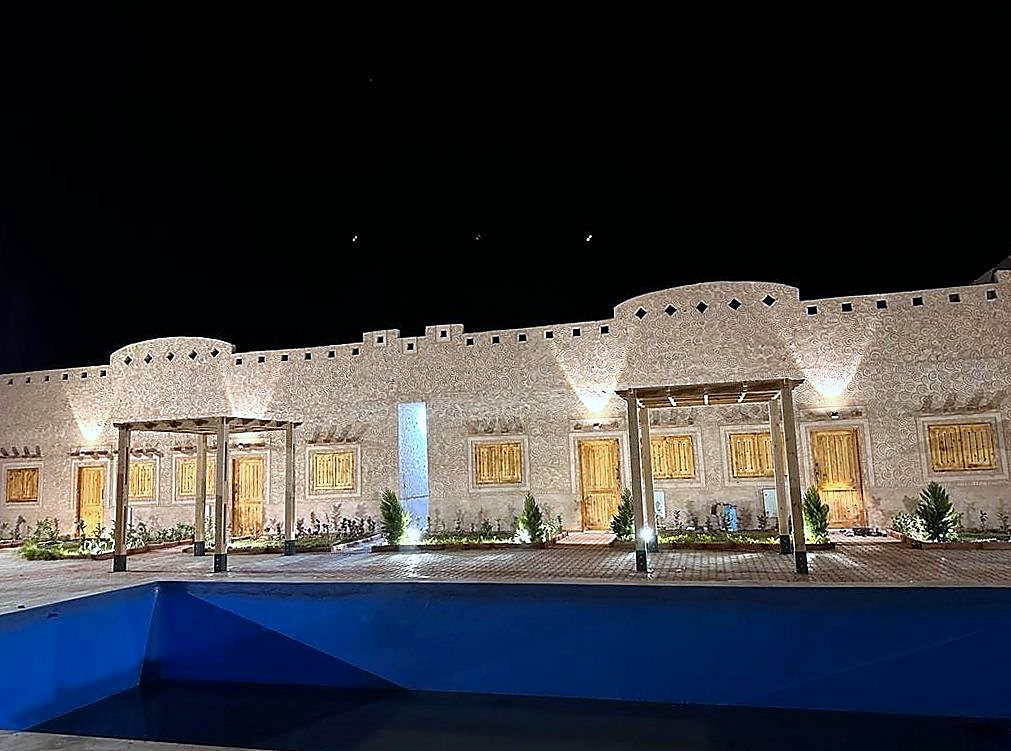
El Moghra
Turnkey build & finish · Desert lodge · Completed
View project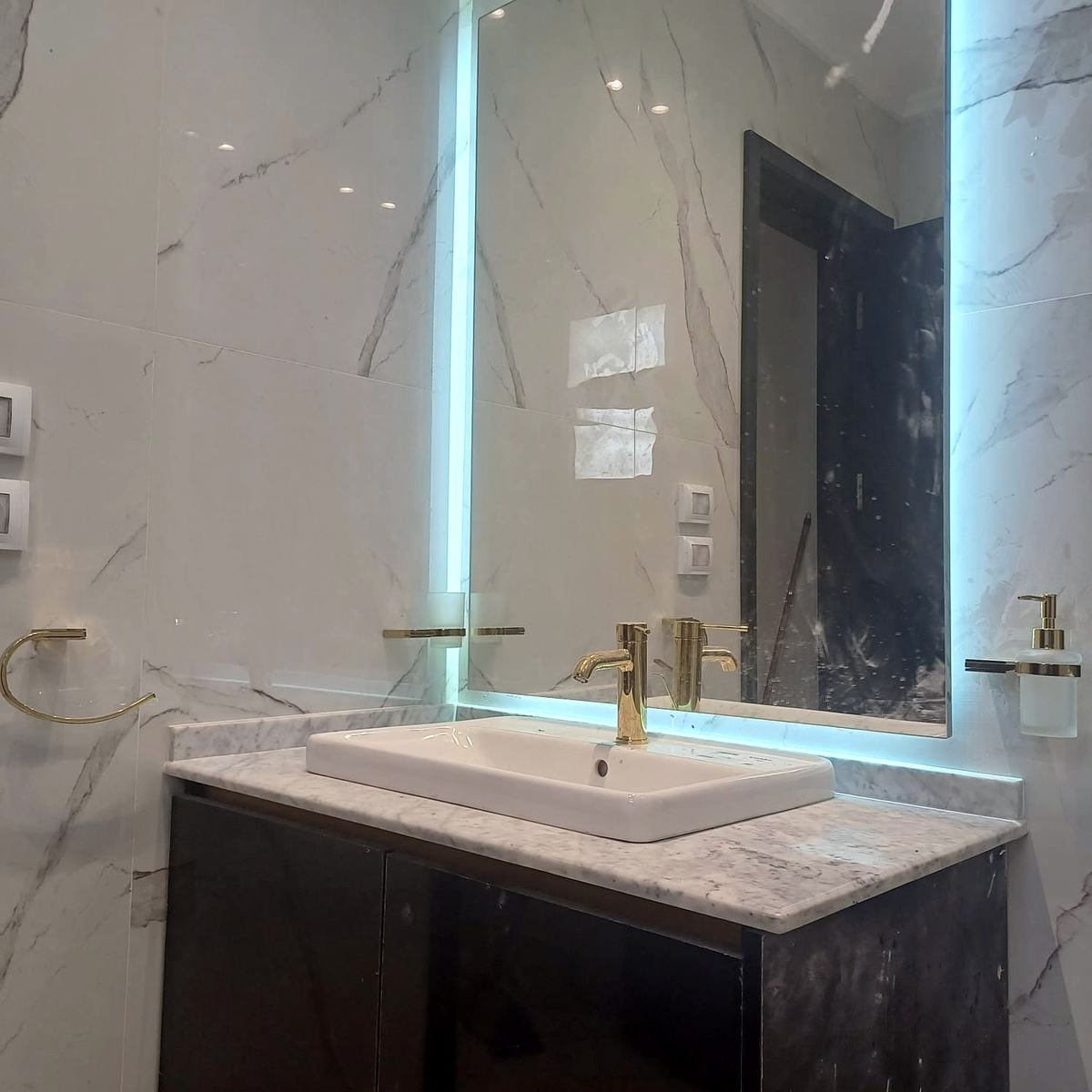
Sea-view Villa — Marble & Brass
Turnkey finishing · Villa · In progress
View project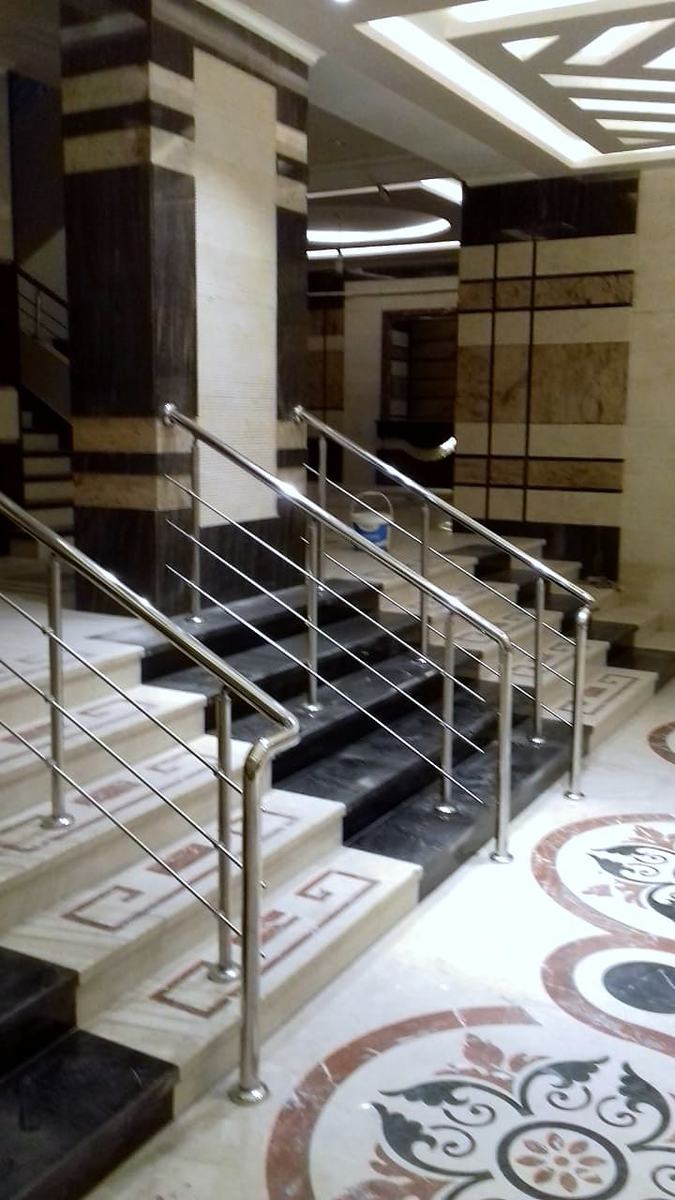
Entrance Lobby & Marble Stairwell
Lobby, stairs & balustrades · Residential building · Completed
View projectQuestions people ask
Does marble-effect sheet look like the real thing?
Does wallpaper survive humidity?
What is microcement?
Do timber slats collect dust?
How do I do a marble feature wall that doesn't feel heavy?
How much does a wall finish cost?
Read next
Reception rooms and TV walls
The TV wall is the first thing the eye lands on in a reception room, and the wall most easily spoiled by a visible cable or a…
See more Decoration · by styleNeo-classic interiors
Neo-classic takes the proportion, symmetry and cornices of classic design and leaves out the clutter and most of the gold. The…
See more Decoration · by styleHidden lighting: plan it before the gypsum
Hidden lighting is decided at the electrical first fix and built into the gypsum board. Planned in layers, in the right colour…
See more Guides · repairsDamp walls: find the cause first
Painting over damp hides it for a season, and then it comes back, usually worse. The fix depends on where the water comes from…
See more Guides · MaterialsFinishing by the sea: what lasts and what fails
A finish that lasts for years in Cairo can fail within a few seasons on the North Coast. Salt, humidity, sun, sand and long…
See more Supply